Table of Contents
ToggleIntroduction
As consumer demand for clean-label, gluten-free, and naturally sourced ingredients continues to grow, organic cassava flour has become an increasingly valuable ingredient across global food industries. Manufacturers, distributors, and importers are actively seeking reliable suppliers that can provide consistent quality while meeting international food safety and sustainability standards.
Produced from the entire cassava root rather than only its starch, organic cassava flour offers versatility for bakery products, gluten-free formulations, snacks, sauces, and a wide range of processed foods. Indonesia, one of the world’s leading cassava-producing countries, has become an important source of export-quality organic cassava products for international markets.
Featured Snippet
Organic cassava flour is a gluten-free flour made from the whole organically grown cassava root. Unlike tapioca starch, it retains more of the root’s natural fiber and nutrients, making it a popular ingredient for baking, food manufacturing, and clean-label products.
What Is Organic Cassava Flour?
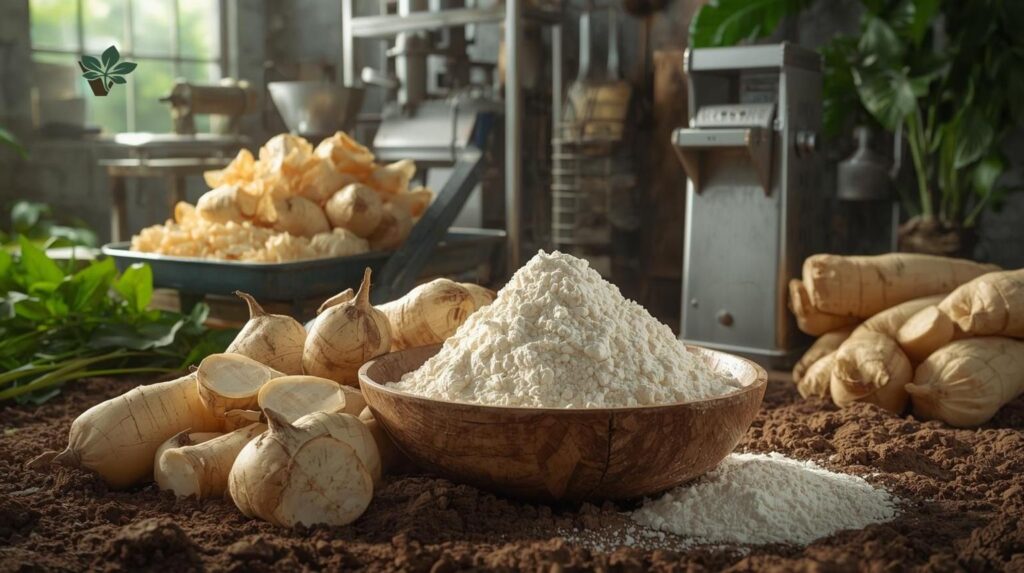
Organic cassava flour is produced by washing, peeling, drying, and finely milling organically cultivated cassava roots. The production process follows organic farming principles that avoid synthetic pesticides, herbicides, and chemical fertilizers while promoting sustainable agricultural practices.
Because the whole root is processed, the flour contains more natural fiber than purified starch products. This gives it a mild flavor, excellent functionality, and broad compatibility with various food formulations.
Many international buyers choose organic cassava flour because it is:
- Naturally gluten-free
- Grain-free
- Nut-free
- Suitable for vegan products
- Free from genetically modified organisms when certified as organic cassava flour non GMO
- Compatible with clean-label food trends
Its neutral taste also allows manufacturers to incorporate it into different recipes without significantly changing flavor profiles.
Organic Cassava Flour vs Tapioca Flour
Although these products originate from the same cassava plant, they differ considerably in composition and application.
| Organic Cassava Flour | Tapioca Flour (Tapioca Starch) |
| Made from the whole cassava root | Extracted only from cassava starch |
| Contains more natural fiber | Primarily starch |
| Mild earthy flavor | Nearly neutral flavor |
| Suitable for baking and gluten-free recipes | Excellent thickening agent |
| Provides better nutritional value | Higher starch concentration |
Many buyers searching for tapioca organic products eventually discover that organic cassava flour better suits bakery, health food, and specialty food manufacturing because it offers greater nutritional value and improved texture.
Understanding these differences helps manufacturers select the right ingredient for their intended applications.
How Organic Cassava Flour Is Produced
Consistent quality begins with responsible farming and careful processing. Every production stage contributes to the final flour’s safety, functionality, and shelf stability.
Organic Farming Process
Organic cultivation starts with healthy cassava varieties grown under sustainable farming systems.
Instead of relying on synthetic agricultural chemicals, farmers typically use:
- Organic compost
- Natural soil enrichment
- Crop rotation
- Biological pest management
- Responsible water management
These farming methods help preserve soil fertility while reducing environmental impact. They also support long-term agricultural sustainability, an increasingly important consideration for international buyers and food manufacturers.
Because global consumers are paying closer attention to ingredient sourcing, cassava organic production has become an attractive option for brands focused on environmental responsibility.
Processing Methods
After harvesting, cassava roots undergo several controlled processing stages:
- Selection of mature roots
- Washing and cleaning
- Peeling
- Slicing
- Controlled drying
- Fine milling
- Sieving
- Packaging under hygienic conditions
Proper drying is especially important because it helps maintain product quality, reduces moisture content, and extends shelf life.
For export markets, reputable manufacturers implement quality control systems that monitor particle size, moisture levels, cleanliness, and packaging integrity throughout production.
Nutritional Benefits
Although cassava flour is primarily valued for its versatility, it also offers several nutritional advantages when incorporated into balanced diets.
Organic cassava flour naturally contains:
- Dietary fiber
- Complex carbohydrates
- Potassium
- Calcium
- Magnesium
- Vitamin C (before processing)
- Small amounts of essential minerals
Because it is naturally gluten-free, it is widely used by manufacturers producing foods for consumers with gluten intolerance or those simply choosing gluten-free lifestyles.
Another advantage is its clean ingredient profile. As consumers increasingly seek recognizable ingredients with minimal processing, organic cassava flour aligns well with modern clean-label product development.
Industrial Applications
The versatility of organic cassava flour makes it suitable for numerous industries beyond traditional baking.
Bakery Products
Bakeries frequently incorporate cassava flour into:
- Gluten-free bread
- Cakes
- Cookies
- Muffins
- Pancakes
- Pizza crusts
It can improve texture while providing a mild taste that blends well with other gluten-free flours.
Gluten-Free Products
Demand for gluten-free foods continues to grow worldwide. Organic cassava flour serves as an excellent base ingredient because it produces a soft texture and performs well in both home baking and industrial manufacturing.
Food producers also combine it with rice flour, almond flour, or potato starch to create customized flour blends.
Vegan Foods
Plant-based food manufacturers appreciate organic cassava flour because it is entirely plant-derived and free from common allergens such as wheat and nuts.
It is frequently used in:
- Plant-based snacks
- Meat alternatives
- Dairy-free baked goods
- Vegan desserts
Food Manufacturing
Large-scale food manufacturers value cassava flour for its processing consistency and functional properties.
Applications include:
- Instant food mixes
- Snack coatings
- Noodle production
- Sauce formulations
- Frozen foods
- Processed food ingredients
Businesses searching online for cassava flour for sale or organic cassava flour bulk often prioritize suppliers capable of maintaining consistent product specifications across multiple shipments. Reliable quality is particularly important for industrial production, where even small variations in ingredient characteristics can affect manufacturing efficiency and final product performance.
Why Indonesia Is a Reliable Supplier
Indonesia has long been recognized as one of the world’s leading producers of cassava, supported by favorable tropical growing conditions, experienced farmers, and an expanding agricultural processing sector.
Several factors contribute to Indonesia’s reputation as a dependable sourcing destination:
- Year-round cassava cultivation
- Extensive agricultural expertise
- Competitive production costs
- Modern processing facilities
- Growing adoption of international quality standards
- Strong export infrastructure
These advantages enable Indonesian suppliers to serve importers, wholesalers, ingredient distributors, and food manufacturers seeking export-quality flour with stable supply capacity.
As global demand for sustainable ingredients continues to rise, Indonesia is well positioned to support businesses looking for reliable sources of organic cassava flour for both specialty and large-scale food production.
Tips for Buying Organic Cassava Flour in Bulk
Purchasing organic cassava flour bulk requires more than comparing prices. International buyers should evaluate suppliers based on product quality, certifications, consistency, and export capabilities.
Before placing a large order, consider asking the supplier about:
- Organic certification and compliance
- Non-GMO documentation
- Quality control procedures
- Moisture specifications
- Packaging options
- Minimum order quantity (MOQ)
- Production capacity
- Export experience
- Available shipping methods
- Lead times and delivery schedules
Working with an experienced food ingredient supplier can help reduce procurement risks while ensuring consistent product quality over the long term.
Why International Buyers Choose EFBA Agro
For international buyers seeking a dependable sourcing partner, EFBA Agro has established itself as an Indonesian exporter specializing in high-quality agricultural commodities for global markets. The company focuses on supplying export-quality organic cassava flour while maintaining consistent product standards across every shipment.
EFBA Agro supports both standard and organic cassava flour bulk orders for importers, wholesalers, ingredient distributors, and food manufacturers. The company implements quality control procedures throughout sourcing, processing, and packaging to help ensure product consistency and compliance with buyer specifications.
Beyond product quality, the exporter provides comprehensive export documentation, competitive international pricing, and coordinated logistics support to simplify international trade. Their experience in serving global B2B customers allows them to build long-term partnerships based on reliable communication, transparent business practices, and dependable supply capacity.
As demand for sustainably produced ingredients continues to grow, EFBA Agro remains committed to connecting international buyers with responsibly sourced Indonesian agricultural products while supporting efficient and professional export operations.
Looking for Indonesian Coffee Products? Coffeenesia is your Answer
Buyers sourcing multiple agricultural commodities from Indonesia may also wish to explore Coffeenesia as an additional export partner.
Their company specializes in supplying premium Indonesian coffee products for international markets, including Green Coffee Beans, Specialty Coffee, Arabica, Robusta, and Cascara. They work with carefully selected producers to provide export-quality coffee suitable for roasters, importers, distributors, and specialty coffee businesses worldwide.
For businesses looking to diversify their sourcing portfolio, Coffeenesia offers an opportunity to source Indonesian coffee products alongside other agricultural commodities through experienced export-focused partners.
Conclusion
As global demand for clean-label, gluten-free, and sustainably produced ingredients continues to expand, organic cassava flour has become an increasingly valuable choice for food manufacturers, ingredient distributors, and international importers. Its versatility, nutritional advantages, and compatibility with modern food trends make it suitable for applications ranging from bakery products to industrial food manufacturing.
Indonesia’s strong agricultural foundation, favorable growing conditions, and expanding export capabilities position the country as a reliable source of high-quality organic cassava flour. By partnering with experienced exporters that prioritize quality control, consistent supply, and international trade expertise, buyers can strengthen their supply chains and confidently meet the evolving needs of global consumers.
Frequently Asked Questions
Is organic cassava flour naturally gluten-free?
Yes. Organic cassava flour is naturally gluten-free because it is made entirely from cassava root rather than wheat or other gluten-containing grains. However, manufacturers should ensure the product is processed in facilities that follow appropriate food safety standards to minimize the risk of cross-contamination.
What is the difference between organic cassava flour and tapioca flour?
Although both come from the cassava plant, they are different products. Organic cassava flour is made from the whole root, preserving more natural fiber and nutrients. Tapioca flour, often referred to as tapioca starch, is extracted only from the starch component of the cassava root, making it more suitable as a thickening agent than a direct flour substitute.
Is organic cassava flour non-GMO?
Cassava is generally considered a non-genetically modified crop. Many suppliers also offer organic cassava flour non GMO with supporting certifications or documentation to meet international buyer requirements. Buyers should always request relevant certificates when sourcing products for regulated markets.