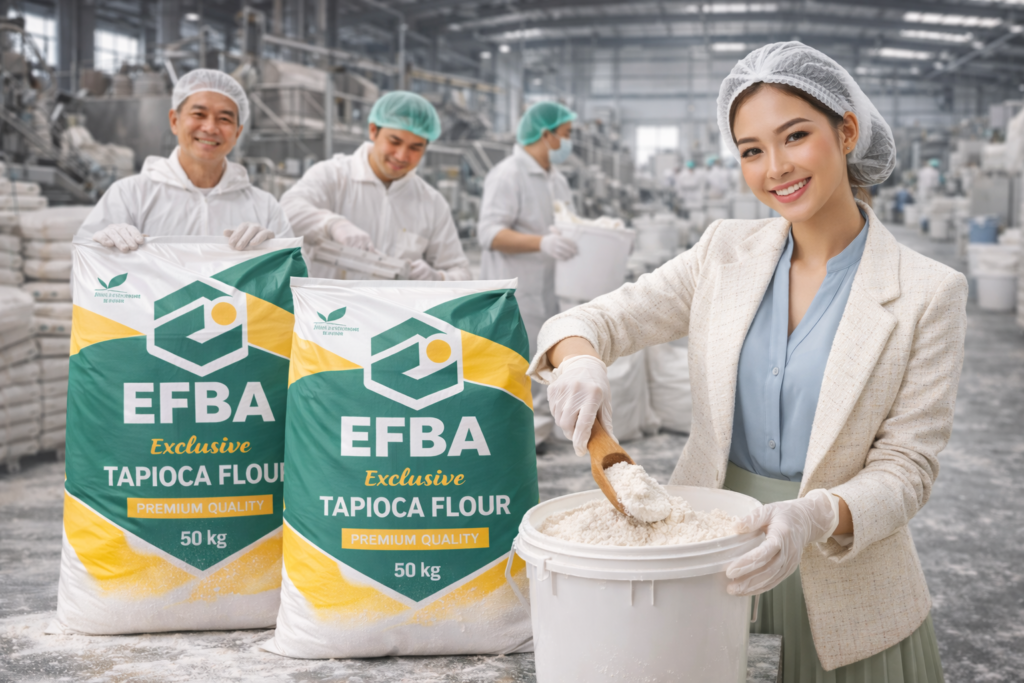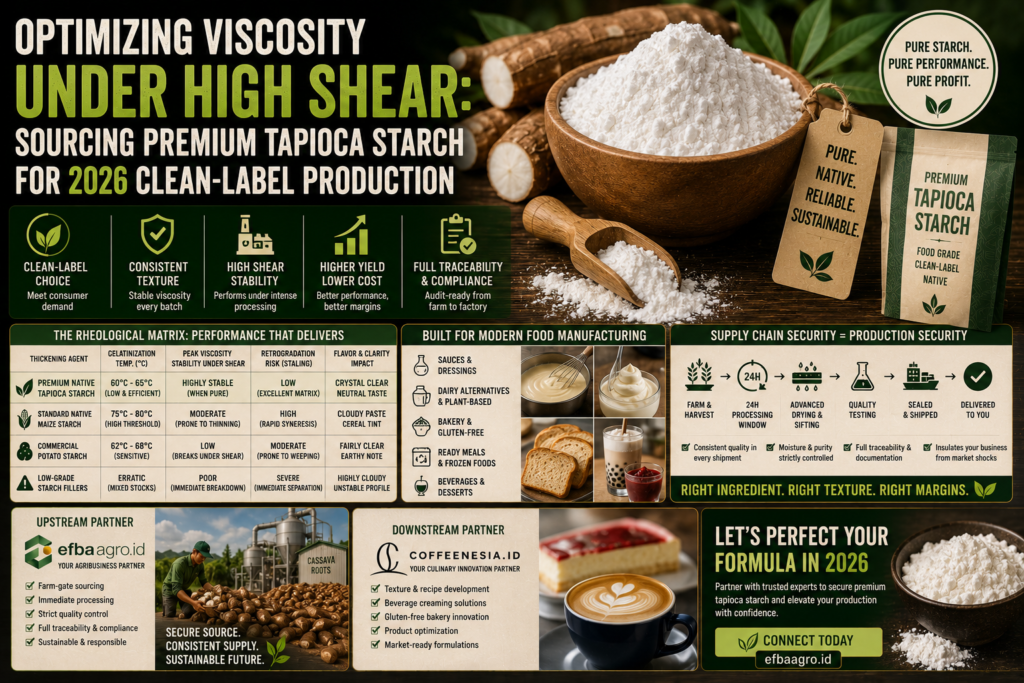
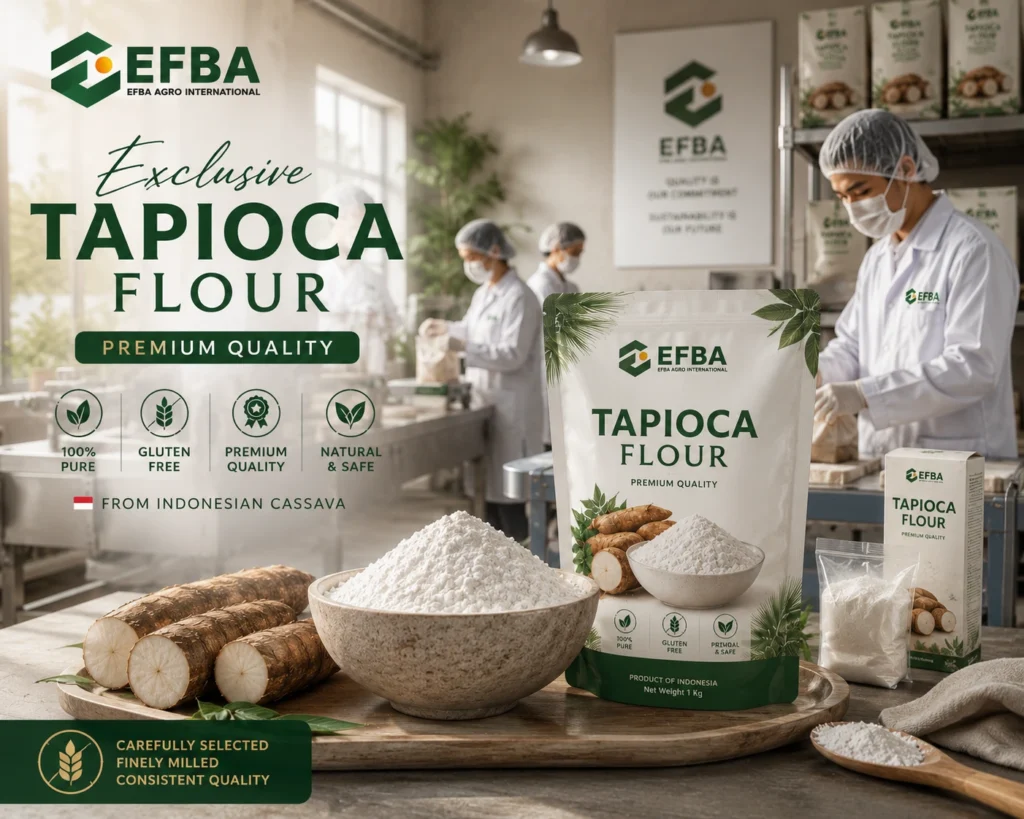
Buy Tapioca Flour products continue gaining worldwide attention because industries actively search for versatile, gluten free, and naturally derived ingredients that deliver reliable functionality across multiple commercial applications. Tapioca flour comes from carefully processed cassava roots and offers excellent thickening ability, stable texture formation, neutral flavor, and impressive adaptability for modern manufacturing systems. Global food producers, beverage companies, bakeries, pharmaceutical manufacturers, and even textile industries consistently use tapioca flour because it supports efficient production while maintaining product quality and formulation stability.
In addition, modern consumers increasingly prefer clean label ingredients, therefore manufacturers continue integrating tapioca flour into both traditional and innovative products. Indonesia also holds an important position in global cassava cultivation because its fertile soil, tropical climate, and agricultural expertise support high quality tapioca production with strong starch content and dependable consistency for industrial requirements.
Understanding Buy Tapioca Flour and Its Agricultural Origin
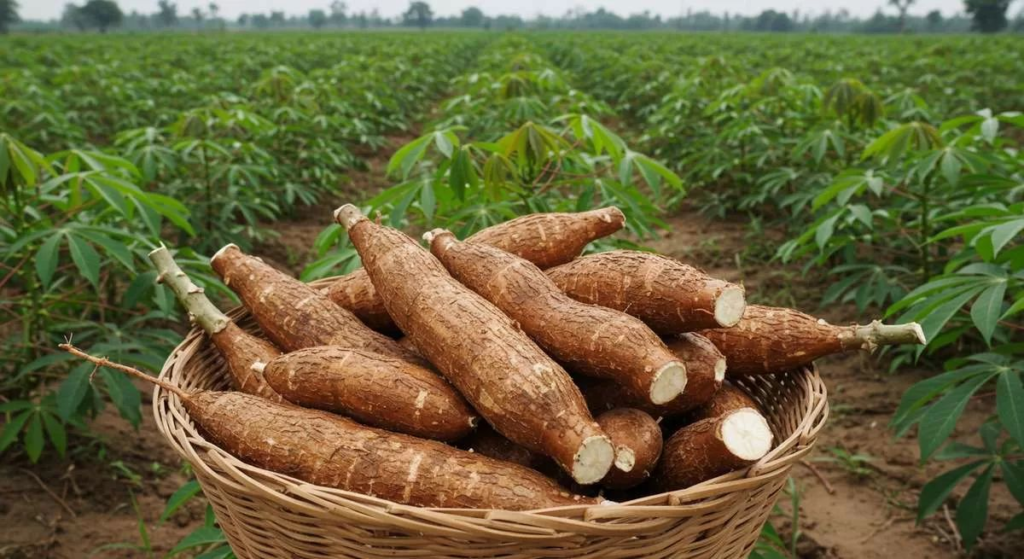
Tapioca flour originates from cassava roots, scientifically known as Manihot esculenta, which grow extensively across tropical regions including Indonesia, Thailand, South America, and several African countries. Farmers harvest mature cassava roots before processors clean, crush, extract, dry, and mill the starch into a fine white powder with smooth texture and neutral aroma. Although many people confuse tapioca flour with cassava flour, both products actually differ because cassava flour uses the entire root while tapioca flour mainly contains purified starch extracted from the root itself. Consequently, tapioca flour delivers lighter consistency, softer texture, and cleaner appearance compared to whole root flour alternatives.
Today, manufacturers actively Buy Tapioca Flour because it performs exceptionally well in industrial formulations that require stability, elasticity, and moisture retention without affecting original taste profiles. Moreover, tapioca flour dissolves easily during processing and creates glossy textures that improve the visual quality of sauces, desserts, bakery fillings, and processed foods. Since the ingredient naturally contains no gluten, industries frequently incorporate it into gluten free products that continue expanding across international markets. According to agricultural research from FAO Official Website, cassava remains one of the world’s most valuable tropical crops because it supports food security, industrial manufacturing, and agricultural sustainability in many developing economies worldwide.
Functional Performance in Food Manufacturing Industries
Modern food industries continuously prioritize ingredients that improve texture consistency, production efficiency, and product shelf stability, therefore manufacturers increasingly Buy Tapioca Flour for commercial food processing applications. Tapioca flour functions effectively as a thickener, stabilizer, binder, and moisture retaining ingredient in soups, sauces, gravies, frozen meals, instant noodles, processed snacks, and ready to eat foods. Furthermore, the starch forms smooth gels during heating processes, allowing manufacturers to create silky textures without introducing overpowering flavors into final formulations. This versatility significantly benefits food companies because they can maintain product identity while simultaneously enhancing mouthfeel and structural consistency.
Food processors also appreciate tapioca flour because it demonstrates strong freeze thaw stability that prevents water separation and texture damage during storage or reheating cycles. As a result, frozen food industries frequently integrate tapioca flour into commercial recipes that require long lasting consistency under varying temperature conditions. Snack manufacturers additionally rely on tapioca starch because it improves expansion characteristics and creates crisp textures in crackers, chips, and coated fried products. Many producers now Buy Tapioca Flour to support clean label product development since modern consumers increasingly reject artificial additives and synthetic stabilizers. Research published through Grand View Research also highlights the growing international demand for natural starch ingredients used in large scale industrial food manufacturing systems worldwide.
Bakery Innovation and Gluten Free Product Development
The global bakery sector continues evolving rapidly because consumers increasingly seek healthier, gluten free, and alternative grain products that still deliver satisfying texture and flavor. Consequently, commercial bakeries consistently Buy Tapioca Flour to improve softness, elasticity, and moisture retention in breads, cookies, pastries, cakes, pancakes, pizza crusts, and dessert products. Tapioca flour contributes remarkable chewiness and flexibility to dough formulations, therefore manufacturers often combine it with rice flour, almond flour, or coconut flour to create balanced gluten free recipes with superior texture performance. Unlike many alternative starches that produce dense or dry baked goods, tapioca flour supports lighter structure and smoother consistency during baking processes.
In addition, bakery industries value tapioca flour because it extends freshness and helps maintain softness over longer storage periods. This characteristic significantly improves product shelf life while increasing overall customer satisfaction in retail markets. Vegan product manufacturers also Buy Tapioca Flour because its binding capability effectively replaces certain animal based ingredients in modern plant based recipes. Furthermore, tapioca flour enhances browning effects and crisp outer layers in baked products without masking natural flavors. Since global demand for gluten free and plant based foods continues expanding each year, industrial bakeries increasingly depend on tapioca flour to support innovation, improve product quality, and satisfy evolving consumer expectations in highly competitive international food markets.
Expanding Beverage and Dessert Applications Worldwide
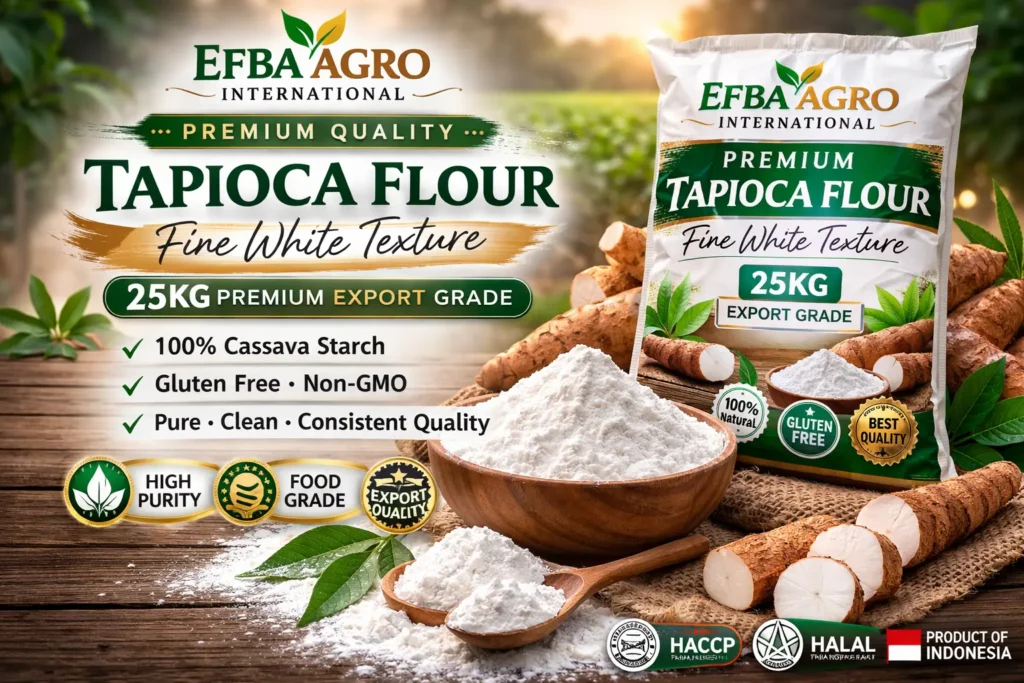
The beverage and dessert industry increasingly depends on starch based ingredients that stabilize texture, improve viscosity, and create visually appealing consistency without interfering with flavor profiles. Therefore, manufacturers actively Buy Tapioca Flour for bubble tea pearls, pudding mixes, jelly desserts, sweet sauces, flavored beverages, dairy alternatives, and frozen desserts. One of the most recognized applications involves bubble tea production because tapioca starch creates the signature chewy pearls that consumers enjoy worldwide. This trend alone has substantially increased international demand for tapioca based ingredients across both Asian and Western markets. Additionally, dessert producers utilize tapioca flour because it creates glossy textures and smooth mouthfeel in creamy products.
Ice cream manufacturers also Buy Tapioca Flour because the starch helps reduce ice crystal formation while improving creaminess and texture stability during long term storage. Beverage companies further appreciate tapioca flour because it maintains suspension consistency in flavored drinks and processed beverages without altering the intended taste balance. Moreover, pudding and custard producers rely on tapioca starch to achieve stable thickness while preserving visual attractiveness and pleasant mouthfeel.
Since the ingredient possesses a naturally neutral flavor, manufacturers can easily incorporate it into premium dessert formulations without disrupting aroma or sweetness profiles. According to nutritional and food trend insights from Harvard T.H. Chan School of Public Health, consumer interest in alternative ingredients and gluten free formulations continues driving innovation across modern food and beverage industries globally.
Nutritional Content and Digestive Advantages
Tapioca flour mainly consists of carbohydrates that provide a quick and accessible energy source for daily consumption and industrial food formulations. Although the ingredient contains relatively low protein and minimal fat, manufacturers still Buy Tapioca Flour because it offers excellent digestibility, mild flavor, and compatibility with specialized dietary products. Furthermore, tapioca flour naturally contains no gluten, making it highly suitable for individuals with gluten sensitivity or celiac related dietary restrictions. This characteristic significantly increases its value across global health focused food markets where consumers continue prioritizing digestive comfort and ingredient transparency. In many cultures, cassava based foods have supported traditional diets for generations because communities appreciate their versatility and reliable energy contribution.
In addition, tapioca flour supports soft texture formation in baby foods, elderly nutrition products, and sensitive digestive formulations. Food companies frequently Buy Tapioca Flour because the ingredient blends smoothly with proteins, fibers, and nutrient rich ingredients without creating overpowering taste or heavy texture. Moreover, its neutral allergen profile allows manufacturers to formulate inclusive products that accommodate wider consumer groups. The flour also works effectively in controlled dietary recipes that require low fat and highly digestible carbohydrate sources. As modern nutrition trends continue emphasizing functional ingredients with broad formulation flexibility, tapioca flour maintains strong relevance within industrial food development. Consequently, industries worldwide increasingly incorporate tapioca starch into innovative commercial products designed for modern health conscious consumers and specialized dietary applications.
Distinctive Characteristics That Support Industrial Versatility
Several unique characteristics make tapioca flour one of the most adaptable starch ingredients available for modern commercial manufacturing systems. Industries consistently Buy Tapioca Flour because it demonstrates excellent water absorption capability, allowing products to maintain moisture balance and texture consistency throughout production and storage processes. Additionally, tapioca flour forms glossy and transparent gels during heating, therefore manufacturers frequently use it in sauces, fillings, desserts, and processed foods that require attractive visual presentation. Its smooth consistency and light texture also help manufacturers create refined formulations without introducing grainy mouthfeel or unwanted heaviness into final products. These properties collectively contribute to tapioca flour’s growing importance across global industrial sectors.
Another major advantage involves its impressive elasticity and chewiness, especially in bakery products, confectionery items, and processed snack manufacturing. Companies actively Buy Tapioca Flour because it withstands high temperature processing while maintaining structural integrity and stable performance under demanding industrial conditions. Furthermore, tapioca flour demonstrates strong freeze thaw stability, which benefits frozen foods and refrigerated products requiring long term consistency.
Since the ingredient carries a naturally neutral flavor profile, manufacturers can incorporate it into diverse recipes without disrupting taste balance or aroma characteristics. The increasing global demand for sustainable, multifunctional, and naturally sourced ingredients further strengthens tapioca flour’s industrial relevance. Consequently, manufacturers across multiple sectors continue expanding their reliance on tapioca starch for both conventional production systems and innovative commercial product development worldwide.
Indonesia’s Growing Importance in Global Tapioca Supply
Indonesia continues strengthening its reputation as one of the world’s most important cassava producing countries because its agricultural conditions strongly support high quality starch production. Fertile soil, tropical weather patterns, abundant rainfall, and experienced farming communities enable Indonesian cassava cultivation to achieve strong starch yield and reliable crop consistency throughout the year. Consequently, international buyers increasingly Buy Tapioca Flour sourced from Indonesia because they value dependable quality, smooth starch characteristics, and competitive agricultural supply potential. Farmers across many Indonesian regions actively cultivate cassava as a strategic commodity that supports local economies, industrial partnerships, and expanding export opportunities in global agricultural markets.
Modern manufacturers also Buy Tapioca Flour from Indonesia because producers continue improving processing standards, hygiene systems, and product consistency to satisfy international commercial requirements. Furthermore, Indonesian tapioca products demonstrate strong adaptability for food manufacturing, bakery production, beverage applications, pharmaceutical development, and non food industrial sectors. As sustainability and renewable agricultural sourcing become increasingly important worldwide, Indonesian cassava cultivation offers long term potential for environmentally responsible starch production systems. Businesses searching for versatile starch ingredients now recognize Indonesian tapioca flour as a dependable solution for industrial innovation and large scale commercial manufacturing.
Industrial Applications Beyond the Food Sector
Although many consumers associate tapioca flour primarily with culinary products, numerous non food industries actively depend on its functional properties for large scale manufacturing operations. Paper manufacturers frequently Buy Tapioca Flour because the starch improves paper strength, surface smoothness, ink absorption, and printing performance during industrial processing. Textile industries also utilize tapioca starch in yarn treatment and fabric finishing because it enhances durability while maintaining flexible texture throughout production stages.
Moreover, adhesive manufacturers increasingly replace synthetic chemical binders with starch based alternatives since modern industries continue prioritizing renewable and environmentally responsible raw materials. Companies that Buy Tapioca Flour for industrial adhesives also benefit from stable viscosity, reliable binding capability, and cleaner formulation performance compared to certain synthetic materials. These expanding applications demonstrate how businesses continue to Buy Tapioca Flour for innovation far beyond traditional food manufacturing environments.
Pharmaceutical companies additionally Buy Tapioca Flour because it functions effectively as a binding and disintegrating agent in tablet production systems. Its neutral composition and safe formulation characteristics allow pharmaceutical manufacturers to maintain stable product quality without introducing strong odors or unwanted reactions into medicinal products.
Furthermore, biodegradable packaging developers now Buy Tapioca Flour as a sustainable alternative to petroleum based materials because governments and industries worldwide continue encouraging eco friendly manufacturing practices. Cosmetic manufacturers also Buy Tapioca Flour derived ingredients for powders and skincare products due to their soft texture and absorbent properties. As sustainability trends continue shaping industrial priorities, more manufacturers consistently Buy Tapioca Flour to support renewable, multifunctional, and naturally sourced commercial production systems with dependable long term processing performance.
Global Demand Trends and Market Expansion
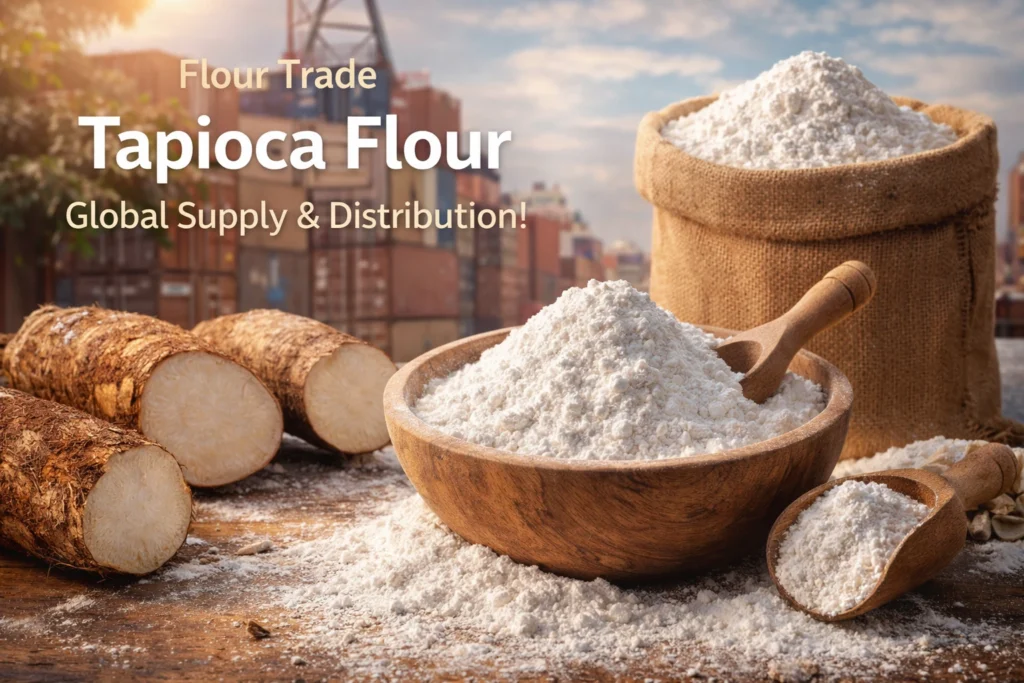
International demand continues rising because industries worldwide increasingly Buy Tapioca Flour to support efficient manufacturing systems while satisfying changing consumer expectations. Food manufacturers actively Buy Tapioca Flour to develop gluten free, clean label, and plant based products that align with modern dietary preferences and global wellness trends.
In addition, growing urban populations and evolving lifestyles have increased demand for convenient processed foods, frozen meals, instant beverages, and ready to eat snacks that frequently require manufacturers to Buy Tapioca Flour for texture stabilization and moisture retention. Beverage brands also Buy Tapioca Flour for bubble tea pearls, flavored drinks, and dessert applications that require smooth consistency and elastic texture performance. These consumption patterns significantly contribute to expanding international tapioca markets across Asia, Europe, North America, and the Middle East.
Industrial innovation also encourages manufacturers to Buy Tapioca Flour because the ingredient adapts effectively to both traditional production methods and advanced commercial formulations. Bakery industries continuously Buy Tapioca Flour to improve softness, elasticity, and shelf stability in gluten free product lines designed for modern retail markets.
Furthermore, sustainable manufacturing initiatives motivate companies to Buy Tapioca Flour for biodegradable and renewable starch based materials that reduce dependence on synthetic additives and petroleum derived ingredients. International agricultural organizations additionally recognize cassava as a resilient crop capable of supporting long term food and industrial security in tropical regions. As technology advances and consumer awareness grows, more industries will continue to Buy Tapioca Flour because its versatility, affordability, and multifunctional performance consistently support industrial growth across multiple economic sectors worldwide.
Why Tapioca Flour Remains a Strategic Ingredient for the Future
Modern industries continue facing increasing pressure to create products that balance functionality, sustainability, affordability, and consumer appeal, therefore companies consistently Buy Tapioca Flour to satisfy these evolving commercial expectations. Manufacturers Buy Tapioca Flour because it improves texture, supports moisture retention, enhances stability, and preserves flavor neutrality across diverse industrial formulations.
Moreover, businesses that Buy Tapioca Flour benefit from its gluten free composition and renewable agricultural origin, both of which strengthen its relevance in future focused industries that prioritize health conscious production and environmentally responsible sourcing. Unlike many synthetic additives, companies Buy Tapioca Flour to achieve naturally derived functionality that aligns with global demand for clean label and minimally processed ingredients. This combination of industrial performance and natural sourcing gives businesses even stronger reasons to Buy Tapioca Flour for long term manufacturing strategies.
Manufacturers worldwide increasingly Buy Tapioca Flour because the ingredient supports innovation across food processing, bakery production, beverages, pharmaceuticals, textiles, biodegradable packaging, and numerous other commercial sectors. Additionally, cassava cultivation continues expanding in tropical countries where agricultural conditions naturally support sustainable starch production with dependable yield potential, encouraging more global buyers to Buy Tapioca Flour from reliable producing regions.
Indonesia particularly strengthens its position in global tapioca supply because its farming expertise, favorable climate, and growing processing capabilities contribute to consistent product quality for international markets that continuously Buy Tapioca Flour for industrial development. As industries continue adapting to changing regulations, sustainability goals, and consumer preferences, global demand to Buy Tapioca Flour will likely increase even further. Its adaptability, efficiency, affordability, and broad application potential ensure that manufacturers will continue to Buy Tapioca Flour to support industrial progress, sustainable innovation, and commercial product development for many years ahead.
Long Term Value for Global Buyers
Tapioca flour offers long term value due to its combination of functionality, availability, and shelf stability. With proper storage, it remains usable for up to 24 months, which reduces waste and supports efficient inventory management. Buyers who consistently buy tapioca flour benefit from predictable quality and reduced risk in supply chains.
Moreover, cassava cultivation continues to expand, ensuring a steady and sustainable supply of raw materials. This stability supports global trade and allows businesses to plan production with confidence. In addition, the versatility of tapioca flour means it can serve multiple purposes within a single operation, reducing the need for additional ingredients. As a result, companies that choose to buy tapioca flour gain both economic and operational advantages in the long term.
Direct consultation and pricing, feel free to contact us via this WhatsApp and discuss your Tapioca Flour requirements with our team.
EFBA Agro International: A Global Supplier Built on Quality, Integrity, and Long-Term Collaboration

EFBA Agro International has grown into one of Indonesia’s most trusted agricultural exporters, serving food manufacturers, distributors, and industrial companies around the world. Built on a foundation of transparency, quality assurance, and long-term collaboration, EFBA Agro delivers a portfolio of commodities designed to support the evolving needs of global supply chains. For buyers who rely on Tapioca Flour as a core ingredient in food production or industrial applications, EFBA Agro provides not only consistent quality but also the confidence that every shipment meets international standards. Our sourcing network spans multiple agricultural regions in Indonesia, giving buyers access to stable production, clear documentation, and export-ready packaging that aligns with global procurement systems.
What sets EFBA Agro apart is our commitment to direct collaboration with processors, mills, and farmer groups. This approach ensures full visibility over raw material selection, processing techniques, and quality control benchmarks. While Tapioca Flour remains one of our strongest export categories, we are equally dedicated to developing a diversified commodity line that supports a wider range of industries. Our export operations emphasize reliability, communication, and proactive updates, helping buyers plan ahead and avoid supply disruptions. EFBA Agro positions itself not just as a vendor but as a strategic partner capable of supporting long-term procurement planning across multiple product categories.
EFBA Agro’s Full Commodity Line: From Tapioca Flour to Premium Spices and Natural Ingredients
Beyond our focus on Tapioca Flour, EFBA Agro International offers a comprehensive selection of agricultural commodities tailored for global markets. Each product category is handled with strict quality protocols, ensuring consistency from the point of harvest to export clearance.
Our portfolio includes Arenga Palm Sugar (both molded and granulated), Candlenut (shelled and polished grades), Black Pepper, Vanilla Beans, Nutmeg, Cloves, Cocoa derivatives, and specialty natural ingredients sourced from Indonesia’s most productive agricultural zones. These commodities support various industries from food and beverages to natural cosmetics, wellness, and industrial formulations.
The diversity of this portfolio allows buyers to consolidate multiple SKUs under one trusted supplier, significantly reducing logistical complexity and administrative workload. Companies that purchase Tapioca Flour often expand their partnership with EFBA Agro once they recognize the operational advantages of working with a supplier capable of managing large-volume shipments, export documentation, container optimization, and consistent communication.
Our website’s commodities section highlights each product’s specifications, applications, and export readiness, ensuring that buyers can evaluate options clearly before placing an order. By offering a multi-commodity ecosystem with modern, export-focused processes, EFBA Agro reinforces its commitment to supporting long-term growth for global manufacturers and distributors.
FAQ Buy Tapioca Flour
1. Can tapioca flour replace wheat flour completely?
Tapioca flour can replace part of wheat flour in recipes, especially for gluten free products. However, manufacturers usually combine it with other flours to achieve balanced texture and structure.
2. Why do beverage industries use Buy Tapioca Flour products?
Many beverage companies use Buy Tapioca Flour because it improves viscosity, texture stability, and chewiness in products like bubble tea pearls and dessert drinks.
3. Does tapioca flour contain common allergens?
Tapioca flour naturally contains no gluten, nuts, or soy. Therefore, industries often use it in allergen friendly formulations for broader consumer markets.
4. How should tapioca flour be stored properly?
Manufacturers should store tapioca flour in dry, cool environments away from moisture and direct sunlight to maintain freshness and starch quality.
5. Which industries commonly Buy Tapioca Flour today?
Food processing, bakery, pharmaceutical, textile, paper, adhesive, and biodegradable packaging industries actively Buy Tapioca Flour for commercial applications worldwide.
6. What makes Indonesian tapioca flour competitive globally?
Indonesian tapioca flour offers stable starch quality, strong agricultural supply, and reliable processing standards that support international industrial requirements.