Beyond the Sweetness: The Clean-Label Revolution
Let’s be entirely real about the global food and beverage industry in 2026. Everyday consumers are moving away from heavily processed ingredients faster than ever before, and simple white sugar is no longer the easy default. Today, healthier choices have shifted from being a niche trend for organic boutiques into an absolute requirement for multinational brands looking to maintain market share. Because of this massive cultural shift, the global demand for premium natural sugar alternatives has completely transformed how corporate procurement teams look at product formulation.
However, transitioning to a clean-label framework is not as simple as swapping out one ingredient on your spec sheet. The commercial wellness space in 2026 is highly competitive, and many purchasing teams are falling straight into the trap of buying from unverified middleman brokers. These spot-market traders promise incredibly low upfront prices but frequently supply batches that are stretched out with refined corn syrups or cheap cane fillers. When you buy unverified ingredients, you aren’t just risking your brand’s clean reputation; you are introducing unpredictable ingredient variations straight into your automated manufacturing systems.
That is why finding a verified supplier who can provide genuine natural sugar alternatives is no longer just an R&D experiment; it is a core financial strategy. When your raw materials fluctuate in purity, your production line experiences expensive adjustments, unexpected clumping, and massive recipe failures. Securing a steady supply of natural sugar alternatives with a partner who controls the upstream infrastructure is the best shield against this operational chaos. By moving away from transactional spot-market buying, global food brands can insulate their Cost of Goods Sold (COGS) and protect their corporate gross margins from the volatile agricultural shifts we are seeing across the equator this year.
Technical & Functional Profiles: Deconstructing the Sweetener Matrix
When we look at the physics of manufacturing, swapping out refined white sugar for premium natural sugar alternatives is not as simple as a one-to-one swap. Unrefined plant saps and organic sweeteners are living, complex matrices that carry their own natural minerals, invert sugars, and moisture profiles. If your industrial production lines are calibrated for the dry, uniform predictability of refined sucrose, introducing raw plant elements requires an analytical look at how these ingredients behave under mechanical stress.
For example, when food scientists evaluate a wide array of natural sweeteners, they quickly discover that botanical origin changes everything from caramelization temperatures to mixing speeds. If your team is used to working with high-intensity synthetic options, shifting back to organic natural sugar substitutes requires adjusting your automated cooking times and moisture barriers. Every production line handles heat differently, meaning your choice of natural sugar alternatives must match your machinery’s specific setup. If you ignore how a sweetener handles thermal degradation, you run the risk of scorching massive batches inside your industrial mixers.
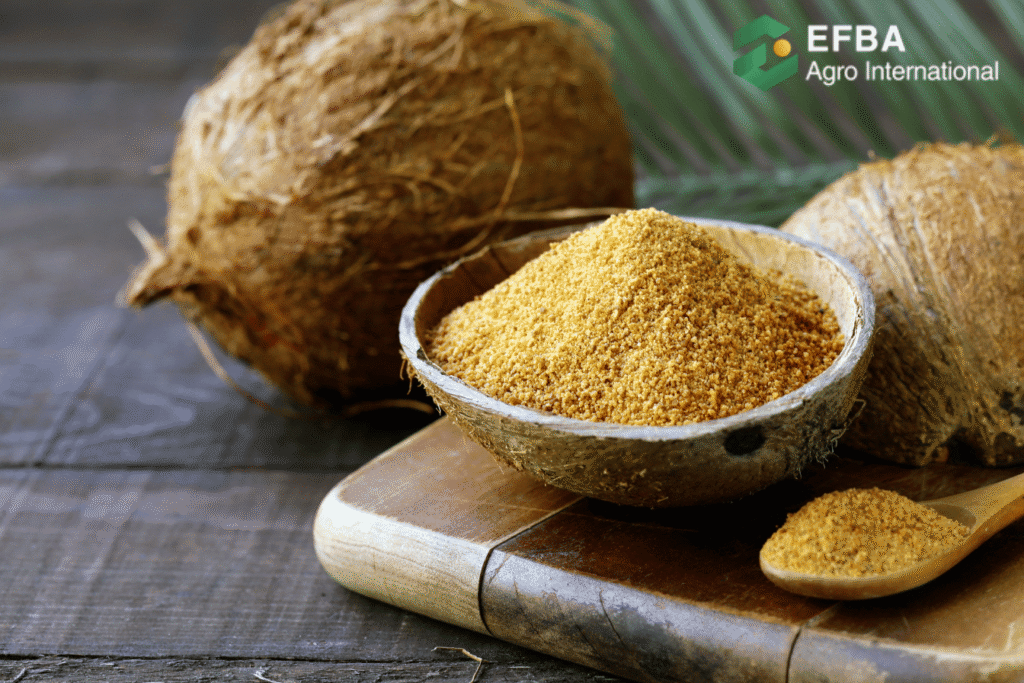
Finding the best natural sweetener for your specific factory setup means balancing consumer taste preferences with pure structural performance. Unrefined coconut sugar, for instance, has a much lower melting point than standard white sugar, which can completely alter how your premium bakery or chocolate products set during cooling cycles. On the other hand, arenga palm sugar brings a deep, smoky flavor profile that works wonderfully in savory sauces and healthy drinks but requires strict humidity controls during storage. We believe that evaluating natural sugar alternatives based on their physical performance under pressure is what separates profitable brands from struggling ones.
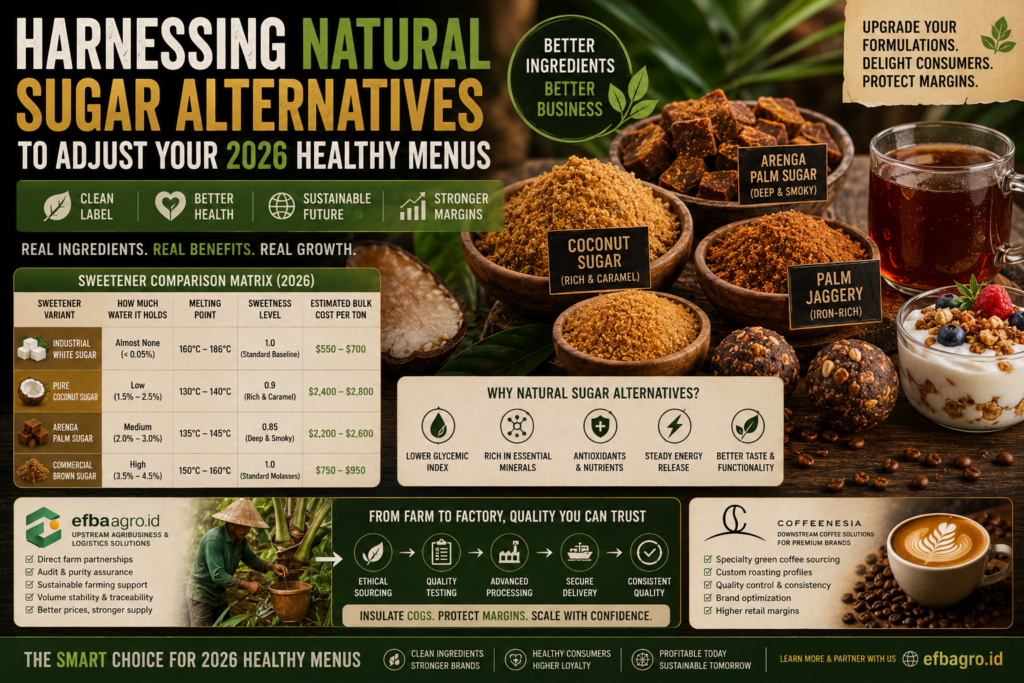
To give your engineering and purchasing teams a clear view of these ingredients, we have mapped out the real-world operational variables of bulk options in 2026:
| Sweetener Variant | How Much Water it Holds | Melting Point | Sweetness Level | Estimated Bulk Cost per Ton |
| Industrial White Sugar | Almost None (< 0.05%) | 160°C – 186°C | 1.0 (Standard Baseline) | $550 – $700 |
| Pure Coconut Sugar | Low (1.5% – 2.5%) | 130°C – 140°C | 0.9 (Rich & Caramel) | $2,400 – $2,800 |
| Arenga Palm Sugar | Medium (2.0% – 3.0%) | 135°C – 145°C | 0.85 (Deep & Smoky) | $2,200 – $2,600 |
| Commercial Brown Sugar | High (3.5% – 4.5%) | 150°C – 160°C | 1.0 (Standard Molasses) | $750 – $950 |
Crafting the Perfect Blend: Specialty Applications and Lifestyle Nutrition
Beyond big industrial factories, the premium beverage and wellness sectors are discovering unique ways to market these natural sugar alternatives. The modern lifestyle demographic is moving away from artificial chemical additives, creating a massive wave of innovation in the global cafe space. Cafe chain founders and drink developers are actively hunting for the right natural sweeteners for coffee to replace high-fructose syrups and synthetic packets. Using a premium, unrefined plant sugar offers a fantastic, healthy sweetener for coffee because its natural molasses notes blend beautifully with the fruit and chocolate undertones of high-quality beans.
At the same time, the global market for functional wellness foods requires ingredients that support steady energy levels without causing extreme metabolic spikes. By using plant-based natural sugar alternatives, your development team can tap into specific dietary lifestyles without sacrificing the mouthfeel or structure of the final product. Unrefined palm saps release energy slowly into the bloodstream, making them an excellent, functional natural sweetener for diabetics and health-conscious consumers who refuse to consume empty calories.
By targeting these growing consumer demographics with high-purity natural sugar alternatives, your brand can easily justify a higher retail price point. This premium positioning allows your company to absorb the higher initial asset costs of organic sourcing while expanding your total market share in the wellness space.
Upstream-Downstream Synergy: Securing Commodity Pipelines via Efba Group

At Efba Group, we know that building a reliable product line requires moving away from the volatile spot market and investing in traceable natural sugar alternatives. When your agricultural sourcing is disorganized, your brand ends up suffering from unexpected price hikes, supply chain delays, and frustrating ingredient variations. To execute a successful clean-label transition, your upstream farm-gate security must align perfectly with your downstream manufacturing capabilities.
Our platform serves as your dedicated corporate supply chain engine:
efbagro.id (Upstream Procurement & Agribusiness Logistics): Serves as your corporate strategic partner for commodity viability auditing, purity testing, and the execution of institutional procurement pipelines to guarantee volume stability. By working directly with local agricultural communities and using automated processing systems, we ensure that your raw materials are protected from regional climate disruptions and quality drops. You can explore our audited sourcing solutions by visiting our platform at efbaagro.id.
By partnering with us, you gain direct access to audited farm networks, giving you a safe pipeline of natural sugar alternatives that bypasses broker inflation. This close connection protects your working capital and guarantees that every single metric ton delivered to your factory doors matches your strict quality parameters.
Driving Retail Margins: Premium Specialty Coffee Solutions via Coffeenesia

While securing a clean-label sweetener pipeline is vital for modern product formulations, many global food networks require a multi-commodity strategy to maximize retail margins. If your organization looks to secure premium specialty coffees alongside your raw agricultural inputs, coffeenesia.id serves as the dedicated downstream solution for sensory engineering and brand optimization.
From calibrating complex industrial roasting profiles to executing strict quality control matrices, they transform high-grade green beans into market-ready, high-margin revenue streams that protect your brand equity. Separating your core agricultural inputs from specialized downstream cafe products allows you to keep both pipelines running smoothly without diluting your main manufacturing focus.
Conclusion & CTA
Ultimately, winning the consumer landscape in 2026 comes down to how well you integrate high-quality natural sugar alternatives into your core supply chain. Relying on short-term discounts from unverified brokers is an open invitation for quality failures, machine downtime, and margin erosion. True manufacturing stability belongs to organizations that take control of their upstream risk and build transparent, long-term partnerships.
Take Control of Your 2026 Ingredient Quality. Protect your brand equity and stabilize your corporate COGS before seasonal weather shifts impact the global markets. We invite your Procurement Directors, Food Technologists, and Corporate Executives to schedule an exclusive Agro-Commodity Supply Chain Audit & Sweetener Contract Optimization session with our senior analyst team by visiting efbaagro.id today.
FAQ (5 Strategic Financial & Sweetener Supply Chain Questions)
How do different natural sugar alternatives handle high-temperature industrial baking?
When you use unrefined options like arenga palm sugar or coconut sugar in high-heat industrial ovens, they brown much faster than standard white sugar because of their natural mineral and invert sugar content. Your R&D team will need to lower your baking temperatures slightly and extend the cooking time to prevent the crust from scorching while the center of the product finishes setting.
What are the direct shelf-life implications when food brands swap out refined cane sugar for unrefined alternatives?
Unrefined alternatives naturally hold onto moisture much better than refined white sugar, which helps keep baked goods and chewy snacks softer for a longer period. However, because they are naturally hygroscopic, your packaging team must use high-quality moisture barrier films to prevent the product from absorbing humidity on store shelves and getting sticky.
How can multinational purchasing teams hedge against seasonal harvest drops in Southeast Asia?
The most effective way to protect your business is to sign asset-backed forward contracts with an integrated supplier instead of buying on the chaotic spot market. Locking in your volume commitments months before the heavy monsoon seasons arrive forces the upstream processor to reserve your inventory, keeping your prices stable when market supplies get tight.