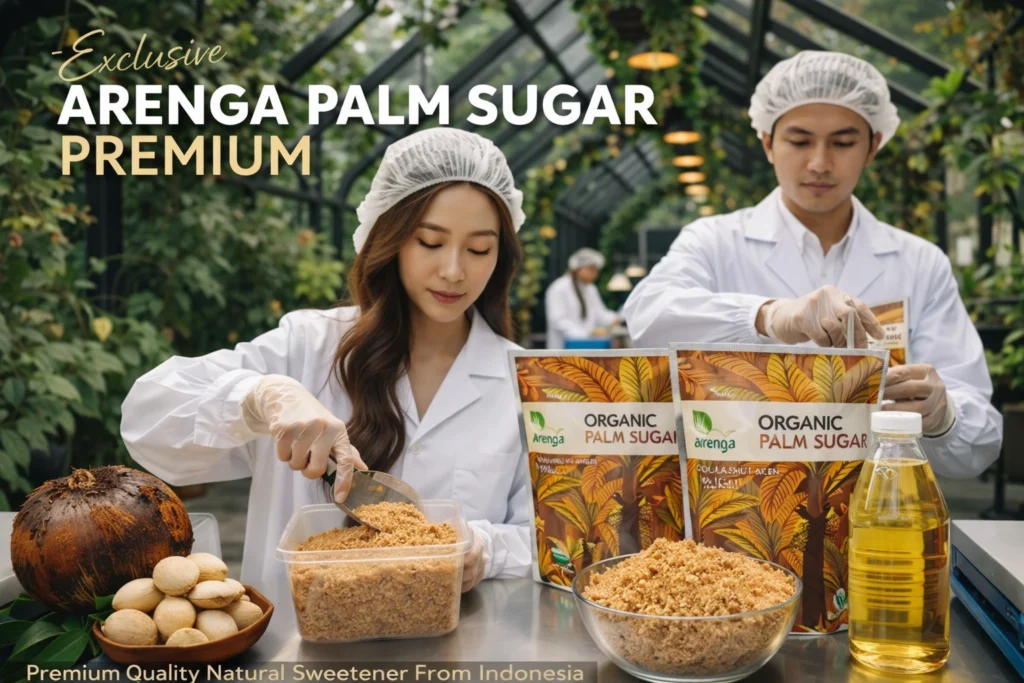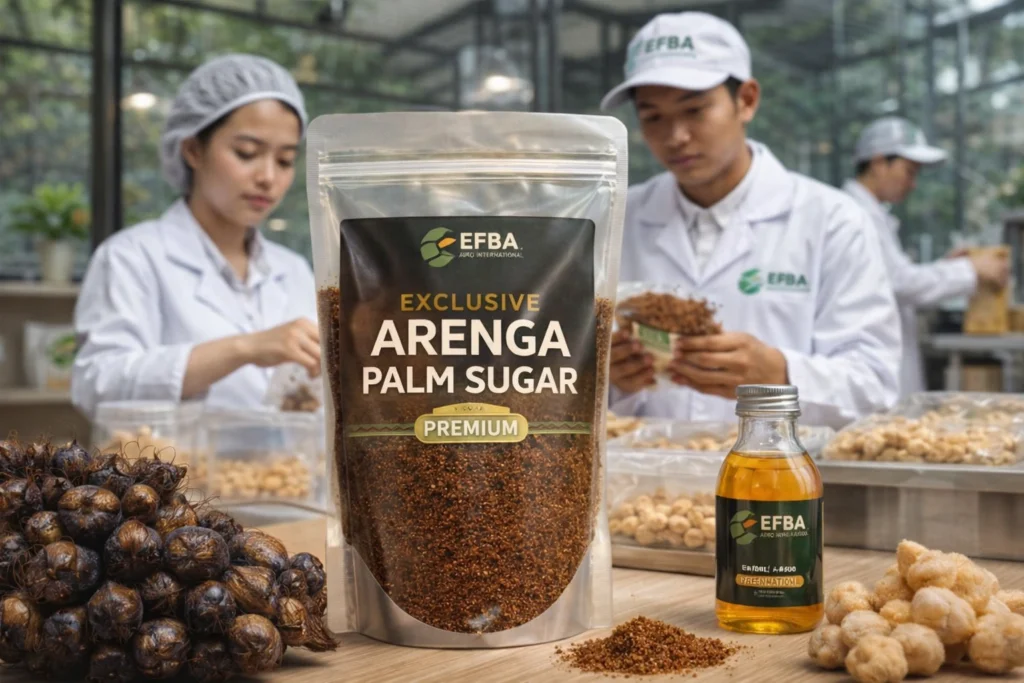
The Need for Precision in Bulk Crystals
Let’s be entirely real about the global food and beverage industry in 2026. The corporate procurement landscape has completely transformed, and standard ingredient sourcing is no longer just about finding the lowest line-item quote on an unverified vendor sheet. With modern consumers actively reading ingredient labels and rejecting highly processed chemical additives, clean-label transparency has shifted from a premium marketing bonus to a baseline survival requirement.
For purchasing directors, food technologists, and brand founders, the ultimate challenge is balancing this massive consumer shift toward wholesome ingredients while protecting corporate manufacturing margins from extreme global volatility. This urgent need for technical clarity is why premium granulated palm sugar has taken center stage for companies looking to update their high-volume formulations this year.
However, moving toward healthier, unrefined ingredients comes with a unique set of operational risks that can easily wreck a high-speed production line if not properly managed. Because the global demand for clean sweeteners is skyrocketing, the marketplace has become flooded with transactional middleman brokers and unverified regional consolidators. These intermediaries love to wave highly attractive upfront spot prices in front of purchasing teams, but they routinely hide severe variances in botanical purity and crystal structure. When you buy from unverified networks, you are highly likely to receive batches that are secretly stretched with cheap, refined white cane sugar or filled with irregular, sticky clumps.
Ultimately, chasing a low upfront quote without checking the upstream processing infrastructure leads to massive financial penalties downstream on the factory floor. Poorly granulated crystals quickly melt unevenly, cause massive clumping inside automated feeding systems, and induce severe physical variations that ruin your product’s flavor profile. Locking in a secure granulated palm sugar infrastructure pipeline with a partner who maintains direct control over farm-gate sap collection and upstream processing centers is the ultimate defensive play to protect your corporate budgets. By establishing a direct, transparent supply chain, global brands can insulate their production lines from climate-driven sap yield drops and regulatory customs delays, ensuring absolute purity from the tree to the final retail package.
Technical & Sourcing Dynamics: Breaking Down the Granulated Matrix
When your R&D and food engineering teams look at substituting traditional refined sweeteners with natural alternatives, they must realize that unrefined crystals behave as unique physical assets. Industrial white sucrose is processed to be as chemically stripped and dry as possible, making it highly predictable but completely devoid of nutritional value or natural character. When we deconstruct the physical properties of granulated palm sugar, we see a complex, living matrix filled with natural invert sugars, organic acids, and essential trace minerals like potassium and iron. If your automated production lines are calibrated purely for the dry uniformity of white sugar, introducing a natural granular sweetener requires an analytical look at how these elements handle mechanical heat and shear forces.
The biggest technical challenge on a high-speed manufacturing line is crystal size uniformity, which is usually measured by precise mesh screening grids. If you swap your baseline sweetener for granulated palm sugar without checking the crystal grid uniformity, you run the risk of experiencing major clumping issues inside your storage silos and automated hoppers. For instance, comparing how different unrefined options melt reveals that pure granulated coconut sugar carries a specific concentration of natural fructose that makes it dissolve wonderfully in hot liquids, though it has a lower melting threshold than standard white sucrose.
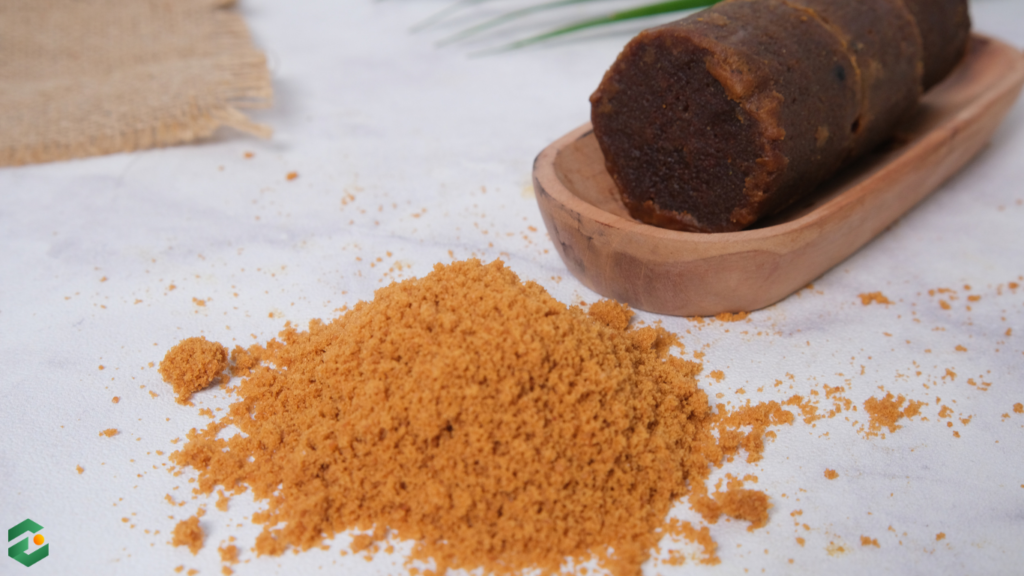
True palm-based granules, sourced from sugar palms or palmyra trees, carry a slightly higher melting point and a deeper, smoky caramel aroma that can enhance the sensory identity of premium sauces, healthy beverages, and functional snacks.
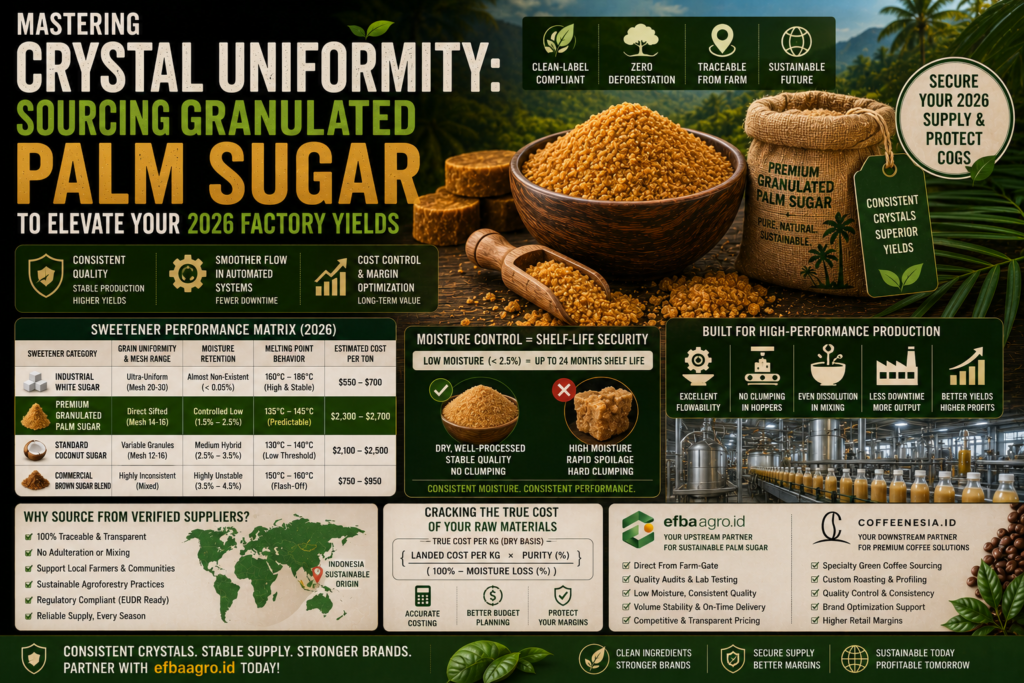
To give your engineering and purchasing teams a clear, data-driven view of how these options compare to standard commercial ingredients, we have mapped out the real-world operational variables of bulk sweeteners in 2026:
| Sweetener Category | Grain Uniformity & Mesh Range | Moisture Retention Profile | Melting Point Behavior | Estimated Bulk Cost per Ton |
| Industrial White Sugar | Ultra-Uniform (Mesh 20-30) | Non-Hygroscopic (< 0.05%) | 160°C – 186°C (High & Stable) | $550 – $700 |
| Premium Granulated Palm Sugar | Direct Sifted (Mesh 14-16) | Controlled Low (1.5% – 2.5%) | 135°C – 145°C (Predictable) | $2,300 – $2,700 |
| Standard Coconut Sugar | Variable Granules (Mesh 12-16) | Medium Hybrid (2.5% – 3.5%) | 130°C – 140°C (Low Threshold) | $2,100 – $2,500 |
| Commercial Brown Sugar Blend | Highly Inconsistent (Mixed) | Highly Unstable (3.5% – 4.5%) | 150°C – 160°C (Flash-Off) | $750 – $950 |
Choosing a premium grain grid over low-grade commercial alternatives means your factory benefits from absolute mechanical predictability. When you secure a high-quality grade of granulated palm sugar, you are investing in an ingredient that flows perfectly through automated pneumatic conveyor systems without creating sticky residue build-ups, keeping your factory maintenance costs low and your recipe yields high.
Strategic Volume Planning and Shelf-Life Security
For purchasing managers looking ahead, securing steady contract volumes of granulated palm sugar from primary producers is the only reliable way to neutralize sudden market spikes caused by seasonal monsoon variations. Waiting around to buy your clean-label raw materials on the highly volatile spot market is a direct threat to your corporate gross margins. Setting up structured forward contracts allows your company to secure structural priority at the primary processing mills, which guarantees that your orders are loaded and shipped on time even when regional crops are temporarily constrained by bad weather.
A primary advantage of structured long-term volume commitments is the optimization of your manufacturing budgets through fixed, multi-quarter pricing models. However, volume planning is completely meaningless if your financial analysts fail to track how moisture consistency directly impacts your ingredient yields during long long-distance ocean transit. This relationship is critical because the initial moisture level of the crystals dictates the long-term palm sugar shelf life. When unrefined sugar is processed with a controlled moisture level below two and a half percent, it can easily maintain its quality and flavor for up to two full years without clumping or degrading, whereas wet, poorly processed alternatives will rapidly spoil and cake into hard blocks inside your warehouse.
When evaluating granulated palm sugar for multi-quarter distribution, your financial analysts can easily calculate the true dry-matter yield using a straightforward, plain-text approach. To find the true cost of your active ingredients, your team must take the total landed cost per container, multiply it by the verified purity percentage of the sugar, and then divide that figure by the remaining percentage of dry product after subtracting out the expected moisture loss from the shipping journey. Doing this ensures that your corporate capital buys active sweetening solids rather than trapped water weight that simply evaporates as steam during your factory’s mixing and cooking phases.
Establishing a direct wholesale supply pipeline also provides massive operational benefits by letting you bypass the expensive markups of third-party distributors and brokers who add zero value to your logistics trail. This direct connection gives your company full visibility over the botanical purity of your sugar, which is a major advantage when compared to commercial distribution networks that sell cheap, pre-blended mixtures. These low-grade options are often combinations of brown sugar sweepings that are stretched with molasses, completely disqualifying your final product from clean-label organic certifications and breaking trust with your customers.
Upstream Synergy: Partnering with Efba Agro

Building a highly profitable food brand or scaling up a commercial facility requires a flawless, transparent alignment between upstream agricultural procurement and downstream factory execution. When these two pieces of your business are disconnected, your company ends up suffering from unexpected lead-time delays, volatile purity metrics, and frustrating margin dilution. Transitioning your brand to a healthier sweetener framework requires a supportive, asset-backed partner who can eliminate the friction from your logistics pipeline.
At Efba Group, we solve this exact supply chain challenge through our fully integrated agribusiness logistics platform at efbaagro.id. Operating as your strategic upstream partner, we manage everything from farm-gate quality audits to comprehensive laboratory purity testing and institutional volume distributions. By taking direct control of the processing warehouses and implementing strict moisture-isolation systems, we ensure that your granulated palm sugar pipeline remains completely safe from broker inflation and market disruptions.
Partnering with a tech-backed agribusiness engine ensures that your raw materials are secured at optimized values right from the source, while your manufacturing teams benefit from flawless quality control and predictable delivery schedules. We take the middleman chaos out of the equation so your brand can focus on what it does best: creating exceptional products that win the marketplace.
Driving Retail Margins: Premium Specialty Coffee Solutions via Coffeenesia

While securing a clean-label sweetener pipeline is an excellent way to upgrade your food and beverage formulations, many global networks require a multi-commodity strategy to maximize their retail floor margins. If your organization wants to secure premium specialty coffees alongside your raw agricultural inputs, coffeenesia.id serves as our dedicated downstream solution for sensory engineering, custom roasting profiles, and brand optimization.
From evaluating high-grade green coffee beans to managing strict international quality control matrices, they transform premium crops into market-ready retail assets that protect your brand equity. Separating your core agricultural bulk inputs from specialized downstream cafe products allows you to keep both supply pipelines running smoothly without diluting your main manufacturing focus or straining your corporate working capital.
Conclusion & CTA
Scale-driven manufacturing success in 2026 belongs exclusively to organizations that master upstream risk mitigation and bypass transactional spot-market brokers. Relying on short-term discounts from unverified middleman networks is a direct threat to your corporate gross margins and your brand’s clean-label promises. Choosing a trusted, integrated supplier of granulated palm sugar is the only sustainable choice to guarantee clean-label purity, zero-deforestation compliance, and absolute volume stability over the long haul.
Take Control of Your 2026 Ingredient Quality. Protect your brand equity and stabilize your corporate costs before seasonal weather shifts impact the upcoming harvest cycles. We invite your Procurement Directors, Food Technologists, and Corporate Executives to connect with our consulting group at efbaagro.id today to analyze your current recipe costs and build a healthier, more reliable supply chain for the future.
FAQ (5 Strategic Financial & Sweetener Supply Chain Questions)
Why does granulated palm sugar perform differently than refined white sugar in industrial ovens?
Pure granulated palm sugar naturally contains complex invert sugars and organic minerals that lower its caramelization threshold. This means it will naturally develop a rich golden color and a deep caramel aroma at lower temperatures, which is excellent for creating an authentic look in premium snacks, though your production team may need to adjust cooking times slightly.
What are the direct factory storage implications for maximizing palm sugar shelf life?
Because unrefined granulated sweeteners are naturally hygroscopic, they easily absorb moisture directly from the surrounding air. To maximize your palm sugar shelf life and prevent severe caking inside your automated equipment, you must utilize high-quality moisture-barrier liners and store the bulk material in dry, climate-controlled environments before processing.
How can forward contracts stabilize granulated palm sugar costs during monsoon seasons?
Signing a long-term forward contract allows your purchasing team to lock in a guaranteed volume allocation and a fixed base price well before the heavy tropical rainy seasons begin. This forces the processing mill to prioritize your orders over spot-market buyers, keeping your production schedules predictable even when local sap collection is limited by bad weather.