Finding a reliable tapioca flour supplier Indonesia requires more than comparing wholesale prices or selecting the lowest-cost cassava starch. International food manufacturers, ingredient distributors, and wholesale importers need consistent product specifications, food-grade quality, suitable bulk packaging, and dependable export arrangements to support uninterrupted production.
A tapioca flour supplier Indonesia connects international buyers with cassava-based starch for applications such as noodles, sauces, snacks, bakery products, and processed foods. Before purchasing commercial quantities, buyers should evaluate starch content, moisture, whiteness, viscosity, microbiological quality, packaging, supply availability, and destination-market import requirements.
Furthermore, choosing the right supplier helps food manufacturers reduce procurement uncertainty and maintain consistent ingredient performance. Buyers should therefore assess technical documentation, product samples, commercial terms, and logistics capabilities rather than relying exclusively on quoted prices.
EFBA Agro International supplies food-grade tapioca flour as part of its Indonesian agricultural commodity portfolio. Through its published product information, the company provides reference specifications, bulk packaging options, minimum order quantities, and export logistics details to help international buyers prepare their purchasing requirements.
What Is Tapioca Flour and How Does an Indonesian Supplier Provide It?
Tapioca flour, commonly called tapioca starch, is a refined starch extracted from cassava roots (Manihot esculenta). Manufacturers generally produce tapioca starch through a sequence of washing, starch extraction, purification, dewatering, and drying.
Unlike whole cassava flour, refined tapioca starch primarily provides starch functionality rather than the broader composition of the cassava root. Its relatively neutral flavor, thickening properties, binding capability, and texture-forming characteristics make it useful in various food manufacturing applications.
For international procurement, buyers searching for a tapioca flour supplier Indonesia should distinguish between native tapioca starch, ordinary cassava flour, and Modified Cassava Flour (MOCAF).
Although these ingredients originate from cassava, their processing methods, compositions, and functional properties differ. Consequently, food manufacturers should not assume they can substitute one ingredient for another without formulation testing.
Moreover, commercial sourcing requires clear agreement on product identity, grade, quality specifications, and intended applications. This helps buyers select the correct cassava ingredient before requesting bulk quotations.
Why Do Global Food Manufacturers Choose a Tapioca Flour Supplier Indonesia?
Indonesia has agricultural resources and processing activities that support commercial sourcing of cassava-based ingredients. As a result, international food manufacturers can explore tapioca starch and related cassava derivatives for different production requirements.
Working with a tapioca flour supplier Indonesia may provide access to bulk ingredient sourcing, technical product information, packaging arrangements, and export coordination.
However, buyers should evaluate each supplier individually because agricultural origin alone does not guarantee product purity, consistent functionality, or reliable delivery.
Therefore, procurement teams should compare available product specifications, sourcing capacity, food-safety documentation, and commercial conditions before making purchasing commitments.
1. Versatile Applications in Food Manufacturing
Tapioca starch offers useful functional properties for various food processing applications. Depending on the formulation and processing conditions, manufacturers may use it as a thickener, binder, or texture modifier.
For example, sauce manufacturers may prioritize viscosity development, product consistency, and processing stability. Meanwhile, snack manufacturers may focus on texture, expansion characteristics, and finished-product quality.
Additionally, bakery and processed-food manufacturers may evaluate tapioca starch for its contribution to texture, binding, and formulation performance.
When evaluating a tapioca flour supplier Indonesia, buyers should clearly explain their intended food application. This allows procurement teams to compare the supplier’s technical specifications against actual manufacturing requirements.
Nevertheless, the most suitable starch grade depends on the recipe, production process, and desired finished-product characteristics. Therefore, manufacturers should conduct sample testing before approving commercial volumes.
2. Access to Cassava-Based Ingredient Options
Indonesian agricultural suppliers may offer different cassava derivatives, including tapioca starch, cassava flour, and Modified Cassava Flour (MOCAF).
Although these products share the same agricultural origin, they provide different functional characteristics. Consequently, buyers should evaluate ingredient suitability based on processing requirements and product performance.
EFBA Agro International publishes both food-grade tapioca flour and Modified Cassava Flour among its agricultural commodities.
For example, a food manufacturer requiring refined starch functionality may prioritize tapioca starch. In contrast, another manufacturer developing flour-based formulations may evaluate MOCAF according to its product objectives.
Therefore, selecting a tapioca flour supplier Indonesia should involve reviewing the exact ingredient being offered rather than treating all cassava-derived products as interchangeable.
Furthermore, buyers should request relevant technical specifications and representative samples to confirm compatibility with their intended applications.
3. Bulk Procurement and Packaging Flexibility
International food manufacturers often require ingredients in commercial quantities significantly larger than standard retail packaging.
Therefore, procurement planning should address bag size, packaging material, storage protection, container loading, shipment schedules, and warehouse handling.
A tapioca flour supplier Indonesia may offer different bulk packaging arrangements depending on product availability and commercial requirements.
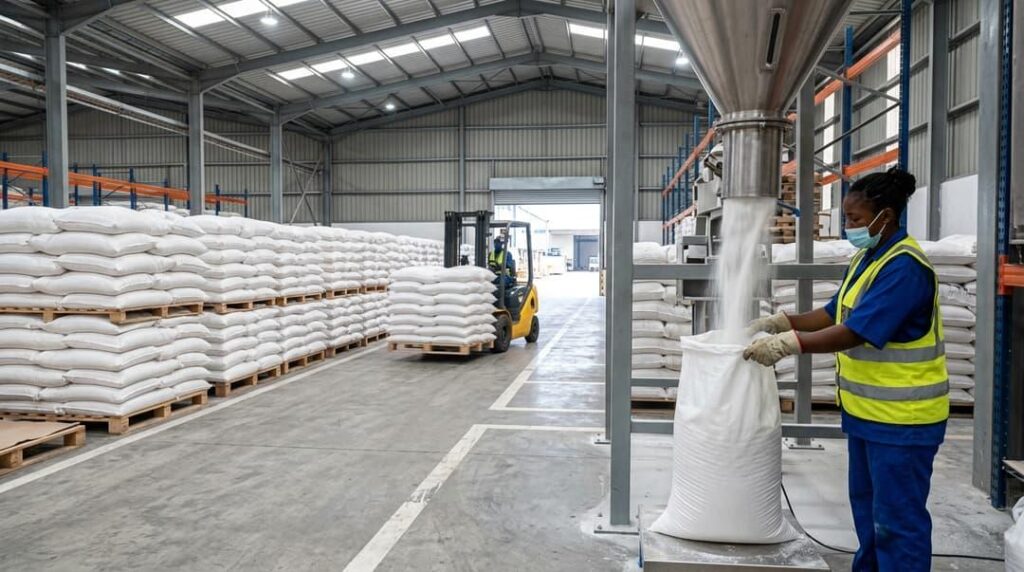
EFBA Agro’s published tapioca flour offering includes 25 kg and 50 kg sacks, with jumbo packaging available upon request.
These options can help international buyers evaluate warehouse handling, purchasing quantities, and container utilization before requesting a quotation.
Moreover, packaging selection should consider moisture protection, transportation conditions, and the buyer’s production workflow.
Consequently, food manufacturers should confirm actual packaging availability, minimum order quantities, and shipping arrangements before finalizing their purchase agreements.
7 Factors to Check Before Choosing a Tapioca Flour Supplier Indonesia
Selecting a reliable tapioca flour supplier Indonesia requires technical, commercial, and logistical evaluation. International buyers should review whether the supplier can meet their ingredient specifications, food-safety requirements, purchasing quantities, and delivery expectations.
Furthermore, supplier qualification should involve measurable criteria rather than relying only on marketing descriptions or competitive pricing.
The following seven factors provide a practical checklist for food manufacturers, ingredient distributors, and wholesale importers seeking tapioca starch from Indonesia.
1. Starch Content and Product Purity
Starch content is one of the primary specifications buyers should examine when purchasing food-grade tapioca flour.
This parameter helps describe the ingredient’s composition. However, actual manufacturing performance also depends on its physical properties, processing characteristics, and functional behavior.
Therefore, buyers should request the supplier’s stated starch-content specification along with the applicable testing method.
When comparing offers from a tapioca flour supplier Indonesia, procurement teams should also confirm whether the product is native tapioca starch or a modified starch.
This distinction matters because starch modification can significantly change viscosity, processing behavior, and performance within food formulations.
Furthermore, manufacturers should evaluate representative samples against their own ingredient acceptance criteria before approving larger orders.
2. Moisture Content and Storage Stability
Moisture content plays an important role in maintaining tapioca flour quality during warehouse storage and international transportation.
Inappropriate moisture conditions may increase the risk of deterioration, particularly when packaging or storage environments expose the ingredient to excessive humidity.
For this reason, buyers should confirm the acceptable moisture range, measurement method, packaging protection, and expected shipping duration.
A tapioca flour supplier Indonesia should provide applicable moisture specifications and clarify the arrangements for protecting product quality during storage and shipment.
Additionally, procurement teams should consider warehouse conditions, container cleanliness, and transportation handling practices.
Even when a product initially meets its moisture specification, unsuitable shipment conditions can still affect its quality.
Therefore, international buyers should evaluate storage and transportation arrangements alongside the initial laboratory results.
3. Whiteness, Appearance, and Odor
Food manufacturers often require tapioca flour with consistent appearance and neutral sensory characteristics.
Important assessment criteria may include whiteness, visible impurities, unusual odors, powder uniformity, and other physical properties relevant to the intended food application.
For example, certain manufacturers may prioritize consistent starch color when producing foods with specific visual requirements.
However, a visually white powder does not automatically demonstrate food safety, purity, or compliance with all technical specifications.
Consequently, buyers evaluating a tapioca flour supplier Indonesia should combine visual inspection with appropriate analytical testing and supporting documentation.
Furthermore, procurement agreements should identify the applicable appearance and sensory acceptance criteria where these characteristics influence finished-product quality.
4. Viscosity and Functional Performance
Viscosity is an important functional characteristic for tapioca starch used in sauces, processed foods, and other applications that require thickening or texture development.
However, viscosity results depend on the testing method, starch concentration, temperature profile, processing conditions, and laboratory equipment.
Therefore, buyers should not compare reported viscosity values without first confirming the measurement procedures.
When sourcing from a tapioca flour supplier Indonesia, manufacturers should request relevant functional specifications and discuss the testing methods used to evaluate product performance.
For example, a sauce manufacturer may assess thickening behavior under its actual heating conditions. Meanwhile, a snack producer may evaluate the starch’s contribution to texture and finished-product characteristics.
Additionally, manufacturers should conduct representative sample trials using their intended recipe and production process.
This approach helps buyers verify ingredient suitability before making a commercial purchasing commitment.
5. Food Safety and Quality Documentation
Food safety documentation plays an important role in international ingredient procurement.
Before selecting a tapioca flour supplier Indonesia, buyers should request relevant product specifications, lot identification information, microbiological requirements, contaminant information, and other documents applicable to their destination market.
Supporting documents may include a Certificate of Analysis (CoA), technical data sheet, and relevant food-safety certifications when available.
However, buyers should not assume that every supplier holds all international certifications or that a certificate automatically covers the specific product being purchased.
Instead, procurement teams should verify the certificate’s scope, validity, issuing organization, and relevance to the intended transaction.
Furthermore, buyers should confirm applicable testing requirements and quality acceptance criteria before commercial approval.
By reviewing these documents carefully, manufacturers can strengthen supplier qualification and reduce uncertainty about ingredient compliance.
6. Packaging, MOQ, and Export Logistics
Packaging and logistics arrangements directly influence the commercial feasibility of importing tapioca flour from Indonesia.
Therefore, buyers should confirm packaging weight, bag materials, liner requirements, minimum order quantity, container loading arrangements, shipment ports, and preferred Incoterms.
A professional tapioca flour supplier Indonesia should communicate available packaging options and relevant export arrangements clearly during quotation discussions.
In addition, buyers should evaluate supply lead times, inspection responsibilities, delivery commitments, and transportation conditions.
For example, a competitive product quotation may result in higher total procurement costs when freight, handling, insurance, customs, and warehousing expenses are taken into account.
Consequently, international manufacturers should compare supplier offers using consistent commercial terms.
Moreover, buyers should remember that published loading capacities or packaging options remain indicative until the supplier confirms the specific order.
7. Supplier Communication and Long-Term Consistency
Long-term ingredient sourcing requires more than completing an initial shipment.
International buyers need clear communication, consistent product specifications, realistic supply planning, and transparent procedures for addressing quality concerns.
Therefore, selecting a tapioca flour supplier Indonesia should include evaluating how the company responds to technical inquiries, sample approval requirements, delivery changes, and repeat-order planning.
For example, suppliers should clarify how they handle differences between approved reference samples and subsequent shipment lots.
Additionally, both parties should agree on acceptable quality ranges, documentation requirements, inspection responsibilities, and procedures for managing product deviations.
A structured purchasing relationship can help reduce misunderstandings and support more predictable ingredient supply.
Ultimately, working with a reliable tapioca flour supplier Indonesia requires a combination of technical verification, clear commercial agreements, and ongoing supplier performance evaluation.
EFBA Agro Tapioca Flour: Published Technical Specifications
As a tapioca flour supplier Indonesia, EFBA Agro International publishes food-grade tapioca flour specifications for international food manufacturers, importers, wholesalers, and ingredient distributors. The company’s product information provides technical reference parameters that buyers can review before requesting commercial quotations.
Furthermore, these specifications help procurement teams evaluate starch quality, functional characteristics, and potential suitability for various food manufacturing applications. However, buyers should still confirm actual product availability and lot-specific quality information before making purchasing commitments.
The following table summarizes EFBA Agro’s published tapioca flour specifications.
| Quality Parameter | Published EFBA Agro Specification |
|---|---|
| Appearance | Fine, pure white powder |
| Starch content | Minimum 85% |
| Moisture content | Maximum 13% |
| Ash content | Maximum 0.2% |
| pH | 5.0–7.0 |
| Whiteness | Minimum 92% |
| Viscosity | Minimum 700 Brabender Units |
| Crude fiber | Maximum 0.2% |
| SO₂ content | Maximum 30 ppm |
Source: EFBA Agro – Tapioca Flour (Food Grade).
These figures represent published reference specifications rather than independent laboratory results for every available shipment lot. Therefore, international buyers should request relevant Certificates of Analysis (CoA), testing methods, lot identification, and confirmation of current supply availability.
Additionally, buyers should clarify the analytical methods used to measure viscosity and whiteness. For example, viscosity results may vary depending on starch concentration, temperature profile, measurement equipment, and laboratory procedures.
Consequently, working with a tapioca flour supplier Indonesia requires agreement on both numerical specifications and the corresponding testing conditions.
This approach helps manufacturers compare laboratory results more consistently and establish clearer acceptance criteria before approving commercial quantities.
What Are the Main Food Applications of Indonesian Tapioca Flour?
Tapioca starch supports various food manufacturing processes because of its thickening, binding, and texture-forming properties. Nevertheless, manufacturers must evaluate each ingredient according to the intended formulation and processing conditions.
When sourcing from a tapioca flour supplier Indonesia, international buyers should explain their intended food applications before requesting samples or confirming product specifications.
Furthermore, the same tapioca starch grade may perform differently in sauces, noodles, snacks, bakery products, and confectionery. Therefore, manufacturers should conduct product-development trials using their actual recipes and processing conditions.
1. Noodles and Processed Food Products
Tapioca starch can contribute to texture, binding, and product structure in suitable noodle and processed-food formulations. Its performance depends on starch concentration, processing temperature, recipe composition, and interactions with other ingredients.
For example, noodle manufacturers may evaluate elasticity, cooking performance, texture, and moisture retention when introducing tapioca starch into their formulations.
In addition, processed-food manufacturers may assess how the ingredient influences finished-product structure and consistency.
When evaluating an Indonesian tapioca flour supplier, buyers should request representative samples and compare their performance against existing ingredients.
Consequently, production trials can help manufacturers determine whether the offered starch meets their technical requirements before purchasing larger quantities.
2. Sauces, Soups, and Thickening Systems
Tapioca starch develops viscosity under appropriate heating and processing conditions. Therefore, food manufacturers may use it in sauces, soups, gravies, and other products that require controlled thickening.
However, native tapioca starch may respond differently under extended heating, high shear, acidic conditions, or other demanding processing environments.
For this reason, manufacturers should evaluate whether native starch provides sufficient functionality or whether their formulation requires a specifically modified starch.
A tapioca flour supplier Indonesia can provide available technical specifications for buyers to assess during initial supplier qualification.
Nevertheless, buyers should conduct their own viscosity and processing trials before approving a commercial ingredient.
3. Snacks, Crackers, and Bakery Products
Tapioca starch can contribute to texture development and binding in snacks, crackers, and selected bakery products. Depending on the formulation, it may also influence product expansion, crispness, and finished-product consistency.
Furthermore, manufacturers may evaluate tapioca starch in recipes that do not intentionally contain gluten-based ingredients.
However, cassava origin alone does not guarantee that a finished food qualifies for gluten-free labeling.
Manufacturers must also consider other ingredients, cross-contact controls, production conditions, and applicable destination-market regulations.
Therefore, buyers sourcing from a tapioca flour supplier Indonesia should confirm the required ingredient specifications and any relevant allergen or gluten-related documentation.
Additionally, product trials should evaluate the complete formulation rather than assuming that tapioca starch will perform identically across different recipes.
4. Confectionery and Other Food Applications
Tapioca starch may support binding, texture development, and gel formation in selected confectionery and processed-food applications.
However, the final product characteristics depend on the formula, processing method, and interactions between ingredients.
For instance, manufacturers may need to evaluate firmness, elasticity, stability, sensory characteristics, and processing behavior before approving a particular starch grade.
Moreover, buyers should communicate these requirements when discussing product suitability with a tapioca flour supplier Indonesia.
Ultimately, the most suitable tapioca flour is not necessarily the ingredient with the highest advertised starch content. Instead, manufacturers should prioritize consistent performance, relevant technical specifications, and compatibility with their production processes.
Tapioca Flour vs. Cassava Flour vs. MOCAF: What Is the Difference?
International food manufacturers should understand the differences between tapioca starch, ordinary cassava flour, and Modified Cassava Flour (MOCAF) before selecting cassava-based ingredients.
Although all three products originate from cassava, their manufacturing processes and composition can produce different functional characteristics.
Consequently, buyers should not assume that these ingredients are interchangeable across food formulations.
| Product | Main Characteristics | Typical Purchasing Consideration |
|---|---|---|
| Tapioca flour / starch | Refined starch extracted from cassava | Thickening, binding, viscosity, and texture |
| Cassava flour | Flour produced from processed cassava root | Flour composition, particle size, flavor, and water absorption |
| Modified Cassava Flour (MOCAF) | Cassava flour processed through fermentation | Flour functionality, sensory profile, and recipe performance |
Tapioca starch generally provides a more appropriate starting point when manufacturers primarily require refined starch functionality. In contrast, MOCAF may offer different formulation possibilities for businesses developing alternative cassava-based flour products.
Furthermore, ordinary cassava flour contains a broader range of cassava root components than refined tapioca starch.
EFBA Agro International also publishes a MOCAF product offering alongside its food-grade tapioca flour portfolio.
Therefore, buyers exploring a tapioca flour supplier Indonesia can compare available cassava derivatives according to their intended manufacturing requirements.
However, each ingredient should undergo separate product-development trials and supplier qualification before receiving commercial approval.
With this approach, international manufacturers can select ingredients based on functionality rather than agricultural origin alone.
Official References: Food Safety and Tapioca Quality Standards
International ingredient procurement requires careful consideration of food-safety regulations, technical specifications, and appropriate quality standards.
Therefore, buyers evaluating a tapioca flour supplier Indonesia should review relevant international references while also confirming the legal requirements of their destination markets.
The Food and Agriculture Organization (FAO) describes cassava starch as a product that manufacturers obtain through the extraction and separation of starch granules from cassava roots.
Its technical materials explain how preparation, purification, water removal, and finishing influence the characteristics of the resulting starch.
Furthermore, FAO discusses quality characteristics such as appearance, moisture, ash, odor, and viscosity in cassava starch evaluation.
These technical considerations demonstrate why international buyers should assess multiple quality parameters rather than relying exclusively on starch-content claims.
Meanwhile, the Codex Alimentarius Commission maintains international food standards and guidance concerning food safety, hygiene, contaminants, and labeling.
However, buyers must identify which standards apply to their specific ingredients. For example, whole cassava flour and refined tapioca starch may fall under different product classifications and technical requirements.
Consequently, procurement teams should verify product identity before applying any particular specification or regulatory reference.
Relevant official sources include:
- FAO – Cassava Flour and Starch Processing
- FAO – Quality Specifications for Cassava Flours and Starches
- Codex Alimentarius – International Food Standards
- Codex – General Standard for Contaminants and Toxins in Food and Feed
For international procurement, legally applicable destination-market regulations take priority.
Accordingly, buyers should confirm contaminant limits, labeling requirements, product classification, food-safety obligations, and import documentation with qualified regulatory or customs specialists.
Furthermore, a tapioca flour supplier Indonesia and its buyer should establish clear technical acceptance criteria before confirming the purchase agreement.
This approach helps both parties understand their responsibilities while supporting more consistent ingredient procurement.
Official Export Data: Indonesia’s Agricultural Trade Position
Indonesia participates in international agricultural commodity trade, including the commercial supply of cassava-based ingredients.
For importers researching a tapioca flour supplier Indonesia, official trade statistics can provide useful economic context. However, national export values do not automatically demonstrate the capabilities or commercial performance of individual suppliers.
Statistics Indonesia (BPS) published its Indonesia Foreign Trade Statistics Exports 2025 report on August 10, 2026.
According to the publication, Indonesia’s total merchandise export value reached approximately US$282.51 billion in 2025, representing an increase of 5.99% compared with 2024.
The publication uses customs export declarations and other official records, with commodity classifications based on the Harmonized System 2022.
Furthermore, the report provides information about export commodities, destination markets, loading ports, and other international trade categories.
Official source: BPS – Indonesia Foreign Trade Statistics Exports 2025.
Nevertheless, these figures represent Indonesia’s overall merchandise exports. They do not specifically measure tapioca flour exports or EFBA Agro International’s shipment volumes, revenue, or market share.
Therefore, buyers seeking detailed tapioca trade statistics should review the relevant Harmonized System classification and destination-country customs data.
Moreover, international buyers should use national trade statistics as supporting market information rather than a substitute for supplier qualification.
Selecting a tapioca flour supplier Indonesia still requires verifying technical capabilities, product quality, commercial arrangements, and actual supply availability.
EFBA Agro Expertise as a Tapioca Flour Supplier in Indonesia
EFBA Agro International presents its business around Indonesian agricultural commodity sourcing, processing coordination, and wholesale export services.
As a tapioca flour supplier Indonesia, EFBA Agro publishes food-grade tapioca flour information for international manufacturers, ingredient distributors, wholesalers, and importers.
Furthermore, the company’s agricultural commodity portfolio includes Modified Cassava Flour (MOCAF), Gayo Arabica coffee, cascara, candlenut, palm products, and other agricultural ingredients.
For tapioca flour procurement, EFBA Agro’s published product specifications provide initial reference information concerning starch content, moisture, ash, whiteness, viscosity, pH, crude fiber, and SO₂ content.
These technical details can help buyers prepare more structured purchasing inquiries and identify the quality parameters they need to verify.
However, international buyers should confirm current product availability, representative sample arrangements, lot-specific test results, packaging options, and commercial terms before placing an order.
Consequently, buyers considering EFBA Agro as their Indonesian tapioca flour supplier should provide clear information about the intended food application, target specifications, purchasing volume, and destination market.
This approach supports more focused procurement discussions and helps both parties evaluate the suitability of the proposed supply arrangement.
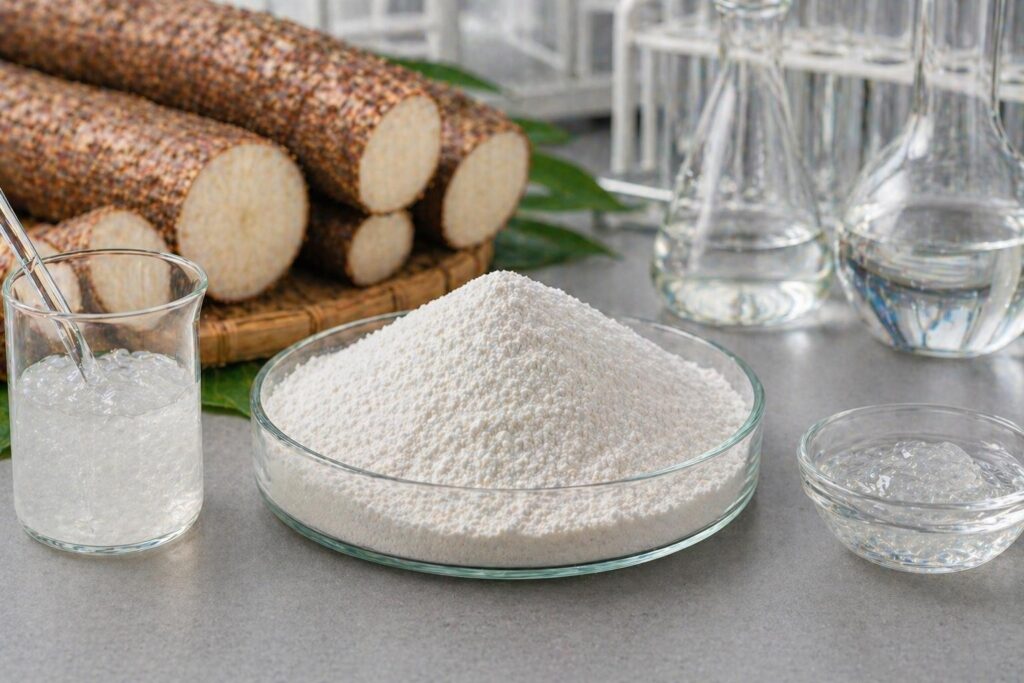
As a tapioca flour supplier Indonesia, EFBA Agro International publishes product information covering food manufacturing applications, measurable quality specifications, bulk packaging, and international purchasing requirements. These details help global manufacturers evaluate product characteristics and prepare technical discussions before confirming wholesale orders.
Furthermore, the company’s sourcing approach emphasizes product matching, supplier coordination, and commercial feasibility. Therefore, international buyers should communicate their required specifications, purchasing quantities, and delivery expectations early in the procurement process.
Tapioca Flour Sourcing and Product Matching
EFBA Agro’s published sourcing process begins by identifying buyer requirements and matching them with available agricultural products and sourcing partners. The process also includes sample provision and evaluation before both parties proceed toward commercial arrangements.
For international buyers evaluating a tapioca flour supplier Indonesia, purchasing discussions should begin with clear technical specifications. Important parameters include starch content, moisture, viscosity, whiteness, packaging requirements, order quantity, and destination market.
Moreover, food manufacturers should explain their intended applications so the supplier can assess whether the proposed ingredient meets their functional requirements.
However, product descriptions alone cannot establish manufacturing suitability. Therefore, buyers should review technical documentation and conduct representative sample testing before committing to bulk quantities.
A practical sourcing framework includes:
Manufacturing Application → Technical Requirements → Product Matching → Sample Evaluation → Commercial Approval
Through this sequence, buyers can evaluate ingredients based on measurable specifications rather than selecting products solely by name or quoted price.
Additionally, the process helps procurement teams compare available products and communicate purchasing expectations more effectively.
Wholesale Packaging and Logistics
Packaging and export arrangements are important considerations when sourcing tapioca flour for international food manufacturing. Therefore, buyers should review packaging specifications, minimum order quantities, container loading, and available shipping terms before requesting a final quotation.
EFBA Agro International publishes the following commercial reference information for food-grade tapioca flour:
| Commercial Parameter | Published Information |
|---|---|
| Standard packaging | 25 kg or 50 kg PP sacks with PE inner lining |
| Optional packaging | 500 kg jumbo bags upon request |
| Indicative container load | Approximately 20 MT per 20-foot FCL |
| Listed loading port | Tanjung Priok, Jakarta |
| Minimum order quantity | One 20-foot FCL |
| Quotation options | FOB or CIF, subject to agreement |
Source: EFBA Agro – Food Grade Tapioca Flour.
These details provide an initial commercial reference for international buyers. However, final packaging configurations, shipment quantities, delivery schedules, prices, and Incoterms require confirmation for each purchase order.
Furthermore, an Indonesian tapioca flour supplier should clarify its responsibilities under the agreed shipping terms. This helps buyers understand which costs and logistics activities remain their responsibility.
For example, importers comparing FOB and CIF offers should evaluate the applicable freight, insurance, and other destination-related charges.
Consequently, buyers can estimate total procurement costs more accurately and reduce misunderstandings during shipment planning.
EFBA Agro within the EFBA Business Ecosystem
EFBA Agro operates within the broader PT EFBA Digital Mulia business ecosystem. Its published services focus on agricultural sourcing, processing coordination, product specifications, and commercial export requirements.
As a tapioca flour supplier Indonesia, EFBA Agro provides information relevant to international buyers seeking cassava-based food ingredients.
Furthermore, the company’s commodity portfolio includes other agricultural products that may be relevant to manufacturers and wholesale distributors.
For buyers interested in coffee-related agricultural products, Coffeenesia provides a separate sourcing resource covering Gayo coffee beans and cascara.
However, these businesses serve different product categories and may operate under different commercial arrangements. Therefore, buyers should contact the relevant company and confirm the contracting legal entity, product specifications, documentation, and transaction terms independently.
With this approach, international procurement teams can explore the broader EFBA business ecosystem while maintaining clear supplier qualification procedures.
How to Import Bulk Tapioca Flour from Indonesia
Importing tapioca starch requires careful planning, particularly when international manufacturers purchase commercial quantities for ongoing production.
Before contacting a tapioca flour supplier Indonesia, buyers should prepare a detailed request for quotation (RFQ). This document should explain the intended food application, technical specifications, target purchasing volume, packaging requirements, and destination market.
Furthermore, a complete sourcing brief helps suppliers evaluate product suitability and prepare more relevant commercial offers.
The following five steps provide a practical guide to importing food-grade tapioca flour from Indonesia.
1. Define the Intended Food Application
Begin by explaining how your manufacturing operation will use tapioca starch. Common applications include noodles, sauces, snacks, bakery products, confectionery, and processed foods.
However, each application may require different functional characteristics. For instance, sauce manufacturers may prioritize thickening performance, while snack producers may focus on texture development and expansion properties.
Therefore, buyers should identify the technical requirements that have the greatest influence on their finished products.
Additionally, clear application information helps the supplier recommend available materials for further evaluation.
2. Submit Your Required Specifications
Next, provide your required starch content, moisture, whiteness, viscosity, packaging, and relevant food-safety parameters.
Moreover, buyers should specify applicable testing methods and quality acceptance criteria. This is especially important when technical results depend on laboratory methods or processing conditions.
When evaluating a tapioca flour supplier Indonesia, international procurement teams should also request information about product grade, lot identification, and available quality documentation.
Consequently, both parties can establish clearer technical expectations before proceeding to sample approval.
3. Request Samples and Documentation
After confirming preliminary specifications, request representative product samples and available technical documentation.
For example, buyers may review a Certificate of Analysis (CoA), technical data sheet, product specifications, and relevant food-safety certificates when available.
However, supplier documentation should not automatically replace independent evaluation when the buyer’s procurement procedure requires testing.
Therefore, manufacturers should examine tapioca starch performance under actual production conditions, particularly when changing suppliers.
Furthermore, sample testing helps buyers assess viscosity, texture development, and compatibility with their intended formulations.
4. Confirm Price, MOQ, and Shipping Terms
Once the buyer approves the technical requirements, both parties can discuss commercial conditions.
These discussions should cover purchase quantity, quotation currency, price basis, packaging, loading port, destination, Incoterms, and payment arrangements.
Additionally, international buyers should distinguish FOB quotations from CIF quotations when comparing shipment costs and responsibilities.
For example, a lower product price may not represent the lowest total landed cost after freight, insurance, customs, and other applicable charges.
Therefore, buyers should request a clear commercial quotation that identifies included and excluded costs.
A professional tapioca flour supplier Indonesia should communicate relevant purchasing conditions and shipment responsibilities before the parties finalize their agreement.
5. Establish Quality and Shipment Acceptance
Before shipment, both parties should confirm the required product specifications, inspection procedures, sampling arrangements, shipment documents, and delivery schedule.
Furthermore, the purchase agreement should establish how the buyer and supplier will manage quality deviations, documentation differences, or delivery issues.
For example, buyers may require pre-shipment verification against agreed acceptance criteria.
Additionally, clear lot identification and inspection records can help procurement teams assess quality consistency upon arrival.
The recommended procurement process follows:
Buyer Requirements → Technical Specifications → Sample Approval → Quotation → Commercial Agreement → Quality Verification → Export Documentation → Shipment
This framework helps buyers and their Indonesian tapioca flour supplier establish repeatable procedures for international procurement.
Moreover, buyers should evaluate supplier performance after each delivery and update purchasing requirements when necessary.
FAQ About Tapioca Flour Suppliers in Indonesia
1. What is a tapioca flour supplier in Indonesia?
A tapioca flour supplier Indonesia provides cassava-based starch for food manufacturers, wholesalers, distributors, and international importers.
Depending on the company’s business model, services may include product sourcing, quality specification coordination, bulk packaging, sample evaluation, and export arrangements.
However, buyers should confirm the supplier’s actual capabilities and available commercial terms before making purchasing commitments.
2. Is tapioca flour the same as tapioca starch?
In many commercial food applications, tapioca flour and tapioca starch refer to refined starch extracted from cassava roots.
However, buyers should distinguish this ingredient from whole cassava flour and Modified Cassava Flour (MOCAF). These materials have different processing characteristics, compositions, and functional properties.
Therefore, international manufacturers should verify product identity and technical specifications before approving a new ingredient.
3. What is Indonesian tapioca flour used for?
Food manufacturers use Indonesian tapioca starch in suitable noodle, snack, bakery, sauce, confectionery, and processed-food formulations.
Depending on the application, it can contribute to thickening, binding, texture development, and product consistency.
Nevertheless, buyers should evaluate representative samples under their actual processing conditions before confirming commercial quantities.
4. What quality specifications should wholesale buyers check?
Buyers selecting a tapioca flour supplier Indonesia should review starch content, moisture, ash, pH, whiteness, viscosity, crude fiber, and relevant food-safety limits.
Additionally, procurement teams should confirm laboratory testing methods, packaging specifications, lot identification, and available supporting documents.
These requirements help manufacturers determine whether the offered ingredient matches their intended applications.
5. What is EFBA Agro’s minimum order quantity for tapioca flour?
EFBA Agro International’s published food-grade tapioca flour product page lists a minimum order quantity of one 20-foot full container load (FCL).
Furthermore, the company provides an indicative loading capacity of approximately 20 metric tons per 20-foot container.
However, buyers should confirm final loading quantities according to packaging configuration, shipment arrangements, and current supply availability.
6. Does EFBA Agro provide bulk tapioca packaging?
EFBA Agro publishes standard packaging options of 25 kg and 50 kg PP sacks with PE inner lining.
Additionally, the company lists 500 kg jumbo bags upon request.
International buyers should confirm packaging availability, labeling specifications, liner requirements, and transportation arrangements before placing orders.
7. Can buyers request tapioca flour samples before ordering?
EFBA Agro’s published sourcing process includes sample provision and buyer evaluation.
Therefore, international manufacturers can contact the company to discuss product samples, technical specifications, and applicable testing arrangements.
However, buyers should confirm availability, sample costs, shipping responsibilities, and supporting documentation before proceeding.
8. What export documents are required for Indonesian tapioca flour?
Documentation requirements depend on the importing country, product classification, and transaction arrangements.
Common documents may include commercial invoices, packing lists, customs declarations, transport documents, certificates of origin when applicable, and relevant food-safety or inspection records.
Furthermore, buyers should confirm destination-market requirements before shipment to reduce customs or documentation problems.
9. Is tapioca starch suitable for gluten-free food manufacturing?
Cassava starch is naturally free from gluten-containing cereal proteins. Therefore, manufacturers may consider tapioca starch for food formulations that do not intentionally include gluten-containing ingredients.
However, manufacturers must evaluate supplier controls, cross-contact risks, and applicable labeling regulations before making gluten-free claims about finished products.
Consequently, ingredient origin alone does not establish the regulatory suitability of a final product’s gluten-free labeling.
10. How can international buyers request a quotation from EFBA Agro?
International buyers can contact EFBA Agro International with their tapioca flour specifications, purchasing quantities, packaging preferences, destination country, preferred Incoterm, and expected purchasing schedule.
Furthermore, buyers should explain their intended manufacturing application and identify any destination-specific documentation requirements.
This information helps EFBA Agro evaluate sourcing options and discuss relevant commercial arrangements.
Source Food-Grade Tapioca Flour from EFBA Agro International
Choosing a reliable tapioca flour supplier Indonesia requires more than identifying an attractive wholesale price. International food manufacturers need consistent ingredient specifications, documented quality parameters, suitable packaging, and supply arrangements that support their production requirements.
Therefore, buyers should prioritize technical verification, representative sampling, and clear commercial agreements before purchasing bulk tapioca starch.
EFBA Agro International provides published food-grade tapioca flour specifications and international sourcing information for buyers interested in Indonesian cassava-based ingredients.
Furthermore, the company offers reference details concerning starch quality, bulk packaging, minimum order quantities, and export logistics arrangements.
International buyers seeking a tapioca flour supplier Indonesia can contact EFBA Agro to discuss available products, purchasing requirements, and commercial opportunities.
For a more efficient sourcing inquiry, prepare your required quality specifications, estimated order quantity, preferred packaging, destination port, Incoterm, and expected purchasing timeline.
Visit EFBA Agro International to explore food-grade tapioca flour sourcing and wholesale export opportunities..
EFBA Agro International publishes a food-grade tapioca flour offering with defined technical specifications, bulk packaging options, and export-related purchasing information. These references help ingredient buyers begin a more informed sourcing discussion.
Looking for a tapioca flour supplier in Indonesia for your next manufacturing order? Contact EFBA Agro International to discuss product specifications, sample requirements, bulk quantities, packaging, FOB or CIF pricing, and international shipment arrangements.
Product Application → Technical Fit → Sample Approval → Commercial Agreement → Quality Control → Export Shipment → Long-Term Supply Partnership