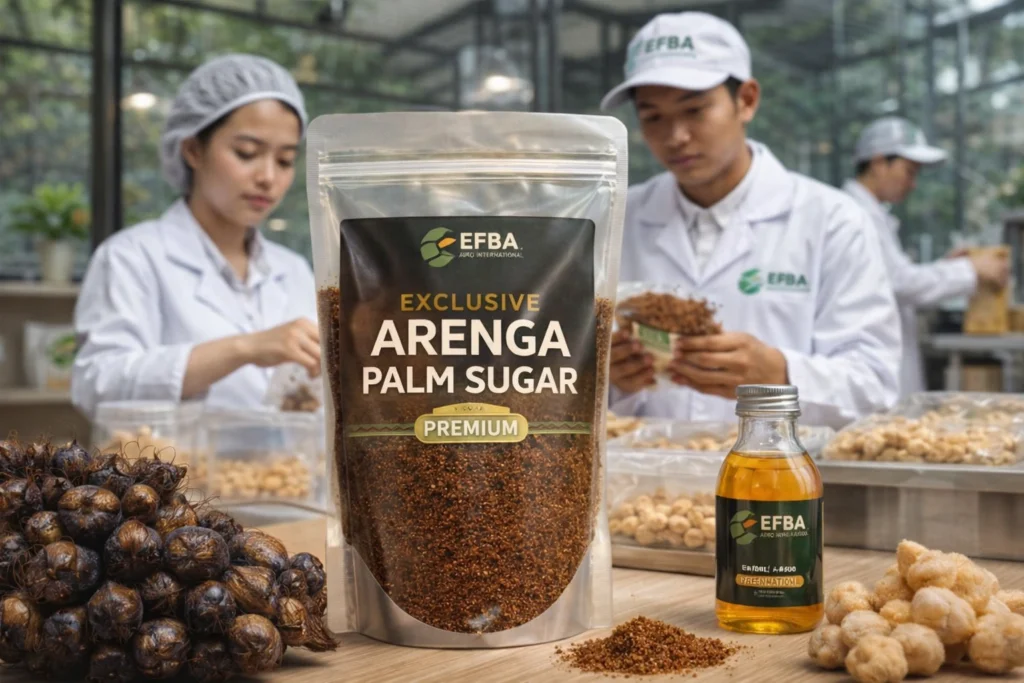

Introduction: The High Cost of Adulterated and Cheap Sweeteners
The global food manufacturing ecosystem in 2026 faces an acute structural deficit in clean-label ingredients. Climate-driven sap yield drops across traditional agro-forestry belts in Southeast Asia, combined with the stringent enforcement of the EU Deforestation Regulation (EUDR), have permanently destabilized legacy procurement channels. For procurement directors managing multinational food and beverage brands, continuing to buy critical raw materials especially palm sugar wholesale on the spot market represents an unacceptable risk to corporate margins.
Procurement executives frequently fall victim to the illusion of low upfront capital expenditure when reviewing unverified vendor quotes. Multi-national networks are routinely compromised by unverified intermediaries who position themselves as cheap options but ignore critical quality metrics such as exact mesh uniformity or maximum water activity. These transactional entities externalize their supply chain inefficiencies onto the buyer, hiding extreme variances in botanical purity behind attractive baseline pricing.
Ultimately, selecting an unverified upstream partner results in severe financial penalties downstream. Low upfront costs often hide high moisture levels and adulteration that lead to premature caking, microbial spoilage, and industrial formula failures, fundamentally destabilizing a brand’s Cost of Goods Sold (COGS). Securing an integrated palm sugar wholesale pipeline with upstream infrastructure control is the only viable mechanism to protect corporate margins against climate-induced sap yield fluctuations and structural market volatility.
Deconstructing Cost Components: Dissecting Granular Sweetener Capital Allocation
To safeguard corporate profitability, procurement directors must look past localized line-item pricing and evaluate total landed cost structures. Truly evaluating an enterprise-grade palm sugar wholesale supplier requires absolute transparency regarding the operational cost stack accrued from the farm-gate to the shipping container. Without this granular visibility, forecasting quarterly gross margins becomes an exercise in speculation rather than fiscal management.
The operational cost accumulation of a tier-1 palm sugar wholesale partner covers farm-gate sap collection, crystallization fuel costs, mesh filtration overheads, climate-controlled storage, and compliance auditing. In 2026, the integration of automated evaporators and advanced sifting machines at upstream warehouses has shifted capital allocation away from manual labor toward technological capital expenditure. While this raises the initial processing cost, it dramatically minimizes the downstream defect-rate percentage and guarantees a consistent sucrose-to-fructose ratio.
Total Landed Cost = Farm-Gate Sap Base + Crystallization Energy + Mesh Sifting + Compliance Audits + Freight Logistics
The table below provides an analytical comparison of B2B capital allocation between Standard Commercial Grade (FOB Jakarta/Surabaya) and Premium Certified Organic / Micro-lot logistics streams:
| Cost Component (Per Metric Ton / MT) | Standard Commercial Grade (USD) | Premium Certified Organic / Micro-lot (USD) |
| Farm-Gate Sap (Neera) Collection Baseline | $1,200 | $2,600 |
| Crystallization Energy & Dehydration Management | $400 | $750 |
| Mechanical Mesh Sifting & Purity Separation | $150 | $350 |
| EUDR Geolocation Tracking & Organic Auditing | $180 | $450 |
| Climate-Controlled Warehousing (Moisture Isolation) | $120 | $250 |
| Domestic Logistics & Port Clearances (FOB) | $250 | $400 |
| Estimated Total Capital Allocation per MT | $2,300 | $4,800 |
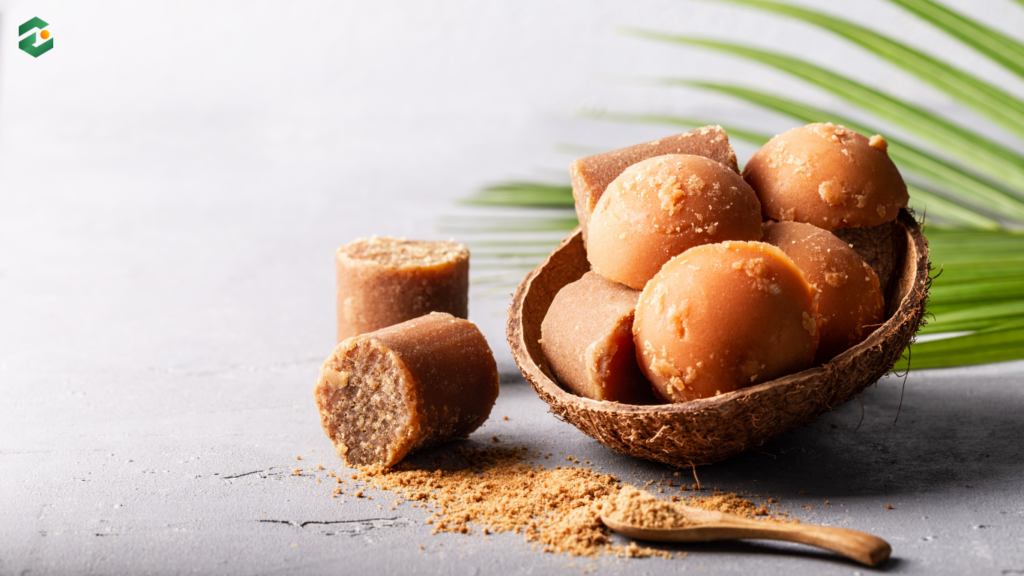
Mitigating Volatility via Strategic Volume Allocations
Mitigating systemic risk in 2026 demands highly sophisticated contractual frameworks. Forward contracts have transitioned from an optional financial hedge to an absolute operational necessity for global F&B enterprises. When negotiating long-term volume allocations of coconut palm sugar bulk shipments, procurement teams must leverage long-term commitments to neutralize unexpected market spikes caused by seasonal monsoon variations.
A primary advantage of structured forward contracts is the optimization of Minimum Order Quantities (MOQs). High-volume, multi-quarter commitments allow upstream processors to balance their processing schedules, driving down per-unit manufacturing costs. However, volume optimization is meaningless if the physical properties of the commodity deteriorate during transport due to elevated moisture levels.
Experienced agro-commodity suppliers budget for moisture loss and dry-matter shrinkage during long-distance transit, and this variance must be factored directly into financial modeling. To maintain precise visibility over actual product yield, corporate analysts must utilize the standard mathematical relationship for post-processing cost evaluation:
Landed Cost Dry per kg =Raw Sugar Price per kg +Logistic Fee per kg – Moisture Loss Percentage
By applying this formula, financial officers can quickly determine whether selecting a palm sugar wholesale partner that offers asset-backed forward pricing justifies the initial premiums over volatile spot market offerings.
Enterprise-scale procurement teams must realize that scaling institutional volumes is vastly different from relying on decentralized sourcing models or localized retail consolidators like a consumer-facing coconut sugar bulk barn infrastructure. Industrial production lines require strict predictability that only large-scale bulk organic coconut sugar contracts can provide.
Risk Management: Moisture Control, Mesh Uniformity, and Botanical Purity
In industrial confectionery and beverage manufacturing, physical uniformity directly dictates processing efficiency. Educating the procurement team on why choosing a rigorous palm sugar wholesale partner is vital to prevent off-flavor variations and physical clumping before the product hits the industrial mixing line prevents catastrophic QC failures. Fluctuations in unrefined sweetener moisture levels create highly erratic melting points, inducing localized scorching within industrial cookers.
To ensure strict compliance with international food safety standards, an elite palm sugar wholesale vendor must employ automated sifting grids to guarantee particle size uniformity. We maintain that your designated palm sugar wholesale partner must execute rigorous pre-shipment sampling and guarantee moisture levels strictly below 3%.
Strategic Protocol: Emphasize the necessity of legally binding Quality Assurance agreements regarding mesh size consistency and the total absence of cane-sugar adulteration to protect long-term brand equity. Contracts must stipulate clear financial penalties or batch-rejection clauses if multi-container arrivals deviate from the agreed purity thresholds or display high water activity values.
Furthermore, forward-thinking procurement directors should track related high-value regional traditional sweeteners like palm jaggery wholesale and panakarkandu wholesale allocations. Monitoring these secondary options provides essential market benchmarks and alternative formulation inputs if regional climate disasters temporarily constrain primary coconut sap production lines.
Upstream-Downstream Synergy: Securing Capital and Purity via Efba Agro

Building a highly profitable food brand or industrial confectionery facility requires a flawless alignment between upstream commodity procurement and downstream manufacturing execution. When these two components are fragmented, corporate enterprises suffer from margin dilution caused by misaligned lead times, volatile purity metrics, and inefficient distribution networks.
At Efba Group, we address this industry challenge through our integrated agribusiness logistics engine, engineered to isolate corporate buyers from supply chain shocks while maximizing purity and compliance standards:
- Upstream Procurement & Agribusiness Logistics: Operating via efbaagro.id, this division serves as your corporate strategic partner for commodity viability auditing, purity testing, and the execution of institutional procurement pipelines to guarantee volume stability. By directly managing asset allocation at the farm gate and utilizing advanced climate-controlled storage systems, we insulate your operational pipeline from systemic market disruptions.
- Furthermore, while securing a clean-label sweetener pipeline is vital for industrial product formulations, many global F&B networks require a dual-commodity strategy to maximize retail floor margins. If your organization looks to secure premium specialty coffees alongside your raw agricultural inputs, coffeenesia.id serves as the dedicated downstream solution for sensory engineering and brand optimization. From calibrating complex industrial roasting profiles to executing strict quality control matrices, they transform high-grade green beans into market-ready, high-margin revenue streams that protect your brand equity.
[efbagro.id] Upstream Asset Security & Geolocation —> [Your Industrial Plant] Frictionless Mixing & High-Margin Scale
By separating institutional raw material procurement from localized downstream supply chains, global F&B brands insulate corporate working capital from macroeconomic disruptions. This structural decoupling ensures that your raw materials are secured at optimized asset values from a trusted palm sugar wholesale source, while your manufacturing facilities benefit from advanced quality control and efficient commercial distribution.

Conclusion & CTA
Scale-driven industrial manufacturing success in 2026 belongs exclusively to organizations that master upstream risk mitigation and bypass transactional spot-market brokers. Relying on transactional brokers who offer short-term discounts is a direct threat to your corporate gross margin. Shifting from an unverified middleman to a strategic palm sugar wholesale supplier with fully integrated infrastructure is the only viable path to long-term profitability.
Secure Your 2026 Volume Allocations. Contact our corporate agribusiness division today. Invite your Procurement Directors, Food Technologists, and Corporate Executives to schedule an exclusive Agro-Commodity Supply Chain Audit & Sweetener Contract Optimization session with the senior analyst team at Efba Agro by visiting efbagro.id.
FAQ (5 Strategic Financial & Sweetener Supply Chain Questions)
How do variations in moisture content affect the shelf-life and industrial processing of bulk palm sugar?
When partnering with an international palm sugar wholesale vendor, managing moisture content is paramount because unrefined sugars are highly hygroscopic. If moisture levels exceed 3%, the product will undergo rapid caking and clumping inside industrial silos, leading to severe blockages in pneumatic conveying systems. High moisture also increases water activity, which compromises microbial stability and causes premature fermentation or mold growth that invalidates product shelf-life guarantees.
Why are forward contracts superior to spot-market buying during the monsoon seasonal transitions?
Monsoon seasonal transitions routinely disrupt sap tapping schedules across Southeast Asia, causing immediate, severe contraction in market liquidity. A forward-looking palm sugar wholesale contract locks in the basis price and volume allocation months in advance, forcing the processor to absorb localized yield variations. Spot-market buyers during these periods face extreme premium spikes and face high risks of receiving lower-grade, high-moisture batches from desperate consolidators.
What specific laboratory metrics must be verified to detect cane-sugar adulteration in bulk organic shipments?
Because raw cane sugar is a C4 plant and palm sap comes from C3 perennial trees, carbon isotope ratio analysis (Stable Isotope Ratio Mass Spectrometry – SIRMS) is the definitive method to detect adulteration. Corporate QC teams must demand a Carbon-13 isotope profile for every incoming lot to ensure the value aligns perfectly with pure C3 botanical origins. Any shift toward C4 isotope characteristics indicates the presence of cheap refined cane sugar fillers, which violates organic certifications and alters the sucrose-to-fructose ratio.