
Arenga Palm Sugar has become one of the most respected natural sweeteners in the global food industry. Derived from the sap of the Arenga pinnata palm tree, this traditional ingredient carries centuries of heritage while meeting modern expectations for sustainability and nutrition. Many consumers today search for sweeteners that are natural, minimally processed, and environmentally responsible. Arenga Palm Sugar answers that demand with a unique flavor profile, gentle sweetness, and a production method that supports rural farming communities.
Unlike refined white sugar that undergoes intensive processing, this traditional sweetener forms through a simple yet careful method. Farmers tap the flower stalk of palm trees to collect fresh sap, which they then slowly heat until it thickens and crystallizes. This natural transformation preserves many of the nutrients present in the sap. As a result, the sweetener retains minerals and organic compounds that refined sugar typically loses during industrial processing.
Across Southeast Asia, this sugar has long been valued for its versatility in cooking and traditional medicine. Today it also gains attention in global markets as a healthier alternative sweetener. Its deep caramel flavor, rich aroma, and lower glycemic response attract chefs, food manufacturers, and health conscious consumers.
More importantly, production supports ecological balance. The palm trees grow naturally in tropical forests and require minimal agricultural intervention. This reality makes the ingredient not only beneficial for health but also aligned with sustainable agricultural practices.
Arenga Palm Sugar Origins And Traditional Harvesting

From the Arenga pinnata palm tree originates Arenga Palm Sugar, a species native to tropical regions of Southeast Asia such as Indonesia, the Philippines, and parts of Thailand. These palms thrive in humid climates and mountainous landscapes where other crops may struggle to grow. Because the trees develop naturally in forest ecosystems, farmers rarely need to clear land or apply chemical fertilizers, which contributes to the sustainable nature of the product. Communities across rural landscapes cultivate these palms through traditional agroforestry practices that maintain soil stability and biodiversity.
The production process begins when skilled farmers tap the palm’s flower stalk. They carefully slice the stalk to allow sap to drip slowly into bamboo containers. This sap appears naturally sweet and slightly cloudy, containing sugars, minerals, and organic compounds that give palm sugar its distinctive flavor. Harvesting usually happens twice daily so farmers maintain freshness before processing. After collection, they filter the sap and transfer it into large traditional pans where steady heating begins the transformation process.
During cooking, farmers stir the liquid continuously while gentle heat evaporates the water content. Gradually the sap thickens and becomes a rich golden syrup before crystallizing into solid sugar. This careful method preserves the natural characteristics of the sap and avoids chemical refining. For generations families have produced Arenga Palm Sugar using these techniques, passing down knowledge and craftsmanship through rural communities.
As global markets increasingly value sustainability, traditional palm sugar production attracts international attention. Organizations such as the Food and Agriculture Organization highlight agroforestry systems as environmentally responsible agricultural models because they support biodiversity while sustaining farmer livelihoods. Consequently, this heritage product continues gaining recognition as both a cultural treasure and a sustainable global sweetener.
Arenga Palm Sugar Unique Characteristics And Flavor Profile
Within the world of natural sweeteners, many culinary professionals recognize Arenga Palm Sugar for its distinctive flavor, texture, and appearance. Unlike refined white sugar that produces sharp sweetness, this palm derived sweetener delivers a deeper and more rounded taste. Chefs frequently describe the flavor as caramel like, slightly smoky, and pleasantly earthy. This profile enhances both sweet and savory recipes while providing a more complex sweetness.
Another noticeable characteristic appears in its natural color. Palm sugar often ranges from golden brown to deep amber depending on sap quality and cooking duration. The darker tone results from the caramelization that occurs when farmers slowly heat the palm sap during processing. This color gives foods a warm visual appeal while signaling the presence of natural compounds preserved from the sap. Because the ingredient remains minimally processed, its appearance reflects authentic agricultural origins rather than industrial refinement.
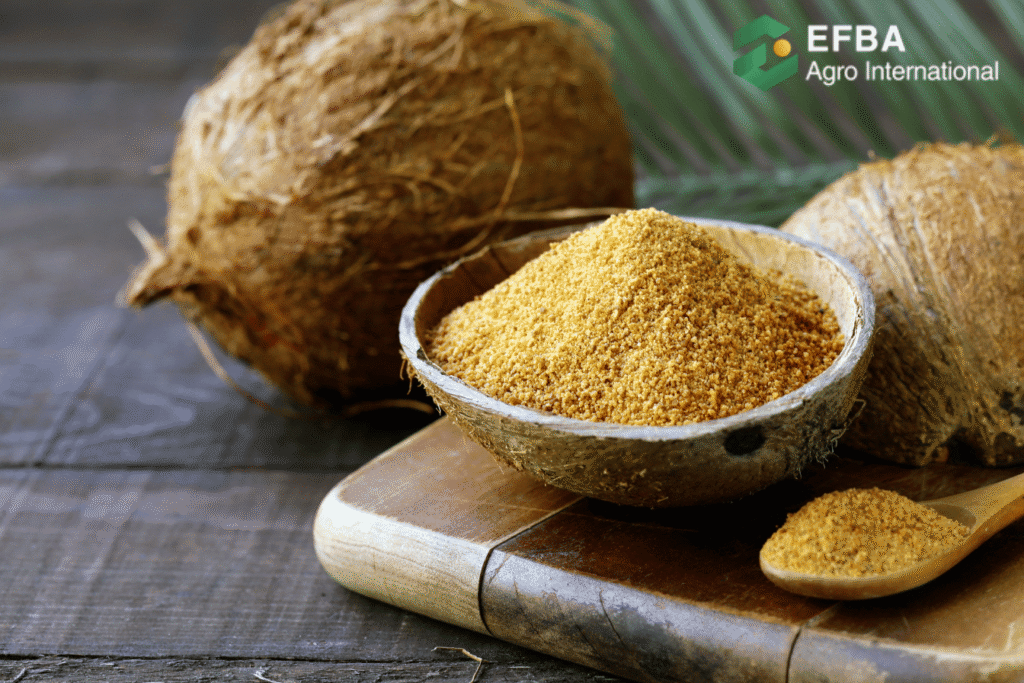
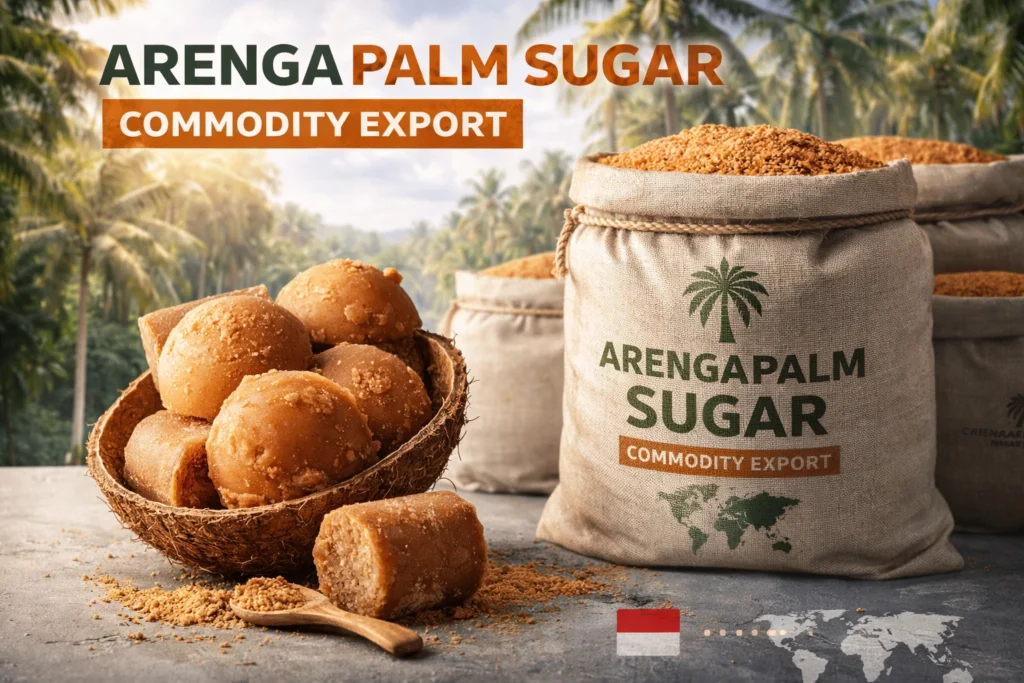
Texture also varies depending on processing style. Traditional forms commonly appear as molded blocks or round cakes that cooks grate or melt during food preparation. In modern markets, producers frequently create granulated varieties that resemble brown sugar. These formats make Arenga Palm Sugar easier for international culinary applications and industrial food production. Both forms dissolve smoothly in liquids and integrate well into sauces, beverages, and desserts.
Beyond flavor and texture, the aroma contributes significantly to culinary popularity. When heated, palm sugar releases a rich fragrance that enhances beverages, baked goods, and savory glazes. This aromatic depth distinguishes it from neutral sweeteners. Consequently chefs, beverage developers, and artisan bakeries increasingly integrate Arenga Palm Sugar into contemporary cuisine because its flavor complexity elevates both traditional and modern recipes.
Arenga Palm Sugar Nutritional Composition And Key Nutrients
Compared with conventional refined sugar, many nutrition researchers highlight the richer micronutrient profile found in palm derived sweeteners such as Arenga Palm Sugar. Because producers avoid aggressive chemical processing, small amounts of natural minerals remain present in the final product. Although it still functions primarily as a sweetener, this composition distinguishes it nutritionally from highly refined sugar.
Palm sap naturally contains trace minerals and vitamins that survive the gentle heating process used during production. While the quantities vary depending on location, soil conditions, and harvesting techniques, laboratory analyses commonly identify several essential nutrients within palm sugar. These components contribute modest nutritional value while supporting the product’s reputation as a more natural sweetening option.
The following nutrients commonly appear in Arenga Palm Sugar:
• Potassium
• Magnesium
• Calcium
• Iron
• Zinc
• Phosphorus
• Vitamin B1
• Vitamin B2
• Vitamin B3
Potassium supports muscle function and fluid balance, while magnesium participates in numerous metabolic reactions. Calcium and phosphorus contribute to bone health, and iron assists oxygen transport within the bloodstream. Zinc strengthens immune responses and cellular repair mechanisms, whereas B vitamins help convert carbohydrates into usable energy for the body.
In addition to these nutrients, palm sugar contains small amounts of antioxidants that help neutralize free radicals associated with oxidative stress. Although the levels remain modest, they still represent a nutritional advantage over refined sugar products that contain almost no micronutrients.
Another important factor involves glycemic impact. Several studies suggest that palm based sweeteners often produce a slower glucose response compared with refined sugar. Because of this characteristic, many consumers prefer Arenga Palm Sugar as part of balanced dietary approaches that prioritize steady energy release.
Arenga Palm Sugar Health Benefits And Natural Advantages

Health conscious consumers increasingly seek natural sweeteners that offer more than simple sweetness, and Arenga Palm Sugar frequently enters this conversation because of its minimal processing and natural origin. Although it should never replace balanced nutrition, the ingredient provides several advantages that distinguish it from heavily refined sugar products.
First, production methods remain remarkably simple. Farmers collect palm sap and gently heat it until it concentrates into syrup and eventually crystallizes. This direct transformation avoids chemical bleaching, artificial additives, and industrial refinement. Because producers maintain this traditional process, the sugar retains trace minerals and organic compounds that contribute to its nutritional value.
Minerals such as potassium and magnesium support several physiological functions. Potassium assists in maintaining proper fluid balance and nerve communication, while magnesium participates in energy metabolism and enzymatic reactions. Although palm sugar supplies these nutrients in small quantities, their presence still differentiates the sweetener from refined sugar that lacks nutritional diversity.
Another benefit relates to glycemic behavior. Foods with lower glycemic responses release glucose gradually rather than causing rapid spikes in blood sugar. While moderation remains essential, the composition of Arenga Palm Sugar often results in a gentler energy release compared with highly processed sweeteners. Consequently many individuals incorporate it into diets focused on balanced energy levels throughout the day.
Environmental sustainability also strengthens its advantages. Palm trees used for sap harvesting continue growing for decades without being cut down. Farmers simply tap the flowering stalk to collect sap while the tree continues producing. This practice protects forest ecosystems and encourages sustainable agriculture. As global markets prioritize responsible sourcing, Arenga Palm Sugar increasingly represents a sweetener that supports both human wellbeing and environmental stability.
Arenga Palm Sugar Culinary Uses And Global Food Applications
Across many culinary traditions, chefs value Arenga Palm Sugar because its complex sweetness enhances a wide variety of dishes. The ingredient has served as a foundation in Southeast Asian cuisine for centuries, yet modern gastronomy now explores its potential in global food innovation.
Traditional kitchens frequently combine palm sugar with coconut milk, rice flour, and tropical fruits to create classic desserts and syrups. Indonesian sweets, puddings, and cakes often rely on its caramel like flavor to balance creamy textures. In savory cooking, chefs use melted sugar to complement chili spices and fermented sauces, creating harmony between sweet, salty, and spicy flavors.
Beverage industries also recognize its versatility. Specialty coffee shops and tea brands frequently use palm sugar syrup to sweeten drinks naturally while enhancing aroma. When dissolved into warm liquids, the sugar releases subtle caramel notes that enrich flavor complexity without overpowering other ingredients. This quality makes it particularly attractive for premium beverage formulations.
Bakeries have also embraced its culinary potential. In baked goods such as cookies, muffins, and breads, the ingredient contributes moisture, warm color, and distinctive taste. During baking, natural sugars caramelize gently and create deeper flavor layers than refined white sugar typically provides. Artisan bakers often select Arenga Palm Sugar precisely for this reason.
Savory cuisine benefits as well. Chefs incorporate palm sugar into marinades, barbecue glazes, and stir fry sauces where it melts smoothly and creates glossy coatings for meats and vegetables. Food manufacturers now integrate it into cereals, snack bars, sauces, confectionery, and plant based foods.
For businesses and global buyers seeking reliable agricultural commodities sourced responsibly, Efba Agro International provides high quality palm sugar and other natural products. Learn more about Efba Agro International https://efbaagro.id/, explore available commodities https://efbaagro.id/#commodities, or contact the team directly via WhatsApp https://wa.me/6285285469417.
Arenga Palm Sugar Sustainability And Environmental Impact
Sustainability plays a crucial role in the global reputation of Arenga Palm Sugar because its cultivation naturally aligns with ecological farming systems. Unlike large scale monoculture crops that often require intensive land clearing, the Arenga pinnata palm grows harmoniously within existing forest environments. Farmers typically cultivate these palms through agroforestry practices, allowing the trees to coexist with other vegetation while maintaining soil fertility and biodiversity.
One of the most significant environmental advantages comes from the harvesting method itself. Farmers do not cut down the palm tree to collect sap. Instead, they carefully tap the flowering stalk while the tree continues to grow and produce for many years. Because the tree remains alive and productive, the same plant can support long term sugar production without repeated deforestation. This sustainable cycle contributes to environmental stability while supporting rural agricultural economies.
Furthermore, Arenga palms help prevent soil erosion in mountainous tropical landscapes. Their root systems stabilize the ground and support water retention, which benefits surrounding ecosystems. In regions where heavy rainfall frequently affects agricultural land, these trees provide natural protection against soil degradation. As a result, farmers can maintain productive landscapes without relying on destructive agricultural expansion.
Another important factor involves biodiversity preservation. Agroforestry systems built around palm cultivation create habitats for insects, birds, and small wildlife. These ecosystems support balanced ecological interactions that modern industrial farming often disrupts. Consequently, the cultivation of Arenga Palm Sugar promotes both economic sustainability and environmental protection.
Global sustainability organizations increasingly encourage agricultural systems that integrate trees with crop production. Arenga palm cultivation reflects this model effectively because it produces valuable commodities while maintaining ecological balance. Therefore, many international buyers now recognize Arenga Palm Sugar not only as a natural sweetener but also as a product connected to responsible environmental stewardship.
Arenga Palm Sugar Role In Traditional Culture And Local Economy
For centuries, communities across Southeast Asia have relied on palm based sweeteners as an essential part of daily life. In many villages, Arenga Palm Sugar represents far more than a culinary ingredient. It symbolizes cultural heritage, traditional craftsmanship, and the economic backbone of rural communities that depend on palm sap harvesting.
Local farmers often learn sap tapping techniques from parents and grandparents. This knowledge includes understanding the correct time to harvest sap, how to slice the flower stalk properly, and how to cook the sap to achieve the ideal sugar consistency. These skills require patience and experience, and families carefully preserve them across generations. As a result, palm sugar production remains closely tied to community identity and traditional livelihoods.
In addition to cultural significance, the economic impact of Arenga Palm Sugar remains substantial. Rural households often depend on daily sap collection as a steady source of income. Because each palm tree produces sap regularly, farmers can harvest twice a day, providing consistent production throughout the year. This stability helps sustain small scale agricultural economies where alternative income opportunities may be limited.
Moreover, local markets frequently revolve around palm sugar trade. Farmers sell freshly produced sugar to nearby traders, cooperatives, or processing centers that distribute it to regional and international markets. This supply chain supports transportation workers, food processors, and exporters, creating employment opportunities beyond the farms themselves.
As global demand for natural sweeteners continues to grow, the economic value of palm sugar production increases as well. International markets increasingly recognize the authenticity and sustainability associated with traditional palm cultivation. Consequently, Arenga Palm Sugar strengthens rural economies while preserving cultural traditions that have shaped Southeast Asian communities for generations.
Arenga Palm Sugar Market Demand And Global Trade
Global demand for natural sweeteners continues to rise, and this trend has significantly increased the international interest in Arenga Palm Sugar. Consumers around the world now look for ingredients that offer both authentic flavor and sustainable origins. Because this palm derived sweetener meets those expectations, food manufacturers, specialty retailers, and health conscious consumers increasingly choose it as a preferred alternative to refined sugar.
Several factors drive this growing market demand. First, people actively seek products that come from natural sources and undergo minimal processing. Palm based sweeteners answer this demand because farmers produce them through traditional techniques that avoid chemical refinement. As a result, Arenga Palm Sugar maintains its reputation as a natural ingredient that aligns with modern clean label food trends.
Second, the expanding popularity of plant based diets also influences the market. Consumers who prefer botanical ingredients often select palm derived sweeteners to replace conventional sugars. Because this product originates entirely from palm sap, it fits well within vegan, vegetarian, and natural food categories. Consequently, manufacturers incorporate it into a variety of products including plant based beverages, energy bars, sauces, cereals, and confectionery.
International trade networks have also played a major role in expanding its availability. Exporters across Southeast Asia now supply palm sugar to global markets in Europe, North America, and the Middle East. Food companies import the ingredient for use in specialty foods and premium culinary products. With improved packaging and quality control standards, Arenga Palm Sugar now travels efficiently through global supply chains while maintaining freshness and quality.
In addition, culinary professionals increasingly promote the ingredient because of its complex flavor. Chefs often highlight palm sugar in gourmet recipes, which further strengthens its global reputation. As consumer awareness continues growing, Arenga Palm Sugar is expected to remain an important commodity within the natural sweetener market and international agricultural trade.
Arenga Palm Sugar Future Potential In Natural Sweetener Industry
The future potential of Arenga Palm Sugar appears remarkably strong as global consumers continue shifting toward healthier and more sustainable food ingredients. Food industries increasingly prioritize natural products that combine authentic flavor, environmental responsibility, and cultural heritage. Because palm sugar embodies all of these qualities, it holds an increasingly important role within the evolving sweetener landscape.
Innovation within food technology further expands its potential applications. Manufacturers now explore ways to incorporate palm derived sweeteners into a wide range of modern products such as functional foods, nutritional beverages, and organic snacks. By using natural sweeteners instead of refined sugar, producers create formulations that appeal to consumers seeking balanced nutrition and clean ingredient labels. This trend significantly increases the commercial opportunities surrounding Arenga Palm Sugar.
Another promising factor lies in the expansion of sustainable agriculture. Governments and environmental organizations increasingly promote agroforestry systems that integrate trees with agricultural production. The cultivation of Arenga palms fits perfectly within this approach because the trees support biodiversity, prevent soil erosion, and produce valuable sap without requiring deforestation. As sustainability standards continue shaping global food markets, palm sugar cultivation becomes even more attractive to responsible producers.
Consumer education also contributes to long term market growth. As more people learn about traditional palm sugar and its natural production methods, interest continues expanding beyond its original regions. Food bloggers, chefs, nutrition advocates, and culinary schools frequently introduce palm sugar in recipes and educational materials, helping new audiences discover its unique characteristics.
These combined factors indicate that Arenga Palm Sugar will likely maintain strong relevance in the natural sweetener industry for many years. Its heritage rooted production, sustainable agricultural system, and versatile culinary applications position it as a valuable ingredient for both traditional cuisine and modern food innovation.
Premium Arenga Palmiye Şekeri Kaynağına Hazır mısınız?
İşletmeniz için premium sınıf Arenga Palmiye Şekeri’ni keşfetmeye hazırsanız, bugün EFBA Agro ile doğrudan iletişime geçin. İhracat uzmanlarımız, aşağıdaki konuları görüşmek için hazırdır:
- Toplu Siparişler ve Özel Marka (Private Label) Hizmetleri
- Fiyatlandırma ve Nakliye Düzenlemeleri
- Uzun Vadeli İş Birliği Fırsatları
Let’s bring the natural sweetness of Indonesia to your global market.
📞 Contact us via WhatsApp
EFBA Agro International’ı Keşfedin: Endonezya’nın En Seçkin Tarım Emtialarına Açılan Güvenilir Kapınız

EFBA Agro International, Endonezya’nın en güvenilir ve kalite odaklı doğal tarım ürünleri ihracatçılarından biri olarak istikrarlı bir şekilde kendini kanıtlamıştır. Dürüstlük, tutarlı tedarik ve güçlü çiftçi ortaklıkları temeli üzerine kurulan EFBA Agro, küresel pazar beklentilerini karşılayan premium sınıf emtialar sunmaya kendini adamıştır. Akıcı bir tedarik sistemi ve titiz kalite denetimi ile her sevkiyatın, Endonezya’nın doğal kaynaklarının zenginliğini ve uluslararası alıcıların talep ettiği profesyonelliği yansıtmasını sağlıyoruz. İzlenebilirlikten dokümantasyona kadar her detay hassasiyetle ele alınır; böylece müşterilerimiz hem iç huzurunu hem de olağanüstü ürün değerini elde eder.
Endonezya’nın tarımsal yapısına derinlemesine kök salmış bir şirket olarak, EFBA Agro, sürdürülebilir ve etik olarak hasat edilmiş hammaddeleri temin etmek için takımada genelindeki çiftçi topluluklarıyla yakın iş birliği yapmaktadır. Bu taahhüt, doğal tatlandırıcılar, baharatlar, nişastalar ve özel ürünleri eşsiz tutarlılıkla tedarik etmemizi sağlar. Alıcılar toplu miktar, perakende hazır ambalaj veya OEM ihracat standartları talep etsin, operasyonel yapımız farklı ihtiyaçları destekler ve dünya standartlarında kalite kontrol sağlar. Şeffaflık ve uzun vadeli iş birliği üzerine inşa edilen itibarıyla, EFBA Agro, Asya, Orta Doğu, Avrupa ve Amerika genelindeki varlığını güçlendirmeye devam etmektedir.
Endonezya’nın Premium İhracat Koleksiyonu: Arenga Palmiye Şekeri’nden Tapyoka’ya, Kahveye, Baharatlara ve Daha Fazlasına

EFBA Agro International proudly offers a versatile selection of Indonesian commodities designed to meet the demands of global food, beverage, and industrial markets. Our flagship product, Granulated Arenga Palm Sugar, remains one of the most popular exports thanks to its natural caramel profile, eco-friendly production, and strong global demand. Beyond palm sugar, EFBA Agro supplies Food-Grade Tapioca Flour, a favorite ingredient for coating, bakery goods, gluten-free recipes, and industrial applications. We also provide a variety of premium Indonesian spices such as candlenut (kemiri), cloves, nutmeg, and black pepper, sourced directly from trusted farmers to guarantee freshness and purity.
Tatlandırıcılar ve baharatların yanı sıra, EFBA Agro, Gayo, Java ve Toraja menşeli özel sınıf Arabica ve Robusta kahve ürünleri ile alıcıları destekler. Her emtia, sıkı işleme prosedürleri, standartlaştırılmış nem kontrolü, uygun ambalaj seçenekleri ve ihracata hazır dokümantasyon ile yönetilir. Bu çeşitli portföy sayesinde, EFBA Agro International, küresel sahnede sürdürülebilir ve yüksek kaliteli Endonezya tarım ürünleri arayan işletmeler için kapsamlı bir tek durak çözüm hâline gelir.
FAQ Arenga Palm Sugar
- How does Arenga Palm Sugar differ from coconut sugar?
Arenga Palm Sugar comes from the sap of the Arenga pinnata palm, while coconut sugar comes from coconut palm blossoms. The flavor of Arenga Palm Sugar tends to be deeper and more caramel-like, with slightly smoky undertones. It also often appears darker in color due to the longer heating process during traditional production. - Is Arenga Palm Sugar suitable for baking and cooking?
Yes. Arenga Palm Sugar works well in baking, beverages, and savory cooking. Its natural caramel flavor enhances cakes, cookies, sauces, and marinades. Because it dissolves easily in warm liquids, many chefs also use it in coffee, tea, and syrups. - Does Arenga Palm Sugar contain preservatives or additives?
Traditional Arenga Palm Sugar usually contains no artificial preservatives or additives. Farmers produce it by heating natural palm sap until it thickens and crystallizes. This simple process preserves its natural taste and mineral content. - How should Arenga Palm Sugar be stored?
Store Arenga Palm Sugar in an airtight container in a cool and dry place. Proper storage prevents moisture absorption and helps maintain its texture, aroma, and flavor for longer periods. - Can Arenga Palm Sugar dissolve in cold drinks?
Granulated Arenga Palm Sugar can dissolve slowly in cold beverages, but it dissolves faster in warm or hot liquids. Many beverage producers first create a syrup to ensure smooth mixing. - Why is Arenga Palm Sugar popular in natural food products?
Many natural food brands choose Arenga Palm Sugar because it comes from sustainable palms and undergoes minimal processing. Its authentic flavor, mineral traces, and traditional origin appeal to consumers seeking natural ingredients.