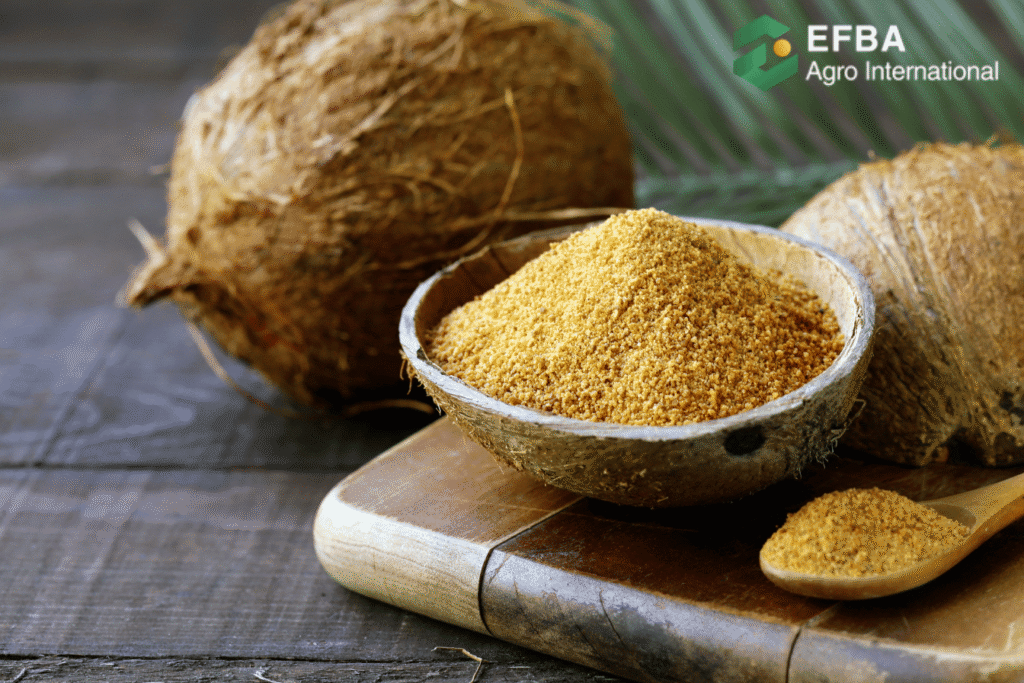

Arenga Palm Sugar is a traditional sweetener derived from the sap of the Arenga pinnata palm tree, valued for its naturally occurring nutrients and deep caramel flavor. Unlike highly refined white sugar, producers process this palm based sweetener with minimal intervention, which helps preserve important compounds that exist naturally in the sap. Across Southeast Asia, especially Indonesia, communities have relied on this ingredient for generations not only as a sweetener but also as part of cultural heritage and daily nutrition. Today, global consumers recognize it as a more natural alternative in both home kitchens and industrial food production.
Origin and Botanical Background of Arenga Palm Sugar
The story of this traditional palm sweetener begins with the Arenga pinnata tree, a tall and resilient species that thrives in tropical climates such as Indonesia, the Philippines, and Malaysia. Farmers tap the flower stalks to collect fresh sap, a translucent liquid rich in natural sugars and micronutrients. They then heat the sap gently over controlled fire to reduce its water content, allowing it to thicken and crystallize. Through this careful process, producers create what global markets now know as Arenga Palm Sugar.
Moreover, local communities have refined tapping techniques for generations. They climb the palm trees daily, collect sap in clean containers, and immediately process it to maintain freshness. Because they avoid chemical bleaching and excessive refinement, they preserve the sap’s original minerals and color. This approach not only protects flavor but also maintains authenticity.
In addition, farmers practice sustainable harvesting. They collect sap without cutting down the tree, which enables continuous production for many years. As a result, this sweetener supports rural livelihoods while maintaining ecological balance. Over time, Arenga Palm Sugar has moved beyond village kitchens and entered international trade, yet it still carries the legacy of traditional craftsmanship and tropical biodiversity.
Traditional Processing and Quality of Arenga Palm Sugar

Producers follow a straightforward yet skill driven method to transform palm sap into a market ready sweetener. Immediately after collection, they filter the sap to remove natural debris. Next, they boil it in large pans while continuously stirring to prevent burning. As the liquid thickens, it gradually turns golden brown and releases a distinctive caramel aroma. At this stage, they pour it into molds or allow it to crystallize into granules. Through this process, they create high quality Arenga Palm Sugar with consistent texture and taste.
Furthermore, careful temperature control determines final quality. When producers manage heat properly, they prevent over caramelization and preserve more nutrients. Consequently, the final product retains its characteristic deep color and rich flavor profile. Because they avoid aggressive industrial refining, they keep the sweetener closer to its natural state.
Quality assurance also plays a vital role in export markets. Producers test moisture content, cleanliness, and granule consistency before packaging. They use hygienic facilities and food grade materials to ensure safety. As global demand increases, suppliers combine traditional knowledge with modern quality standards. Therefore, Arenga Palm Sugar successfully bridges heritage production and international food safety expectations, making it suitable for both artisanal and large scale applications.
Distinctive Characteristics of Arenga Palm Sugar
This palm derived sweetener stands out due to its sensory richness and natural composition. Visually, it appears in block, powder, or syrup form. Its color ranges from light brown to deep mahogany, depending on sap quality and cooking duration. When dissolved in hot liquids, it produces a warm amber tone that enhances beverages and desserts. Many chefs choose Arenga Palm Sugar specifically for this visual and flavor depth.
In terms of taste, it delivers layered sweetness. Instead of the sharp, one dimensional flavor of refined white sugar, it offers caramel notes with subtle hints of molasses and earthiness. As a result, it complements both sweet and savory recipes. Bakers use it to add moisture and softness to cakes and cookies, while chefs incorporate it into sauces and marinades to create balance.
Additionally, its texture supports versatile applications. Granulated forms dissolve easily in warm drinks, whereas solid blocks can be grated or melted. Because producers maintain minimal processing, the sweetener retains trace minerals that influence its flavor complexity. Consequently, Arenga Palm Sugar appeals to consumers who value authenticity, depth, and a more natural alternative to heavily refined sweeteners.
Nutritional Profile and 9 Essential Nutrients in Arenga Palm Sugar
Beyond sweetness, this palm based product offers measurable nutritional components that originate from fresh sap. While carbohydrates remain the primary macronutrient, Arenga Palm Sugar also provides several micronutrients that refined sugar lacks. These nutrients contribute to its darker color and richer taste.
The key nutrients include:
- Carbohydrates as a primary energy source
- Potassium for fluid and muscle balance
- Magnesium for nerve and metabolic function
- Iron for oxygen transport
- Zinc for immune support
- Calcium for bone strength
- Phosphorus for cellular energy
- Small amounts of B vitamins such as B1 and B2
- Natural antioxidant compounds
Because producers do not strip away these elements through heavy refining, the sweetener retains small but meaningful quantities. Although it should not replace whole food sources of minerals, it still offers added value compared to empty calorie sweeteners.
Moreover, antioxidants in palm sap help counter oxidative stress. While consumers must still moderate intake, they can choose Arenga Palm Sugar as a more nutrient conscious option. According to information from the Food and Agriculture Organization, traditional palm products contribute to dietary diversity and rural economies (https://www.fao.org). Therefore, this sweetener combines energy provision with modest nutritional support.
Health Benefits and Functional Value of Arenga Palm Sugar
Consumers increasingly seek sweeteners that align with balanced lifestyles. In this context, Arenga Palm Sugar provides several functional advantages. First, its mineral content supports normal physiological functions. Potassium and magnesium assist muscle and nerve performance, while iron supports healthy blood circulation. Although quantities remain moderate, they enhance its overall nutritional profile.
Second, the presence of natural antioxidants adds another layer of value. These compounds help reduce oxidative stress in the body. While no sweetener should be promoted as a cure, choosing less refined options supports a more mindful dietary pattern. Consequently, many health conscious buyers view this palm sweetener as a preferable alternative.
Third, some studies suggest that palm based sweeteners may produce a steadier glycemic response compared to refined sucrose. Even so, consumers must manage portion size responsibly because it still contains sugar and calories. Nevertheless, Arenga Palm Sugar fits well into recipes that emphasize natural ingredients and reduced processing.
Finally, sustainability strengthens its appeal. Farmers harvest sap without destroying the tree, which promotes long term cultivation and environmental balance. Therefore, this sweetener offers not only functional nutrition but also ecological responsibility.
Culinary Applications and Market Potential of Arenga Palm Sugar
In culinary practice, this traditional sweetener adapts easily to diverse recipes. Cooks in Southeast Asia use Arenga Palm Sugar in desserts, rice dishes, sauces, and beverages. Its caramel depth enhances coffee and tea, while its subtle earthiness balances spicy and savory meals. As global cuisine evolves, chefs worldwide integrate it into cookies, granola, salad dressings, and specialty syrups.
Moreover, food manufacturers incorporate it into ready to drink beverages, plant based snacks, and artisanal confectionery. Because modern consumers prefer recognizable ingredients, companies highlight Arenga Palm Sugar on product labels to communicate authenticity and minimal processing. This strategy strengthens brand positioning in competitive markets.
From a trade perspective, Indonesia remains a key producer and exporter. Suppliers combine traditional expertise with modern quality control systems to meet international standards. Market research platforms report growing demand for alternative sweeteners as consumers reduce refined sugar intake. Consequently, this palm sweetener continues to expand its global footprint.
renga Palm Sugar Applications, Processing Forms, and Market Demand
Manufacturers and consumers access this palm-based sweetener in several forms, including blocks, granules, powder, and liquid syrup. Each format serves a specific purpose across culinary and industrial applications. Granulated forms integrate easily into baking and beverages, syrup blends smoothly into sauces and ready-to-drink products, and powdered variants dissolve rapidly for instant formulations.
Traditional cuisines continue to use Arenga Palm Sugar in desserts, fermented foods, and savory dishes, while modern food industries incorporate it into energy bars, dairy alternatives, specialty coffee products, and functional snacks. Its stable structure allows consistent performance across low and high temperature processing environments without compromising texture or flavor.
Global demand continues to rise as consumers seek natural, traceable sweeteners that align with clean label standards. Plant-based movements and sustainability awareness further accelerate adoption in international markets. Buyers value consistency, sensory depth, and ethical sourcing credentials. Efba Agro International actively connects global partners with responsibly sourced palm sugar commodities to meet this demand.
Premium Arenga Palmiye Şekeri Kaynağına Hazır mısınız?
İşletmeniz için premium sınıf Arenga Palmiye Şekeri’ni keşfetmeye hazırsanız, bugün EFBA Agro ile doğrudan iletişime geçin. İhracat uzmanlarımız, aşağıdaki konuları görüşmek için hazırdır:
- Toplu Siparişler ve Özel Marka (Private Label) Hizmetleri
- Fiyatlandırma ve Nakliye Düzenlemeleri
- Uzun Vadeli İş Birliği Fırsatları
Let’s bring the natural sweetness of Indonesia to your global market.
📞 Contact us via WhatsApp
EFBA Agro International’ı Keşfedin: Endonezya’nın En Seçkin Tarım Emtialarına Açılan Güvenilir Kapınız

EFBA Agro International, Endonezya’nın en güvenilir ve kalite odaklı doğal tarım ürünleri ihracatçılarından biri olarak istikrarlı bir şekilde kendini kanıtlamıştır. Dürüstlük, tutarlı tedarik ve güçlü çiftçi ortaklıkları temeli üzerine kurulan EFBA Agro, küresel pazar beklentilerini karşılayan premium sınıf emtialar sunmaya kendini adamıştır. Akıcı bir tedarik sistemi ve titiz kalite denetimi ile her sevkiyatın, Endonezya’nın doğal kaynaklarının zenginliğini ve uluslararası alıcıların talep ettiği profesyonelliği yansıtmasını sağlıyoruz. İzlenebilirlikten dokümantasyona kadar her detay hassasiyetle ele alınır; böylece müşterilerimiz hem iç huzurunu hem de olağanüstü ürün değerini elde eder.
Endonezya’nın tarımsal yapısına derinlemesine kök salmış bir şirket olarak, EFBA Agro, sürdürülebilir ve etik olarak hasat edilmiş hammaddeleri temin etmek için takımada genelindeki çiftçi topluluklarıyla yakın iş birliği yapmaktadır. Bu taahhüt, doğal tatlandırıcılar, baharatlar, nişastalar ve özel ürünleri eşsiz tutarlılıkla tedarik etmemizi sağlar. Alıcılar toplu miktar, perakende hazır ambalaj veya OEM ihracat standartları talep etsin, operasyonel yapımız farklı ihtiyaçları destekler ve dünya standartlarında kalite kontrol sağlar. Şeffaflık ve uzun vadeli iş birliği üzerine inşa edilen itibarıyla, EFBA Agro, Asya, Orta Doğu, Avrupa ve Amerika genelindeki varlığını güçlendirmeye devam etmektedir.
Endonezya’nın Premium İhracat Koleksiyonu: Arenga Palmiye Şekeri’nden Tapyoka’ya, Kahveye, Baharatlara ve Daha Fazlasına

EFBA Agro International proudly offers a versatile selection of Indonesian commodities designed to meet the demands of global food, beverage, and industrial markets. Our flagship product, Granulated Arenga Palm Sugar, remains one of the most popular exports thanks to its natural caramel profile, eco-friendly production, and strong global demand. Beyond palm sugar, EFBA Agro supplies Food-Grade Tapioca Flour, a favorite ingredient for coating, bakery goods, gluten-free recipes, and industrial applications. We also provide a variety of premium Indonesian spices such as candlenut (kemiri), cloves, nutmeg, and black pepper, sourced directly from trusted farmers to guarantee freshness and purity.
Tatlandırıcılar ve baharatların yanı sıra, EFBA Agro, Gayo, Java ve Toraja menşeli özel sınıf Arabica ve Robusta kahve ürünleri ile alıcıları destekler. Her emtia, sıkı işleme prosedürleri, standartlaştırılmış nem kontrolü, uygun ambalaj seçenekleri ve ihracata hazır dokümantasyon ile yönetilir. Bu çeşitli portföy sayesinde, EFBA Agro International, küresel sahnede sürdürülebilir ve yüksek kaliteli Endonezya tarım ürünleri arayan işletmeler için kapsamlı bir tek durak çözüm hâline gelir.
FAQ Arenga Palm Sugar
- How does Arenga Palm Sugar differ from coconut palm sugar?
Although both come from palm sap, farmers collect Arenga Palm Sugar from the Arenga pinnata tree, not the coconut palm. This difference influences flavor, mineral composition, and aroma. In general, Arenga sap produces a deeper caramel profile with slightly smokier notes. Moreover, the tree structure and growing conditions affect sap flow and sweetness intensity, which ultimately create a distinctive end product. - How should you store Arenga Palm Sugar to maintain quality?
To preserve freshness, store Arenga Palm Sugar in an airtight container in a cool, dry place. Because it naturally contains moisture, exposure to air can cause clumping or hardening. If the sugar solidifies, you can gently grate or crush it before use. Proper storage helps maintain flavor, texture, and shelf stability for several months. - Can Arenga Palm Sugar replace white sugar in all recipes?
In most recipes, you can substitute Arenga Palm Sugar for white sugar using a one to one ratio. However, since it has a richer taste and darker color, it may slightly alter the final appearance and flavor. Therefore, when baking light colored cakes, consider adjusting liquid ingredients or blending it with other sweeteners. - Is Arenga Palm Sugar suitable for vegan diets?
Yes, producers derive Arenga Palm Sugar entirely from plant sap without animal byproducts. As a result, it fits vegan and vegetarian dietary preferences. Additionally, its minimal processing aligns well with clean label and plant based product development. - Does Arenga Palm Sugar contain additives or preservatives?
High quality Arenga Palm Sugar typically contains no artificial additives. Producers simply heat and concentrate fresh sap. Nevertheless, buyers should always check supplier specifications to ensure product purity and compliance with food safety standards. - What industries commonly use Arenga Palm Sugar?
Beyond household kitchens, food and beverage manufacturers use Arenga Palm Sugar in bakery, confectionery, dairy alternatives, sauces, and functional drinks. Because consumers value natural ingredients, brands increasingly integrate this palm sweetener into premium and health oriented product lines.