
Candlenut wholesale involves purchasing candlenut kernels in bulk for food manufacturing, spice distribution, oil processing, and international trade. International buyers should evaluate kernel quality, moisture content, purity, packaging materials, and supplier reliability before placing an order. A dependable supplier should provide clear product specifications, realistic supply information, and suitable logistics arrangements to support consistent commercial procurement.
Indonesia offers various candlenut wholesale sourcing opportunities through agricultural producers, processors, and commodity trading companies. Candlenut, locally known as kemiri, is widely associated with Indonesian culinary ingredients and selected oil-processing applications. However, wholesale buyers must consider more than purchasing price because inconsistent kernel quality, unsuitable storage, and inadequate packaging can increase costs during transportation and processing.
EFBA Agro International operates as an Indonesian agricultural commodity supplier and exporter. Its published candlenut product specifications cover Grade A whole kernels, moisture content, purity, oil content, bulk packaging, and sourcing arrangements. This article explains how candlenut wholesale works, why Indonesia is a potential sourcing market, how to evaluate product quality, and what international buyers should prepare before requesting a quotation.
What Is Candlenut Wholesale?
Candlenut wholesale refers to the bulk procurement and distribution of candlenut kernels for commercial applications. Unlike retail purchasing, wholesale transactions typically involve larger quantities, agreed product specifications, suitable packaging, and coordinated delivery arrangements. Buyers may include food manufacturers, ingredient processors, commodity distributors, and international trading companies.
Candlenut, scientifically identified as Aleurites moluccanus, is a tropical agricultural product traditionally used in Indonesian cooking. Its kernels contain natural oils and can serve as raw materials for further processing. However, technical requirements differ depending on whether buyers intend to use the kernels for food manufacturing, cosmetic ingredient processing, or other industrial applications.
For international trade, the candlenut wholesale procurement process generally involves supplier selection, product specification confirmation, sample evaluation, quotation approval, quality verification, and shipment coordination. Buyers should assess product suitability, sourcing reliability, and commercial conditions rather than focusing exclusively on the lowest available price.
Explore EFBA Agro’s Candlenut Supplier Indonesia to review its published product specifications, packaging options, and wholesale purchasing information.
Why Choose Indonesia for Candlenut Wholesale?
Indonesia has agricultural production regions and commodity trading networks that support the supply of candlenut to domestic and international markets. The ingredient has an established role in Indonesian food preparation, while its natural oil content creates potential applications in selected processing industries.
For businesses evaluating candlenut wholesale from Indonesia, sourcing reliability remains an important consideration. Product consistency depends on origin, harvesting conditions, drying methods, shell removal, sorting, and storage. Therefore, buyers should verify actual product availability and processing arrangements instead of assuming all Indonesian suppliers offer identical specifications or shipment capabilities.
1. Access to Indonesian Agricultural Sourcing Networks
Indonesia’s agricultural supply chain connects growers, collectors, processors, distributors, and exporters. These relationships create opportunities for bulk procurement from different production areas, although production volumes and sourcing capabilities may vary by season and location.
EFBA Agro describes agricultural procurement relationships involving local producers and processing partners. Through its sourcing services, the company supports candlenut wholesale buyers seeking information about product specifications, purchasing quantities, sourcing arrangements, and potential export requirements. Buyers should confirm current stock and commercial availability directly before making purchasing commitments.
2. Applications in Food and Ingredient Processing
Candlenut kernels contribute characteristic flavor and texture to various Southeast Asian dishes. Food manufacturers may use properly processed candlenuts in sauces, seasoning pastes, and other culinary preparations, depending on their formulations and production requirements.
For candlenut wholesale intended for food manufacturing, product safety and processing suitability require particular attention. Raw candlenuts should not be consumed without appropriate preparation because they contain naturally occurring substances that can cause adverse effects. Buyers must establish suitable processing controls and verify applicable food safety requirements for their intended market.
3. Opportunities for Industrial and Oil Processing
Candlenut kernels contain natural oil, making them relevant to manufacturers that process agricultural ingredients for selected cosmetic, personal-care, and industrial applications. The suitability of the raw material depends on product characteristics, processing conditions, and the intended final application.
Businesses sourcing candlenut wholesale for oil extraction should evaluate kernel quality, oil content, storage conditions, and relevant technical specifications. However, kernel specifications alone cannot establish the quality or suitability of extracted oil. Manufacturers should separately assess extraction methods, oil stability, analytical results, and applicable product requirements before commercial use.
Candlenut Wholesale Quality: What Should Buyers Check?
Product quality is one of the most important considerations when selecting a candlenut wholesale supplier. A competitive quotation may become less attractive when delivered kernels contain excessive moisture, foreign materials, physical defects, or inconsistent characteristics. Such problems can affect processing efficiency, storage stability, and overall procurement costs.
Before purchasing, buyers should establish written specifications and appropriate acceptance criteria. Important parameters include kernel appearance, moisture content, purity, oil content, free fatty acids, and applicable safety requirements. The following quality considerations provide a practical starting point for evaluating commercial candlenut shipments.
1. Kernel Appearance and Physical Condition
Whole candlenut kernels generally provide clearer visual consistency than mixed lots containing large quantities of broken pieces. Buyers should inspect kernel color, size uniformity, visible damage, and the presence of foreign materials during sample evaluation.
EFBA Agro describes its Grade A whole candlenut kernels as yellowish-white to creamy-white. Buyers evaluating candlenut wholesale quality should compare samples against agreed specifications rather than relying on appearance alone. Visual inspection can help identify potential inconsistencies, but laboratory testing and additional verification may be necessary.
2. Moisture Content and Storage Stability
Moisture content is an important factor in agricultural commodity quality because inappropriate storage conditions can increase the risk of deterioration. Buyers should request measurable moisture specifications and verify how suppliers control drying, storage, packaging, and handling.
EFBA Agro’s published candlenut specification states a maximum moisture content of 7%. For candlenut wholesale transactions, buyers should confirm the applicable testing method, inspection procedure, and batch-specific results before accepting commercial deliveries. Proper moisture management also helps reduce risks during storage and international transportation.
3. Purity and Foreign Material Control
Purity specifications help buyers establish expectations regarding the proportion of suitable product in a shipment. Procurement teams should define acceptable levels of foreign materials, damaged kernels, and other relevant quality defects before confirming an order.
EFBA Agro publishes a minimum purity specification of 99% for its Grade A whole kernels. During candlenut wholesale negotiations, buyers should clarify how the supplier measures purity and determines conformity with the agreed specifications. Written inspection criteria can help reduce disagreements during receiving and quality assessment.
4. Oil Content and Free Fatty Acids
Oil content is particularly relevant to manufacturers planning further extraction or ingredient processing. Meanwhile, free fatty acid measurements can provide information about the condition of oil-containing materials, depending on the analytical method and product application.
EFBA Agro publishes a minimum oil content of 60% and maximum free fatty acids (FFA) of 1% in its general candlenut specifications. Buyers should confirm the testing methodology and results for the relevant lot. For candlenut wholesale intended for oil processing, these parameters may help determine whether the proposed raw material meets manufacturing requirements.
5. Microbiological and Other Safety Requirements
In addition to physical characteristics, food manufacturers may need microbiological and contaminant testing according to the intended use and importing-country requirements. Applicable criteria can differ depending on product classification, manufacturing processes, and destination-market regulations.
Therefore, buyers should request relevant documentation and determine whether laboratory testing or independent inspection is necessary. Candlenut wholesale quality assurance should rely on agreed specifications and appropriate evidence rather than general marketing claims such as “premium quality” or “export grade.”
EFBA Agro Candlenut Wholesale Specifications
EFBA Agro International publishes general technical specifications for Grade A whole candlenut kernels on its official Candlenut Supplier Indonesia product page. These specifications provide a reference for buyers preparing commercial inquiries, evaluating product suitability, and establishing quality expectations.
| Parameter | Published Specification |
|---|---|
| Product Form | Shelled candlenut |
| Grade | Whole Kernels, Grade A |
| Kernel Color | Yellowish White / Creamy White |
| Moisture Content | 7% maximum |
| Purity | 99% minimum |
| Oil Content | 60% minimum |
| Free Fatty Acids (FFA) | 1% maximum |
These figures represent EFBA Agro’s published product offering and should not be interpreted as independently verified results for every available shipment. Before confirming a candlenut wholesale order, buyers should request current availability, sampling arrangements, relevant batch-specific documents, and agreed inspection methods.
For further information about specifications, packaging, and purchasing arrangements, visit the EFBA Agro Candlenut Product Page. International buyers can use the published information as a starting point for discussing technical requirements and requesting a commercial quotation.
Candlenut Wholesale Packaging: How Should Bulk Kernels Be Packed?
Packaging protects candlenut kernels during handling, storage, and shipment. However, the appropriate packaging depends on purchasing quantity, expected transit conditions, warehouse arrangements, and destination requirements.
Buyers should evaluate packaging materials and loading procedures together with product quality. Proper packing helps reduce exposure to moisture, contamination, physical damage, and avoidable handling losses.
1. PP Sacks with PE Inner Lining
Polypropylene (PP) sacks with polyethylene (PE) inner lining are one packaging option for bulk agricultural products. The outer sack provides handling support, while the inner lining can offer additional protection against environmental exposure when properly specified and sealed.
EFBA Agro lists 25 kg and 50 kg PP sacks with PE inner lining for its candlenut wholesale products. Buyers should confirm actual packaging materials, net weight, sealing methods, and suitability for the intended route.
2. Jumbo Bags for Larger Purchasing Volumes
Jumbo bags may suit selected bulk-handling operations when the product, packing system, and transport equipment support their use. However, buyers need to consider product protection, lifting arrangements, and the impact of packaging on handling efficiency.
EFBA Agro also publishes a 500 kg jumbo bag option upon request. The availability and suitability of this packaging should be confirmed for each order rather than assumed for every shipment.
3. Packaging Labels and Batch Identification
Labels help procurement teams identify products during warehouse receiving, inventory management, and quality investigations. Depending on applicable requirements, relevant information may include product name, net weight, lot identification, origin, and handling instructions.
Buyers should confirm labeling requirements before packing begins. Moreover, exporters should ensure that packing lists and commercial documents correspond with the actual goods and packaging units.
4. Moisture Protection During Storage and Transport
Even suitable bags cannot compensate for poor storage or unfavorable transport conditions. Suppliers should therefore protect goods from leaks, excessive humidity, and direct contact with wet or contaminated surfaces.
For container shipments, buyers may need to review container cleanliness, loading arrangements, and condensation risks. The parties should agree on any necessary protective measures before shipment.
How to Choose a Reliable Candlenut Wholesale Supplier
Selecting a candlenut wholesale supplier requires evaluating technical suitability, commercial reliability, and the ability to fulfill agreed purchasing conditions. A supplier offering an attractive price may still create operational problems when quality specifications or delivery arrangements remain unclear.
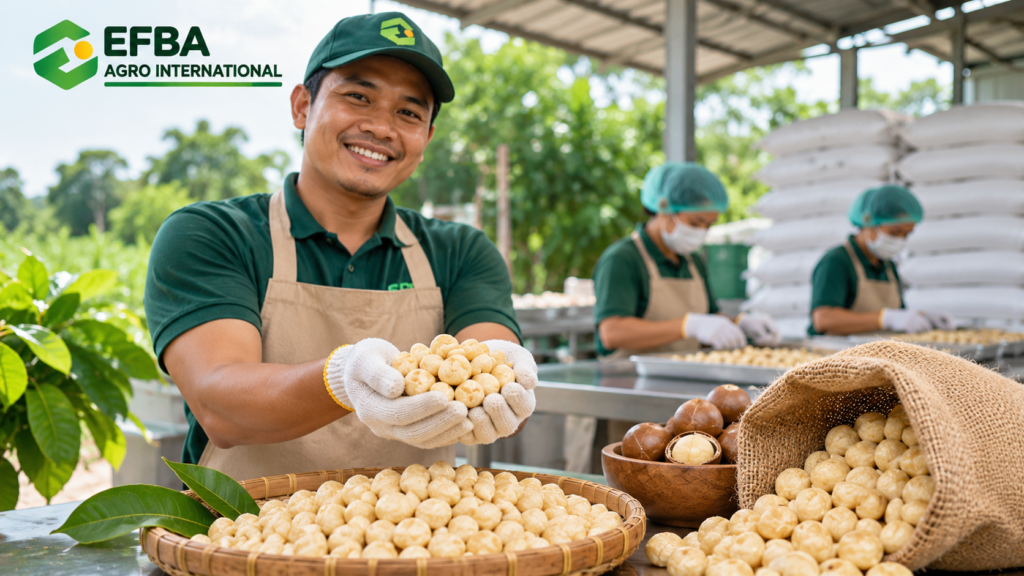
The following seven checks can help buyers compare Indonesian candlenut suppliers more effectively.
1. Verify Supplier Identity and Product Experience
Start by checking the supplier’s official website, business information, product portfolio, and ability to discuss your required commodity. Confirm whether the company acts as a producer, processor, trader, exporter, or sourcing coordinator.
These distinctions matter because each business model may involve different production control, inventory, and documentation arrangements. A credible supplier should explain its responsibilities without exaggerating its facilities or supply capacity.
2. Review Written Product Specifications
Request a product specification that identifies kernel grade, appearance, moisture, purity, and other relevant quality characteristics. Avoid depending solely on general descriptions such as “high quality” or “export grade.”
Additionally, clarify how the supplier measures each specification. Both parties should understand the acceptable limits and the procedure for resolving disagreements about quality.
3. Request Samples and Relevant Test Reports
Samples allow buyers to inspect appearance and evaluate suitability for their intended production process. Where appropriate, manufacturers can also conduct laboratory analysis and trial processing before purchasing commercial volumes.
However, a sample does not necessarily represent every future shipment. Therefore, buyers should establish lot-based acceptance procedures and request relevant documentation for commercial deliveries.
4. Confirm Wholesale Quantity and Supply Availability
Candlenut procurement may depend on seasonal availability, sourcing networks, sorting capacity, and existing commitments. Buyers should explain their required volume and purchasing frequency so the supplier can assess feasibility.
EFBA Agro’s product page states a minimum order quantity of one 20-foot full container load. However, buyers should confirm the actual net tonnage, loading plan, inventory availability, and shipment schedule directly because the container designation alone does not establish the permitted or achievable cargo weight.
5. Evaluate Packaging and Storage Conditions
A suitable supplier should be able to discuss bag size, inner lining, sealing, labeling, and handling requirements. Buyers may also request information about storage procedures and arrangements for avoiding moisture exposure.
Before purchasing, confirm whether the proposed packaging matches the shipment route and warehouse operations. Appropriate packaging can support quality preservation, but performance depends on the complete handling process.
6. Compare Commercial Terms and Total Landed Cost
Wholesale buyers should review unit price alongside freight, insurance where applicable, duties, taxes, inspections, and destination handling charges. The cheapest quoted product may not represent the lowest total purchasing cost.
Furthermore, buyers should clarify the applicable Incoterm, payment conditions, delivery point, and responsibilities for documentation. These commercial details should appear in a written quotation or agreement.
7. Check Export Documentation and Communication
International orders may require invoices, packing lists, shipping documents, certificates of origin, phytosanitary documentation, or other approvals depending on the product and destination country.
Buyers should verify these requirements before confirming the transaction. Reliable communication and clear responsibilities help reduce misunderstandings during procurement, inspection, and shipment preparation.
Official Data: Candlenut Production and Trade in Indonesia
Indonesia’s Ministry of Agriculture provides official agricultural statistics relevant to candlenut sourcing. In January 2026, the Directorate General of Estate Crops published its Estate Crop Statistics 2024–2026, Volume II, which provides a current reference for examining plantation commodity data.
Earlier official publications also contain candlenut-specific tables covering cultivated area, production, and export-import activity. For example, Estate Crop Statistics 2023–2025, Volume II includes provincial candlenut production data and trade information.
These publications demonstrate the availability of official statistical references for Indonesian candlenut procurement. However, national production figures should not be interpreted as the stock, export volume, or guaranteed shipment capacity of an individual supplier.
International buyers should therefore combine government statistics with direct verification of product grades, shipment availability, documentation, and supplier capabilities.
Official references: Directorate General of Estate Crops – Statistical Publications and Indonesian Estate Crop Statistics 2023–2025, Volume II.
EFBA Agro Expertise in Candlenut Wholesale and Agricultural Sourcing
EFBA Agro International presents itself as an Indonesian agricultural commodity supplier and exporter supporting wholesale buyers, distributors, and manufacturers. Its published commodity portfolio includes candlenut, cassava derivatives, coffee, cascara, palm products, and natural sweeteners.
The company’s website describes procurement networks, product specification matching, quality considerations, packaging, and export logistics coordination. These activities are relevant for businesses seeking wholesale candlenut, particularly when buyers need to discuss technical requirements before confirming procurement.
However, buyers should verify actual stock, current prices, testing arrangements, and shipment capabilities for each inquiry. Published product descriptions do not establish that every specification or commercial condition is available for every order.
1. Candlenut Product Selection and Specification Matching
EFBA Agro lists Grade A whole candlenut kernels with specific quality parameters on its official product page. This information gives buyers a starting point for reviewing suitability before requesting samples or quotations.
For manufacturers, specification matching helps clarify whether a proposed material meets production requirements. Buyers should communicate their intended application, acceptance criteria, and documentation expectations to support an accurate sourcing discussion.
Explore EFBA Agro’s Grade A Candlenut Kernels for published product information.
2. Wholesale Packaging and Procurement Coordination
EFBA Agro publishes options involving 25 kg and 50 kg sacks with PE inner lining, as well as a 500 kg jumbo bag option upon request. The company also provides information about wholesale purchasing and export quotation discussions.
These options are relevant for procurement teams that need to evaluate handling requirements and commercial order sizes. However, packaging, loading quantity, and shipment feasibility should be confirmed for the specific purchasing arrangement.
3. Quality Requirements and Buyer Communication
The company’s published sourcing approach emphasizes product quality, specification matching, and communication with agricultural producers and processing partners.
For candlenut buyers, this approach provides a basis for discussing kernel appearance, moisture, purity, testing requirements, and intended applications. Commercial quality acceptance should nevertheless rely on agreed specifications and relevant inspection results.
4. Agricultural Sourcing within the EFBA Business Ecosystem
EFBA Agro operates within the broader EFBA business ecosystem. PT EFBA Digital Mulia publishes business consulting and corporate development services, while EFBA Agro focuses on agricultural commodities and sourcing relationships.
These business areas support different needs. International buyers seeking candlenut should direct technical specifications and purchasing inquiries to EFBA Agro, while broader business consulting services fall under the relevant EFBA business entities.
For additional information about sourcing Indonesian commodities, read Indonesian Agricultural Commodity Exporter for Global Buyers.
EFBA Agro Candlenut Wholesale Procurement Process
EFBA Agro describes a sourcing and export workflow that begins with buyer requirements and continues through product evaluation, commercial discussions, and shipment planning.
For wholesale candlenut inquiries, the process can be summarized as follows:
Buyer Requirements → Product Specifications → Sample Evaluation → Quotation → Commercial Agreement → Quality Verification → Packaging → Shipment Coordination
Buyers should begin by specifying the required product grade, intended application, quantity, destination, and packaging preferences. Next, the parties can discuss sample evaluation, testing documents, availability, and quotation terms.
Once they agree on the commercial requirements, the relevant parties can coordinate procurement, inspection, packaging, and logistics according to the confirmed scope. This framework supports clearer purchasing expectations but does not guarantee a particular lead time or shipment capacity.
What Should Buyers Include in a Candlenut Wholesale RFQ?
A detailed Request for Quotation (RFQ) helps suppliers understand the purchasing requirements and prepare a more relevant commercial response. Incomplete inquiries may lead to repeated clarification about grade, quantity, packaging, and delivery terms.
The following example illustrates information that an international buyer may submit.
| RFQ Information | Illustrative Requirement |
| Product | Indonesian candlenut kernels |
| Grade | Whole Kernels, Grade A |
| Moisture | Maximum 7%, subject to agreement |
| Purity | Minimum 99%, subject to agreement |
| Quantity | 1 × 20-foot container, net weight to be confirmed |
| Packaging | 25 kg or 50 kg bags |
| Destination | Hamburg, Germany |
| Incoterm | FOB or CIF quotation requested |
| Documentation | Buyer-defined testing and import requirements |
| Delivery | Requested shipment month |
This is an illustrative RFQ, not a confirmed product quotation, available inventory, or shipment commitment from EFBA Agro. Buyers should also specify laboratory testing expectations and their intended application before finalizing the order.
FAQ About Candlenut Wholesale
1. What is candlenut wholesale?
Candlenut wholesale refers to purchasing candlenuts in larger commercial quantities for manufacturing, distribution, or further processing. Buyers typically require consistent product specifications, bulk packaging, and suitable delivery arrangements. Quality verification and clear commercial agreements are important because agricultural materials can vary by origin and handling.
2. How can I find a reliable candlenut supplier in Indonesia?
Start by evaluating the supplier’s business information, candlenut specifications, available quantities, packaging, and export capabilities. Request samples and relevant quality documents before making a bulk commitment. Additionally, compare commercial terms and clarify how the parties will handle product inspection and nonconforming goods.
3. What specifications should wholesale candlenut buyers check?
Important parameters include kernel appearance, moisture content, purity, physical defects, and oil-related characteristics where relevant. EFBA Agro publishes Grade A whole kernels with a maximum moisture content of 7% and minimum purity of 99%. However, buyers should confirm test methods and batch-specific compliance before purchasing.
4. What packaging is available for bulk candlenut?
Wholesale candlenut may use sacks with suitable inner lining or larger bulk bags depending on product requirements and handling arrangements. EFBA Agro publishes 25 kg and 50 kg PP sacks with PE inner lining, as well as a 500 kg jumbo bag option upon request. Buyers should confirm availability, suitability, and packing details for each order.
5. What is the minimum order quantity for EFBA Agro candlenut?
EFBA Agro’s candlenut product page lists a minimum order quantity of one 20-foot full container load. However, the actual cargo weight, available product volume, and loading arrangements require confirmation. Buyers should submit their required quantity and destination so the supplier can assess the proposed purchase.
6. Does EFBA Agro provide candlenut samples?
EFBA Agro’s published agricultural sourcing process discusses sample evaluation as part of its buyer collaboration approach. However, buyers should confirm sample availability, charges, shipping arrangements, and testing requirements for their specific inquiry. Commercial lots may still require separate inspection and quality acceptance.
7. Can Indonesian candlenuts be used for food manufacturing?
Yes, candlenuts are traditionally used in Indonesian culinary preparations and can serve as ingredients in suitable food manufacturing processes. However, raw candlenuts require proper processing and must not be treated as ready-to-eat products. Manufacturers should establish relevant processing controls and verify the requirements of their target markets.
8. Can candlenuts be exported from Indonesia?
Candlenuts can enter international trade subject to product classification, applicable export conditions, and importing-country requirements. Exporters and importers must confirm the relevant documents, customs procedures, and any required inspections or permits. Requirements vary by destination and the precise product form.
9. How do I request candlenut wholesale pricing?
Provide the supplier with your required grade, quantity, packaging, destination port, preferred Incoterm, and expected shipment schedule. Include testing or documentation requirements so the quotation reflects your actual procurement needs. Buyers can contact EFBA Agro through its official candlenut product page and quotation form.
Source Wholesale Candlenut from EFBA Agro International
Choosing a candlenut wholesale supplier requires careful evaluation of kernel quality, packaging, procurement quantities, and delivery arrangements. Buyers should prioritize clear specifications, relevant quality verification, and dependable communication rather than selecting suppliers solely by the lowest offered price.
EFBA Agro International supplies information and sourcing support for Indonesian agricultural commodities, including Grade A candlenut kernels. Its published offering includes specific quality parameters, bulk packaging options, and commercial sourcing arrangements for buyers seeking agricultural raw materials from Indonesia.

Source Premium Candlenut Wholesale from EFBA Agro International
Finding a reliable candlenut wholesale supplier is essential for businesses requiring consistent kernel quality, competitive bulk purchasing arrangements, and dependable international sourcing. Whether your company operates in food manufacturing, oil processing, spice distribution, or international trade, selecting the right supplier can help improve procurement efficiency, maintain product standards, and support long-term supply planning.
EFBA Agro International supports buyers seeking Indonesian agricultural commodities, including Grade A candlenut kernels for wholesale procurement. Through its published candlenut wholesale offering, buyers can review product specifications, moisture and purity requirements, available packaging options, and purchasing conditions before submitting an inquiry. Clear communication about product quality, order quantities, and shipment requirements helps both parties evaluate suitable sourcing arrangements.
For international buyers, successful candlenut wholesale procurement requires more than comparing prices. Businesses should consider kernel appearance, moisture content, purity, packaging suitability, shipping arrangements, and applicable import requirements. By discussing these factors with EFBA Agro International, buyers can better assess product suitability and establish clear expectations before confirming commercial orders.
If your company requires candlenut wholesale from Indonesia, contact EFBA Agro International to discuss your technical specifications, purchasing volume, packaging preferences, destination port, and preferred commercial terms. Buyers can also request information about current product availability, sampling arrangements, quality documentation, and shipment coordination based on their procurement requirements.
Explore Candlenut Supplier Indonesia – EFBA Agro to review the company’s published product specifications and wholesale purchasing information. You can also visit the EFBA Agro International official website to learn more about its agricultural commodity sourcing activities and submit a purchasing inquiry.
Request a candlenut wholesale quotation from EFBA Agro International and develop a more structured sourcing plan based on clear product specifications, quality expectations, purchasing quantities, and agreed commercial terms.