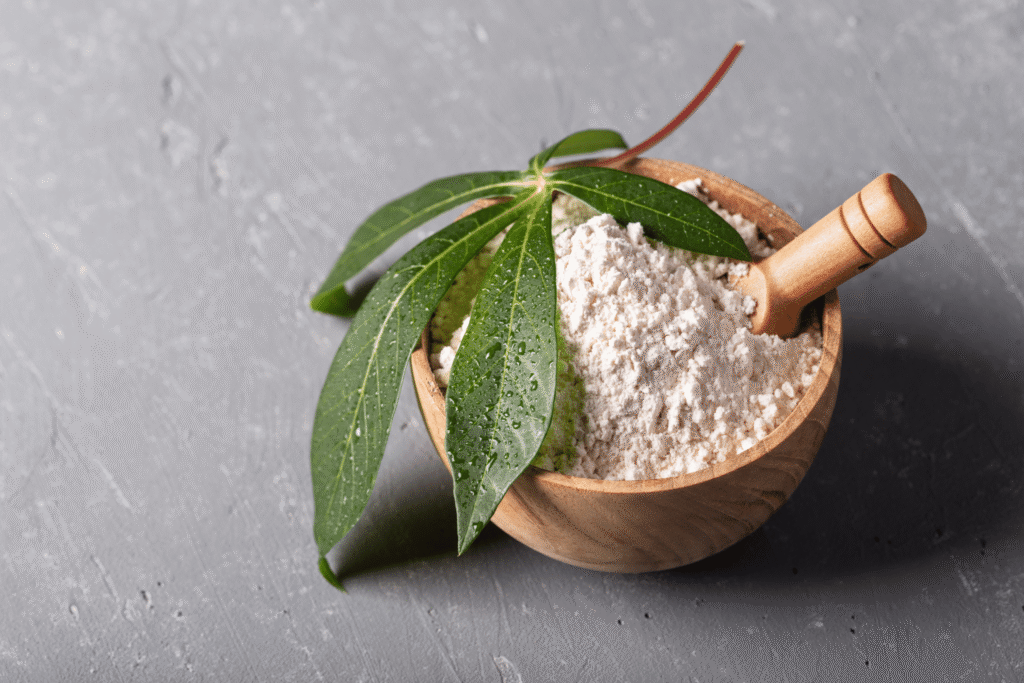

Cassava Flour stands among the most nutrient rich root based flours in the world, derived from cassava roots that have sustained communities for centuries. Known scientifically as Manihot esculenta, cassava grows as a tropical root crop that farmers cultivate widely across Africa, Asia, and Latin America. Today, global markets recognize cassava flour not only as a staple carbohydrate source but also as a versatile gluten free alternative that supports modern dietary patterns.
Unlike grain based flours, producers create cassava flour entirely from the fleshy storage roots of the cassava plant. These roots grow underground and develop thick, starchy tubers that store energy efficiently. When processors dry and mill the roots, they transform them into a fine, soft powder with a neutral aroma and mild taste. This simple yet powerful ingredient connects traditional agriculture with contemporary nutrition trends in a practical and sustainable way.
Because cassava adapts easily to different climates, farmers rely on it to strengthen food security in tropical regions where other crops struggle. The plant tolerates drought conditions and grows in marginal soils with minimal inputs. Beyond survival value, cassava offers impressive nutritional properties, and this article explores its origin, characteristics, benefits, and broad culinary potential in depth.
Nutrient Rich Roots and Botanical Origin
Farmers first cultivated cassava thousands of years ago in the Amazon basin, and over time traders introduced the crop to Africa and Asia through maritime routes. As communities recognized its resilience, they integrated cassava into daily agriculture and relied on it as a dependable staple. Today, agricultural systems across tropical regions still depend on this hardy shrub, and cassava flour represents the refined result of that long botanical journey.
The cassava plant grows as a woody shrub that can reach two to four meters in height. It produces palmate leaves and forms elongated roots beneath the soil surface. These roots may extend up to 80 centimeters and develop a thick brown outer peel that protects a dense white interior. Inside the root, the plant stores high concentrations of starch as an energy reserve. When producers process these roots into cassava flour, they preserve much of the root’s natural structure rather than isolating only starch, which differentiates cassava flour from tapioca starch.
Moreover, growers distinguish between sweet and bitter cassava varieties. Sweet cassava contains lower levels of naturally occurring cyanogenic compounds and requires minimal preparation before consumption. Bitter varieties contain higher levels, so communities traditionally grate, soak, ferment, or dry them to ensure safety. Through this careful handling, societies developed knowledge systems that allowed cassava flour to become both safe and nutritionally valuable across generations.
Physical Characteristics
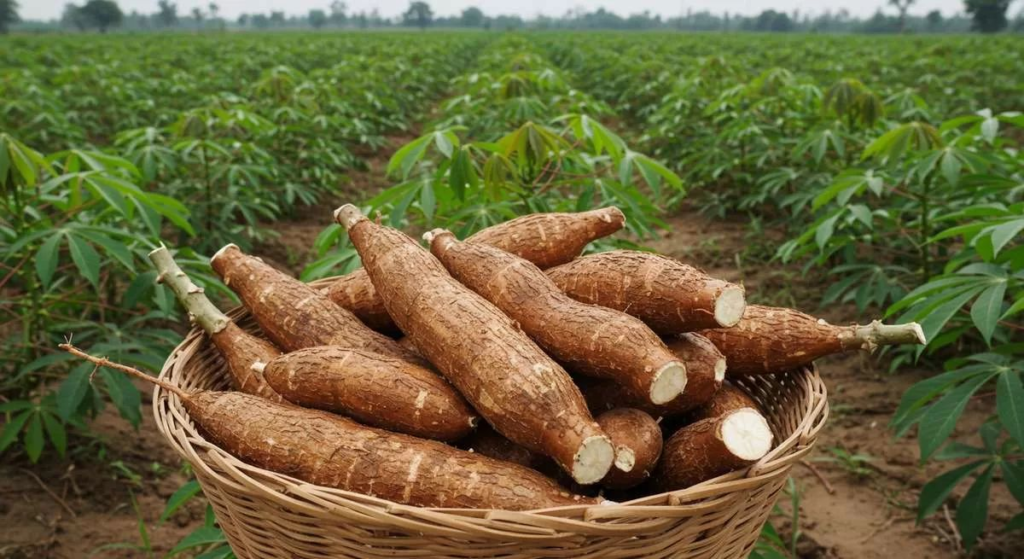
As processors dry and mill the roots, they create a fine powder that reflects the root’s natural density and structure. High quality cassava flour appears soft, smooth, and slightly off white in color. Its texture allows cooks to blend it easily into recipes without leaving gritty residues. Because producers mill the whole root rather than extracting only starch, cassava flour retains subtle structural complexity that influences how it behaves in dough and batter.
In addition, cassava flour carries a neutral aroma and mild taste. This neutrality allows chefs and home cooks to incorporate it into both sweet and savory preparations without altering dominant flavors. When bakers combine cassava flour with water, eggs, or plant based binders, the mixture forms a cohesive dough. The natural starch content supports binding and thickening, which helps create structure in flatbreads, pancakes, and pastries. As heat interacts with the starch molecules, the flour develops a tender interior and lightly crisp exterior in baked products.
Quality also depends on moisture control and uniform granulation. Producers who dry the roots properly reduce microbial growth and extend shelf life. Consistent milling ensures even hydration during cooking. Therefore, the physical properties of cassava flour do not arise by chance. Instead, they reflect careful agricultural practices and precise post harvest handling that preserve the integrity of nutrient rich roots from field to kitchen.
Nutritional Composition
From a nutritional perspective, cassava flour delivers a concentrated source of carbohydrates that support daily energy needs. On average, it contains around 80 percent carbohydrates, primarily in the form of starch. This high energy density explains why communities across tropical regions rely on cassava as a foundational food. The body converts these carbohydrates into glucose, which fuels physical activity and metabolic processes.
Beyond energy, cassava flour also provides dietary fiber that contributes to digestive health. Although it does not match the fiber levels of certain whole grains, it still supports bowel regularity and promotes a balanced gut environment when consumed within a varied diet. Furthermore, cassava roots contain small amounts of vitamin C, folate, potassium, and magnesium. While processing reduces some vitamin C content, trace minerals remain present in the final flour and assist with nerve signaling, muscle function, and metabolic stability.
Importantly, cassava flour contains no gluten because cassava is a root vegetable rather than a cereal grain. This characteristic makes cassava flour suitable for individuals who avoid gluten for medical or lifestyle reasons. Compared with refined wheat flour, it offers a simple plant based profile without added preservatives. Although it centers primarily on carbohydrates, its clean composition and natural origin strengthen its role in balanced dietary patterns worldwide.
Culinary Applications
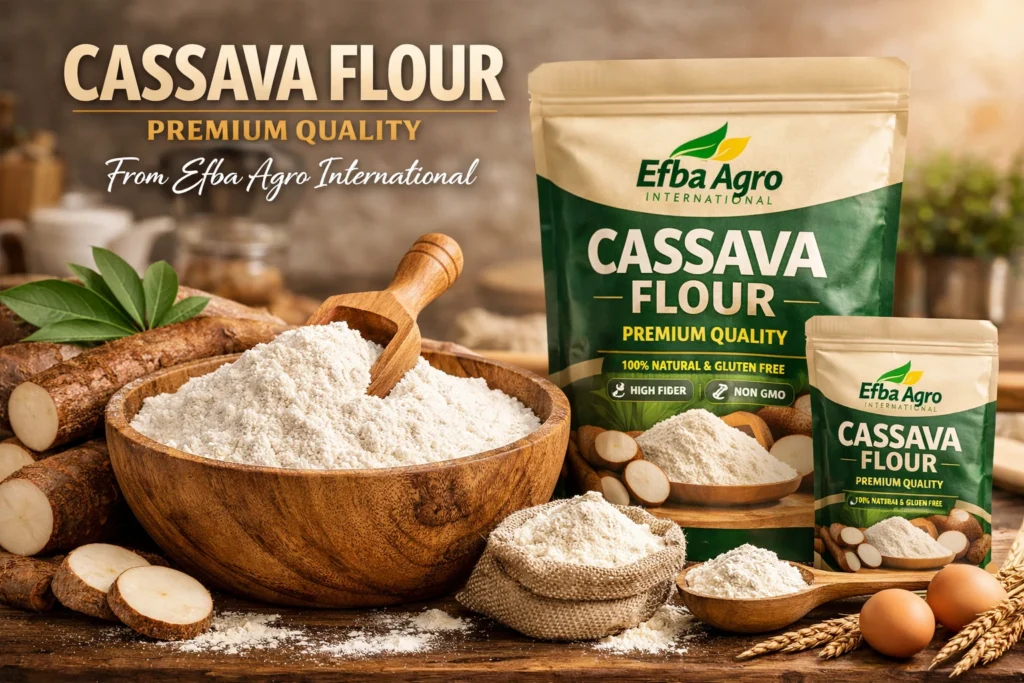
Across continents, culinary traditions integrate cassava flour into diverse dishes that reflect local culture and climate. In West Africa, cooks prepare staples such as fufu and other cassava based preparations that provide daily sustenance. In South America, families use cassava derivatives to create flatbreads and regional baked goods. Throughout Southeast Asia, street vendors and home kitchens transform cassava flour into snacks, desserts, and savory dishes that highlight its adaptability.
Because cassava flour features a fine texture and neutral taste, bakers frequently use it as a wheat alternative in gluten free recipes. When combined with eggs or natural binders, it helps create soft crumb structures in breads and cakes. Additionally, cooks rely on its thickening properties in soups, sauces, and stews. The starch reacts quickly to heat, forming smooth textures that enhance mouthfeel without overpowering flavor profiles.
Furthermore, cassava flour performs well in pancakes, crackers, tortillas, and pastry dough. Its natural density supports shaping and rolling, although the absence of gluten means recipes may require slight adjustments. Nevertheless, the final results remain tender and satisfying. For households seeking grain free solutions, cassava flour offers practical versatility that bridges traditional knowledge with contemporary dietary innovation.
Cassava Flour Nutrient Rich Roots and Agricultural Importance
Global agriculture continues to recognize cassava as one of the most resilient staple crops in tropical climates. Farmers value the plant because it tolerates drought, adapts to sandy or less fertile soils, and requires relatively low inputs. As a result, cassava cultivation strengthens food security in regions where environmental conditions challenge other crops.
The plant’s deep root system allows it to access underground moisture, which supports survival during dry seasons. Moreover, farmers can leave mature roots in the soil and harvest them gradually according to household needs or market demand. This flexibility reduces post harvest losses and stabilizes supply. When communities process harvested roots into cassava flour, they extend shelf life and create products suitable for trade and storage.
Beyond direct consumption, cassava contributes to rural economies by generating employment in cultivation, drying, milling, packaging, and distribution. Therefore, cassava flour represents more than a kitchen ingredient. It embodies agricultural resilience, cultural continuity, and economic opportunity. As demand for plant based and gluten free foods continues to rise, cassava flour strengthens its position within both local markets and global supply chains.
Cassava Flour Nutrient Rich Roots and Health Considerations
Understanding cassava also requires awareness of responsible preparation and balanced consumption. Fresh cassava roots naturally contain cyanogenic compounds that plants produce as defense mechanisms. However, traditional processing methods such as peeling, soaking, fermenting, drying, and cooking effectively reduce these compounds to safe levels. When producers follow proper standards, cassava flour becomes safe for regular dietary use.
Moderation remains important because cassava flour primarily supplies carbohydrates. Individuals should combine it with protein sources, vegetables, fruits, and healthy fats to create balanced meals. When integrated thoughtfully, cassava flour supports sustained energy without excessive dietary complexity. Nutrition professionals often recommend rotating carbohydrate sources to maintain dietary diversity, and cassava flour fits well within that strategy.
At the same time, consumers appreciate its simple ingredient profile. Cassava flour contains no gluten and typically undergoes minimal processing beyond drying and milling. This simplicity appeals to those who prefer recognizable plant based foods. Consequently, when people handle, store, and cook cassava flour correctly, they can enjoy its benefits while maintaining nutritional balance and safety.
At Efba Agro International, we remain committed to delivering high quality agricultural products rooted in sustainability and integrity. Discover our full range of commodities at https://efbaagro.id/#commodities and explore premium Cassava solutions at https://efbaagro.id/tapioca-flour-food-grade/. Learn more about our company at https://efbaagro.id/ and connect directly with us via WhatsApp at https://wa.me/6285285469417.
Cassava Flour Nutrient Rich Roots and Historical Development
Human civilizations have relied on cassava for centuries, and over time communities refined cultivation methods that increased both yield and consistency. Early farmers in South America selected hardy root cuttings and replanted them season after season, gradually improving resilience and root size. As maritime trade expanded, explorers carried cassava stems across oceans, and farmers in Africa and Asia quickly adopted the crop because it adapted well to tropical climates. Through this gradual movement, cassava flour emerged as a stable food ingredient that supported both rural villages and growing urban centers.
As societies integrated cassava into daily diets, they developed structured preparation techniques to enhance safety and flavor. Indigenous groups mastered fermentation, drying, and roasting processes that reduced natural toxins while improving digestibility. These traditional practices did not disappear with modernization. Instead, they evolved into standardized processing systems that allow producers to maintain quality control while preserving the nutritional integrity of nutrient rich roots. In this context, cassava flour represents both cultural heritage and technological progress.
Furthermore, governments and agricultural institutions began to recognize cassava as a strategic crop for food security. Research centers studied improved planting materials, disease resistance, and post harvest handling. As a result, farmers today benefit from decades of accumulated knowledge that strengthens productivity and sustainability. Cassava flour therefore reflects a long historical journey shaped by indigenous wisdom, agricultural science, and global exchange.
Cassava Flour Nutrient Rich Roots and Socioeconomic Impact
Beyond its nutritional value, cassava flour contributes significantly to rural livelihoods and community stability. Smallholder farmers cultivate cassava using relatively simple tools and moderate inputs, which lowers barriers to entry. Because the crop tolerates irregular rainfall and poor soils, farmers reduce risk and maintain income stability even when other crops fail. Consequently, cassava flour production supports household resilience and regional food systems.
Local processing facilities also generate employment opportunities in peeling, slicing, drying, milling, packaging, and distribution. Women often play central roles in these value chains, especially in small scale processing enterprises. Through these activities, communities create additional income streams that circulate within local economies. Therefore, cassava flour does not only nourish individuals. It strengthens economic networks that sustain entire regions.
In addition, policymakers increasingly promote cassava cultivation as part of national food diversification strategies. By encouraging domestic cassava flour production, governments reduce reliance on imported wheat and other grains. This shift can stabilize prices and enhance food sovereignty. As consumer demand for gluten free and plant based ingredients grows internationally, cassava flour also opens export potential for producing countries. Through this combination of local empowerment and global opportunity, cassava flour reinforces its position as both a staple food and a strategic agricultural commodity.
Cassava Flour Nutrient Rich Roots and Modern Dietary Trends
In recent years, consumers have shown growing interest in whole food ingredients that align with clean label preferences. Within this movement, cassava flour has gained attention as a simple, plant based alternative to highly refined grain products. Because manufacturers produce it primarily through peeling, drying, and milling, the ingredient maintains a recognizable origin. This transparency appeals to individuals who value minimally processed foods.
Moreover, the gluten free characteristic of cassava flour aligns with expanding dietary needs. While not everyone requires gluten avoidance, many people explore gluten free recipes to diversify their meals. Cassava flour offers a practical option because it mimics certain structural properties of wheat flour without containing gluten proteins. As a result, home bakers experiment with cassava flour in breads, muffins, cookies, and flatbreads that suit varied dietary preferences.
Athletes and physically active individuals also appreciate cassava flour as an energy dense carbohydrate source. The body efficiently converts its starch into glucose, which supports endurance and recovery. When combined with protein rich foods and vegetables, cassava flour contributes to balanced meals that sustain activity levels. Therefore, modern nutrition trends do not replace traditional uses. Instead, they reinterpret cassava flour within contemporary health frameworks that emphasize flexibility, simplicity, and plant based nourishment.
Cassava Flour Nutrient Rich Roots and Environmental Sustainability
Environmental sustainability increasingly shapes agricultural decisions worldwide, and cassava cultivation offers several advantages in this regard. The plant’s tolerance for drought and marginal soils reduces the need for intensive irrigation systems. Farmers can cultivate cassava in areas where other crops would require higher water inputs. This resilience helps conserve resources and supports adaptation to changing climate conditions.
Additionally, cassava’s root system contributes to soil stability. When farmers manage fields responsibly, cassava cultivation can reduce erosion in certain environments. Because the crop requires fewer chemical inputs compared with some cereal crops, it may also lower environmental impact when integrated into diversified farming systems. However, sustainable outcomes depend on proper land management and crop rotation practices.
Processing cassava into flour further extends its usability and reduces post harvest waste. Fresh roots deteriorate quickly after harvest, but drying and milling convert them into a shelf stable product that can travel long distances. This transformation enhances efficiency across supply chains. When producers implement energy efficient drying techniques and responsible sourcing, cassava flour becomes part of a broader strategy that balances productivity with environmental awareness. Through careful stewardship, farmers and processors can ensure that nutrient rich roots continue to serve both people and the planet.
Cassava Flour Bulk Export Logistics and Quality Assurance
International trade demands precision, consistency, and transparent documentation. Exporters who coordinate 25 ton container shipments organize sourcing, drying, milling, packaging, and inspection processes carefully to maintain product integrity. Producers monitor moisture levels to prevent clumping and microbial growth, ensuring that Cassava Flour arrives at its destination in optimal condition. They also implement standardized particle size control to guarantee uniform performance in industrial recipes.
Furthermore, quality assurance teams conduct laboratory testing to verify purity, starch content, and absence of contaminants. By following food safety management systems and export regulations, suppliers protect both buyers and end consumers. Packaging typically involves multi layered sacks stacked securely within containers to prevent damage during transit. Efficient logistics partners then manage port handling, shipping schedules, and customs clearance.
Because global buyers depend on uninterrupted supply chains, exporters who handle Cassava Flour with disciplined quality control earn long term trust. As demand continues to expand across continents, reliable bulk logistics remain essential to sustaining competitive advantage in the international agricultural marketplace.
direct consultation and pricing, feel free to contact us via WhatsApp and discuss your Cassava Flour requirements with our team.
EFBA Agro International: A Global Supplier Built on Quality, Integrity, and Long-Term Collaboration

EFBA Agro International has grown into one of Indonesia’s most trusted agricultural exporters, serving food manufacturers, distributors, and industrial companies around the world. Built on a foundation of transparency, quality assurance, and long-term collaboration, EFBA Agro delivers a portfolio of commodities designed to support the evolving needs of global supply chains. For buyers who rely on Cassava Wholesale as a core ingredient in food production or industrial applications, EFBA Agro provides not only consistent quality but also the confidence that every shipment meets international standards. Our sourcing network spans multiple agricultural regions in Indonesia, giving buyers access to stable production, clear documentation, and export-ready packaging that aligns with global procurement systems.
What sets EFBA Agro apart is our commitment to direct collaboration with processors, mills, and farmer groups. This approach ensures full visibility over raw material selection, processing techniques, and quality control benchmarks. While Cassava Flour remains one of our strongest export categories, we are equally dedicated to developing a diversified commodity line that supports a wider range of industries. Our export operations emphasize reliability, communication, and proactive updates, helping buyers plan ahead and avoid supply disruptions. EFBA Agro positions itself not just as a vendor but as a strategic partner capable of supporting long-term procurement planning across multiple product categories.
EFBA Agro’s Full Commodity Line: From Cassava Flour to Premium Spices and Natural Ingredients
Beyond our focus on Cassava Flour, EFBA Agro International offers a comprehensive selection of agricultural commodities tailored for global markets. Each product category is handled with strict quality protocols, ensuring consistency from the point of harvest to export clearance. Our portfolio includes Arenga Palm Sugar (both molded and granulated), Candlenut (shelled and polished grades), Black Pepper, Vanilla Beans, Nutmeg, Cloves, Cocoa derivatives, and specialty natural ingredients sourced from Indonesia’s most productive agricultural zones. These commodities support various industries from food and beverages to natural cosmetics, wellness, and industrial formulations.
The diversity of this portfolio allows buyers to consolidate multiple SKUs under one trusted supplier, significantly reducing logistical complexity and administrative workload. Companies that purchase Cassava Flour often expand their partnership with EFBA Agro once they recognize the operational advantages of working with a supplier capable of managing large-volume shipments, export documentation, container optimization, and consistent communication. Our website’s commodities section highlights each product’s specifications, applications, and export readiness, ensuring that buyers can evaluate options clearly before placing an order. By offering a multi-commodity ecosystem with modern, export-focused processes, EFBA Agro reinforces its commitment to supporting long-term growth for global manufacturers and distributors.
FAQ Cassava Flour
- How should you store Cassava Flour to maintain freshness?
First, store Cassava Flour in an airtight container to protect it from moisture and humidity. Then, keep it in a cool and dry place away from direct sunlight. If you live in a humid climate, you can place the container inside a refrigerator to extend shelf life. Proper storage prevents clumping and preserves its natural texture and flavor for months. - Does Cassava Flour contain allergens?
Unlike wheat based products, Cassava Flour does not contain gluten, which makes it suitable for individuals who avoid gluten. However, you should always check cross contamination risks during processing and packaging. Manufacturers that follow strict quality control standards reduce allergen exposure and maintain product safety for sensitive consumers. - Can Cassava Flour replace wheat flour in every recipe?
Although Cassava Flour works well in many baked goods, it does not always behave exactly like wheat flour. Because it lacks gluten, you may need to adjust liquid ratios or add binding ingredients. When you follow recipe guidance carefully, you can achieve soft textures and stable structures in breads, cakes, and flatbreads. - How does Cassava Flour differ from tapioca starch?
While both originate from cassava roots, Cassava Flour uses the whole root, whereas tapioca starch isolates only the starch component. As a result, cassava flour retains more fiber and offers a slightly denser texture. This distinction influences baking performance and nutritional value. - Is Cassava Flour suitable for long term daily consumption?
When you include Cassava Flour as part of a balanced diet, it provides reliable carbohydrate energy. However, you should combine it with protein sources, vegetables, and healthy fats to ensure nutritional diversity. Balanced consumption supports overall wellness and dietary stability.