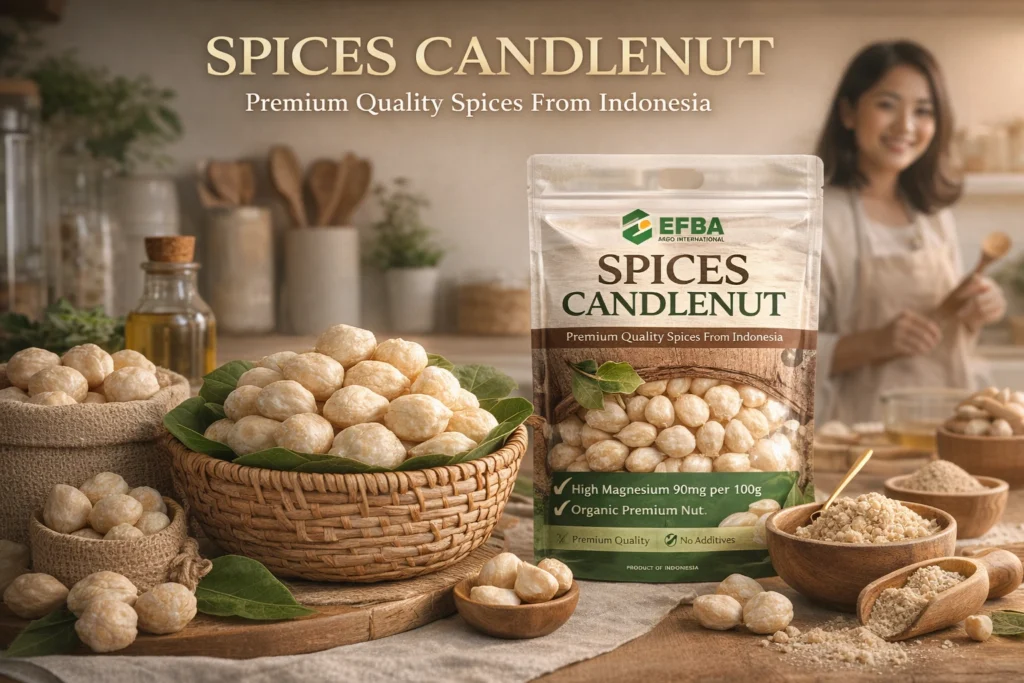
Spices Candlenut plays a major role in traditional cuisine and modern nutrition because this organic premium nut delivers rich flavor, dense nutrients, and impressive culinary versatility. Many cultures across Southeast Asia, the Pacific Islands, and tropical regions rely on this nut to create thick sauces, aromatic spice pastes, and balanced savory dishes. Farmers cultivate the candlenut tree in fertile tropical environments where warm temperatures and steady rainfall encourage strong growth.
Nutrition experts also highlight the mineral composition found in this nut, especially magnesium, which reaches about 90 milligrams per 100 grams and supports muscle function, energy metabolism, and nerve health. Culinary professionals value the creamy texture produced by the natural oils inside the kernel, while food producers recognize its potential as a natural ingredient that enhances flavor without artificial additives.
As global demand for authentic natural ingredients grows steadily, many chefs and nutrition specialists explore the advantages of incorporating spices candlenut into both traditional and modern recipes. The ingredient therefore connects culinary heritage, nutritional science, and sustainable agriculture while continuing to gain attention across international food markets.
İçindekiler
Understanding the Botanical Identity of Candlenut Trees
Botanists classify the candlenut tree under the scientific name Aleurites moluccanus, a tropical species that thrives in warm climates and fertile soils. The tree grows tall with wide branches that produce clusters of green fruits which gradually harden and turn brown when they reach maturity. Each fruit contains a hard shell that protects the pale kernel inside, the edible portion that culinary traditions value across tropical cultures. Farmers harvest the fruit, dry the seeds carefully, and crack the shell to reveal the creamy kernel that cooks later transform into aromatic spice pastes. The ingredient widely known in culinary traditions as spices candlenut emerges from this kernel and provides the thick texture that many regional recipes depend on.
The candlenut tree grows quickly in diverse agricultural environments, which allows farmers to cultivate it in mixed crop systems alongside coconut, cassava, and other tropical plants. This adaptability encourages sustainable farming practices because the tree stabilizes soil while supporting biodiversity in tropical landscapes. Agricultural communities across Indonesia, Malaysia, and Pacific islands have cultivated this plant for centuries, passing knowledge about harvesting and processing from one generation to another. As trade networks expanded through maritime routes, merchants carried candlenut seeds to new regions where farmers integrated the plant into local agriculture.
Furthermore, culinary traditions quickly embraced the nut because its natural oil content produced rich flavor and creamy consistency. Chefs discovered that grinding roasted kernels created a paste that thickened soups, sauces, and curries naturally. The ingredient therefore evolved into a key component of regional spice blends that continue to define Southeast Asian cuisine today.
Historical Origins and Cultural Importance of Candlenut
Historical accounts reveal that early Austronesian communities transported candlenut trees across islands during ancient migration routes throughout Southeast Asia and the Pacific. Travelers valued the tree not only for culinary purposes but also for practical uses such as natural lighting, traditional medicine, and wood resources. The seeds burned slowly when used as candles, which explains why many cultures refer to the plant as the candlenut tree. Over time, communities began to refine culinary applications of the kernel, which later gained recognition in international markets as spices candlenut.
Cultural traditions across Indonesia illustrate how deeply the ingredient integrates into daily cooking practices. Families prepare spice pastes that combine candlenut with garlic, shallots, chili, turmeric, and ginger to create the aromatic base for many traditional dishes. This combination produces complex flavor layers that transform simple ingredients into memorable meals. Recipes such as rendang, opor, and sambal rely on the nut to provide body and smooth texture, which prevents coconut milk from separating during long cooking processes.
In addition, ceremonial dishes often include candlenut as a symbol of abundance and nourishment. Local culinary traditions associate rich sauces and thick spice blends with hospitality and celebration. Communities therefore consider candlenut more than just an ingredient; they see it as a culinary heritage element that represents shared culture and regional identity.
Modern gastronomy continues to celebrate this heritage. Many chefs around the world experiment with spices candlenut to recreate authentic Southeast Asian flavors or to develop innovative fusion cuisine that blends global ingredients with traditional techniques.
Nutritional Composition and Mineral Richness of Candlenut
Nutrition science reveals a complex profile of beneficial nutrients inside the candlenut kernel. The nut contains healthy fats, plant proteins, and essential minerals that support metabolic health and sustained energy levels. Among these nutrients, magnesium stands out because the kernel provides approximately ninety milligrams per one hundred grams. This mineral supports nerve function, muscle contraction, and enzyme activity that regulates hundreds of biochemical processes inside the human body. Researchers studying tropical food ingredients often highlight spices candlenut as a notable plant source of this essential nutrient.
Healthy fatty acids also form a large portion of the candlenut composition. These natural oils help the body absorb fat soluble vitamins while supporting balanced cholesterol levels when consumed responsibly. In addition, the kernel provides phosphorus and potassium, which contribute to bone strength and proper cellular function. Although the nut contains high fat content, the fats mostly originate from natural plant oils rather than processed sources.
Traditional knowledge already recognized many of these nutritional qualities long before modern science confirmed them. Communities across Southeast Asia used candlenut oil in natural remedies for skin care and hair treatment. The oil nourishes the scalp, enhances hair shine, and supports skin hydration because it penetrates deeply into the outer layers of skin.
Nutrition experts encourage proper preparation methods because raw kernels contain natural compounds that require cooking. Roasting or cooking the nut neutralizes those compounds and unlocks its rich flavor while preserving the beneficial nutrients found in spices candlenut.
Culinary Foundations in Southeast Asian Cooking
Across Southeast Asia, chefs rely on candlenut to construct the foundation of many traditional recipes. Grinding roasted kernels into paste releases aromatic oils that blend smoothly with spices and herbs, producing thick sauces that coat ingredients evenly. Culinary traditions recognize this unique characteristic and frequently combine the nut with garlic, shallots, lemongrass, turmeric, and chili. This mixture creates spice bases that transform into flavorful stews, curries, and grilled marinades. The ingredient recognized globally as spices candlenut therefore anchors countless regional dishes that highlight bold and balanced flavors.
Indonesian cuisine offers some of the most well known examples of candlenut applications. Rendang, one of the country’s iconic dishes, uses candlenut paste to stabilize coconut milk during long slow cooking processes. Sambal recipes also incorporate the nut to soften chili intensity while adding creamy texture that binds all ingredients together. Opor ayam, a traditional chicken dish simmered in coconut milk and spices, depends on candlenut paste to deliver smooth consistency and rich aroma.
Home cooks appreciate the nut because it supports flavor balance without overpowering other ingredients. The oils function as natural emulsifiers that hold spices together while distributing flavor throughout the dish. As a result, even simple meals gain deeper complexity when cooks include candlenut in the spice mixture.
Contemporary chefs increasingly experiment with the ingredient in creative ways. They adapt spices candlenut into plant based sauces, gluten free thickeners, and modern fusion recipes that merge Southeast Asian culinary heritage with global gastronomy.
Agricultural Cultivation and Tropical Farming Systems
Tropical agriculture provides the ideal environment for candlenut trees because warm temperatures, fertile soil, and steady rainfall support vigorous plant growth. Farmers cultivate these trees across many regions of Southeast Asia, especially Indonesia, Malaysia, and several Pacific islands where agricultural traditions have relied on tree crops for generations. The candlenut tree adapts well to mixed farming systems because it grows alongside coconut, banana, cacao, and cassava without creating strong competition for nutrients. In these environments, agricultural communities maintain sustainable landscapes that balance productivity with ecological stability. Within these systems, the kernel widely recognized in culinary trade as spices candlenut becomes one of the most valuable harvest products collected from mature trees.
Farmers usually plant candlenut seedlings in well drained soil and allow the tree to develop naturally over several years. The plant forms broad canopies that help protect the ground from excessive sunlight while maintaining moisture in the surrounding soil. Once the trees reach maturity, they begin producing clusters of fruit that contain the hard shelled seeds. Workers collect the fruits, dry them under controlled conditions, and carefully remove the shells to obtain the kernels used for food processing. These steps require skill and patience because proper drying preserves the natural oils that determine flavor quality.
Rural communities depend on this crop not only for culinary trade but also for economic stability. Smallholder farmers often sell dried kernels to local markets or export buyers who distribute the ingredient internationally. As global culinary interest in spices candlenut continues to expand, many farming regions experience stronger demand for consistent quality harvests. This demand encourages farmers to maintain careful cultivation methods that protect soil health, ensure reliable yields, and sustain traditional agricultural knowledge across generations.
Health Benefits and Functional Food Potential
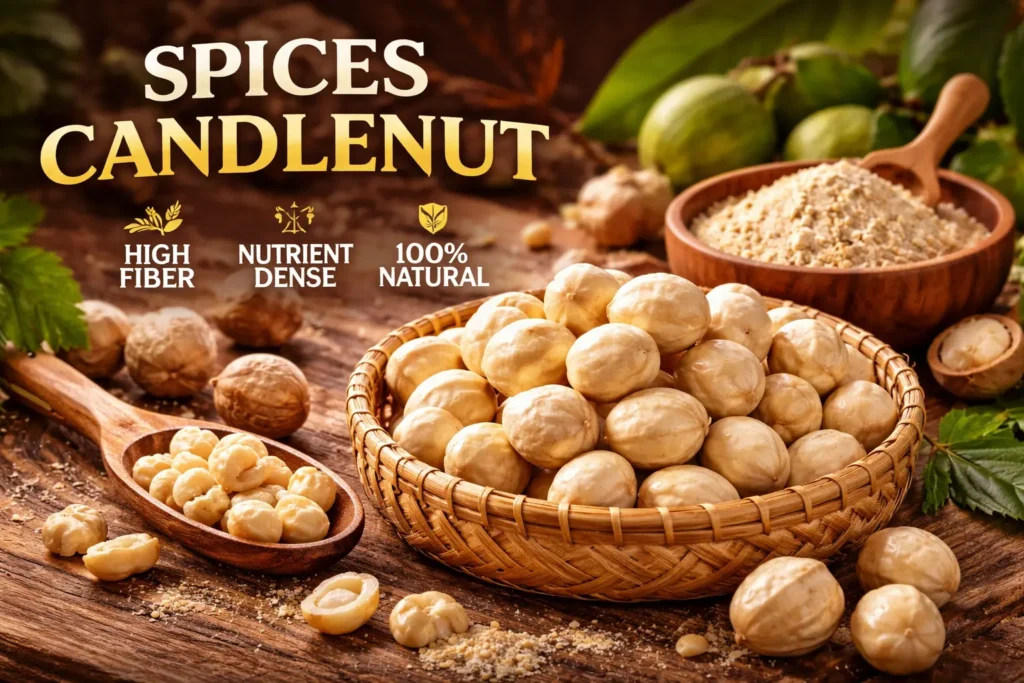
Food scientists continue to examine the health potential of candlenut because the kernel contains a combination of beneficial nutrients that support balanced diets. Natural plant oils form the largest portion of the nut’s composition and provide energy that the body can use gradually throughout the day. These oils include fatty acids that contribute to metabolic health when consumed in moderate amounts. At the same time, the mineral content inside the kernel attracts attention from nutrition researchers. Among these nutrients, magnesium remains especially important because the nut contains around ninety milligrams per one hundred grams, an amount that supports muscle performance and nerve communication. This nutritional profile strengthens the reputation of spices candlenut as a valuable natural ingredient.
Magnesium contributes to more than three hundred biochemical reactions within the human body. It helps regulate muscle contraction, supports energy production in cells, and maintains proper nerve signaling. When individuals consume foods rich in magnesium, they support normal metabolic functions that influence energy levels and physical endurance. The presence of this mineral in candlenut therefore adds functional value beyond its culinary use.
In addition to magnesium, candlenut kernels contain small quantities of potassium and phosphorus. These minerals help maintain healthy bones and support the balance of fluids inside body tissues. Traditional communities recognized many of these advantages long before modern nutritional analysis confirmed them. They often included candlenut in daily meals to provide both flavor and nourishment.
Today, nutrition experts encourage the use of carefully cooked spices candlenut within balanced diets because roasting neutralizes natural compounds found in raw kernels while preserving the beneficial oils and minerals that contribute to overall wellness.
Candlenut Oil and Cosmetic Applications

The natural oil extracted from candlenut kernels has gained attention far beyond culinary traditions. For centuries, communities across Southeast Asia used this oil as a natural treatment for skin and hair because of its nourishing properties. When pressed from the roasted kernel, the oil contains fatty acids that moisturize the skin while supporting scalp health. Many traditional beauty practices therefore relied on candlenut oil to maintain strong hair growth and healthy skin appearance. Modern cosmetic researchers still study the ingredient, which the beauty industry often associates with spices candlenut due to its origin in the same kernel used for culinary purposes.
Hair care products frequently incorporate candlenut oil because the fatty acids penetrate the hair shaft and improve shine and smoothness. The oil helps reduce dryness and protects the scalp from irritation caused by environmental factors. As consumers increasingly search for plant based cosmetic ingredients, candlenut oil continues to attract attention as a natural alternative to synthetic conditioners.
Skin care formulations also benefit from this oil because it absorbs quickly into the skin surface and helps maintain moisture balance. Traditional remedies often applied small amounts of candlenut oil to soothe dry or irritated skin. The oil forms a protective barrier that prevents excessive water loss while allowing the skin to remain soft and flexible.
Cosmetic manufacturers today explore the integration of candlenut oil into natural beauty products such as lotions, hair serums, and massage oils. These developments demonstrate how a traditional ingredient can adapt successfully to modern wellness markets. Through both culinary and cosmetic uses, spices candlenut continues to connect agricultural heritage with contemporary consumer demand for natural solutions.
Global Trade and Commodity Value
International trade networks have increasingly recognized candlenut as a valuable agricultural commodity because global cuisine continues to expand its interest in authentic tropical ingredients. Food manufacturers, restaurants, and spice distributors search for reliable sources that provide consistent quality kernels suitable for culinary processing. This demand encourages exporters in Southeast Asia to strengthen supply chains that maintain product integrity from harvest to international distribution. Within these trade networks, spices candlenut occupies an important position among specialty ingredients that support global food diversity.
Export markets evaluate candlenut quality based on several factors including kernel size, oil content, moisture level, and cleanliness during processing. Producers therefore invest in improved drying techniques and careful packaging to maintain freshness during transportation. When suppliers meet these quality standards, they gain stronger access to international buyers who supply restaurants, food processors, and retail spice markets.
Global culinary interest also drives demand for natural thickening agents and plant based flavor enhancers. Because candlenut provides both texture and mild nutty flavor, it offers a unique advantage compared with other ingredients that require additional additives. Chefs and product developers increasingly explore this ingredient to create sauces, seasoning pastes, and specialty foods that highlight authentic Southeast Asian flavors.
Economic opportunities surrounding spices candlenut also benefit rural farming communities. Export activities generate income that supports agricultural families and encourages younger generations to continue cultivating traditional crops. As a result, the trade of candlenut not only strengthens global cuisine but also supports sustainable rural livelihoods.
Sustainability and Organic Production

Sustainable agriculture plays a crucial role in the long term future of candlenut production. Farmers who cultivate this tree often integrate it into agroforestry systems where multiple crops grow together in balanced ecological environments. This approach reduces soil erosion, maintains biodiversity, and improves resilience against climate variations. Because the candlenut tree adapts well to mixed cultivation, many farms combine it with other tropical plants that contribute additional food resources and economic value. In these sustainable systems, spices candlenut emerges as a key product that supports both environmental stability and agricultural productivity.
Organic farming practices further strengthen the reputation of candlenut as a natural ingredient. Many growers avoid heavy chemical fertilizers and instead rely on natural compost and traditional soil management techniques. These practices preserve soil fertility while protecting surrounding ecosystems from contamination. As global consumers increasingly prefer organic food products, producers who follow environmentally responsible methods gain competitive advantages in international markets.
Researchers studying tropical agriculture emphasize the importance of maintaining genetic diversity among candlenut trees. Diverse plant populations reduce vulnerability to pests and diseases while preserving the resilience of the species. Farmers who plant multiple varieties within the same region contribute to this ecological stability and protect the future of candlenut cultivation.
Environmental awareness therefore shapes the modern production of spices candlenut. By combining traditional knowledge with sustainable farming strategies, agricultural communities ensure that this valuable ingredient continues to support both global cuisine and ecological balance for generations to come.
Modern Culinary Innovation and Future Potential
Modern culinary innovation continues to expand the role of candlenut beyond its traditional uses. Chefs working in international kitchens increasingly experiment with tropical ingredients that introduce new textures and flavors to contemporary dishes. Because candlenut contains natural oils that produce creamy consistency, it serves as an alternative thickening agent that works well in gluten free cooking. Restaurants now incorporate spices candlenut into sauces, plant based spreads, and gourmet marinades that highlight both tradition and creativity.
Food technologists also investigate how candlenut can contribute to modern food products. Its emulsifying properties help stabilize mixtures in sauces and dressings without relying on artificial additives. Product developers therefore consider the ingredient valuable for natural food formulations that appeal to health conscious consumers. As interest in plant based diets continues to grow, the nut offers potential as a component in innovative recipes that require both richness and nutritional value.
Culinary education also plays an important role in introducing this ingredient to new audiences. Cooking schools and food media often present candlenut as a signature element of Southeast Asian cuisine. Through demonstrations and recipe development, chefs teach students how roasting and grinding the kernel releases its full aromatic potential.
These developments suggest strong future prospects for spices candlenut within global gastronomy. As consumers explore diverse food cultures, they discover ingredients that combine flavor, nutrition, and cultural heritage. Candlenut stands among those ingredients that connect traditional agricultural knowledge with modern culinary exploration.
At the same time, readers who want to explore agricultural products from trusted suppliers can visit efba at https://efbaagro.id/. Those interested in cassava based ingredients may learn more about Cassava through this page https://efbaagro.id/tapioca-flour-food-grade/. To discover additional agricultural commodities available in global markets, explore the commodities section here https://efbaagro.id/#commodities. For partnership inquiries or product information, direct communication is available through WhatsApp at https://wa.me/6285285469417.
EFBA Agro International: Endonezya’nın En Seçkin Tarımsal Ürünlerine Açılan Güvenilir Kapınız

EFBA Agro International stands as a premier export company dedicated to delivering Indonesia’s most valuable agricultural resources to global markets. With a strong commitment to quality, sustainability, and ethical sourcing, we operate as a bridge between Indonesia’s fertile lands and international buyers seeking premium-grade natural products.
Our expertise extends far beyond the supply chain of Toptan Baharatlar: Mum Cevizi (Candlenut)s; it encompasses an integrated export ecosystem built on transparency, farmer empowerment, and global-standard processing. EFBA Agro International is recognized not only for providing premium Toptan Baharatlar: Mum Cevizi (Candlenut)s but also for offering a diversified portfolio of Indonesian agricultural commodities.
Our philosophy is rooted in protecting Indonesia’s rich biodiversity while supporting sustainable livelihoods for local communities. By integrating technology-driven logistics, export-ready packaging, and quality control at every step, we position ourselves as a trusted partner for global importers seeking reliable, ethically produced, and high-value agricultural commodities.
Bir Diğer: Küresel İthalatçılar Neden Efba Agro’ya Güveniyor?
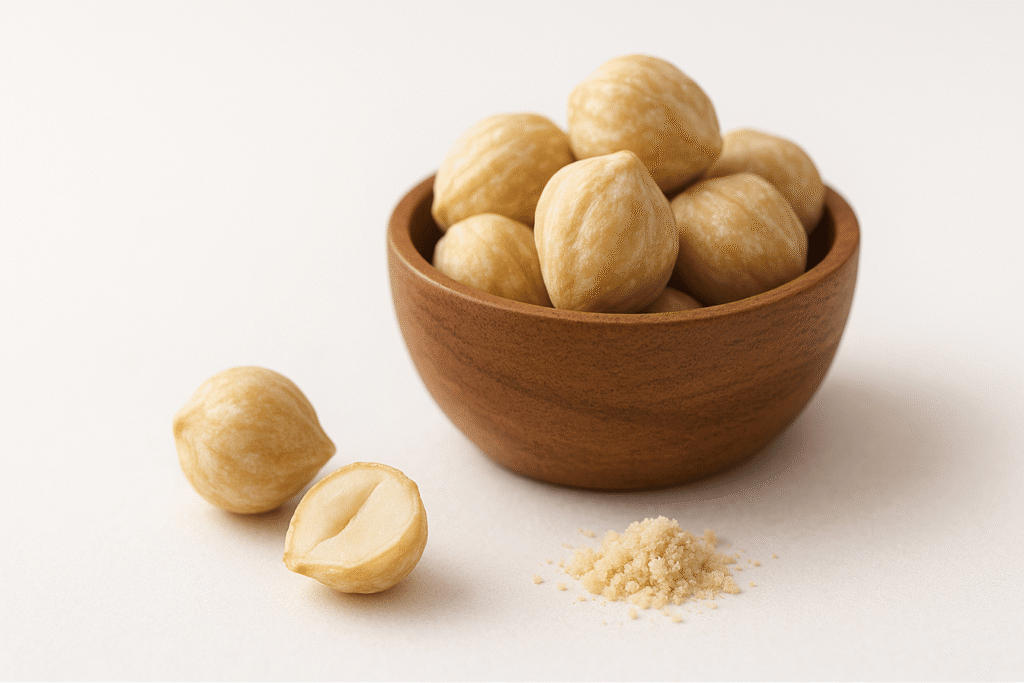
Efba Agro tarafından desteklenen platform, Endonezya çiftçilerini şeffaf ve verimli bir ihracat sistemi aracılığıyla küresel alıcılarla buluşturur. Ağımız, mum cevizi, palmiye şekeri ve tapioka unu gibi başlıca emtiaları öne çıkararak, izlenebilirlik, tazelik ve sürdürülebilirlik sağlar. Bizimle ortaklık yapmak, her adımda premium kalite, adil fiyatlandırma ve profesyonel ihracat desteği almanız anlamına gelir.
Endonezya'dan toptan mum ağacı fıstığı baharatı tedarik etmeye hazır mısınız?
Ortak Olun Efba Agro bugün, küresel ithalatçılar tarafından güvenilen, sürdürülebilir, yüksek kaliteli ve maliyet-etkin baharat tedariki için.
👉 Şimdi WhatsApp üzerinden bizimle iletişime geçin: [Buraya Tıklayın]
Premium Emtia Portföyümüz: Toptan Mum Cevizinin (Candlenut) Ötesinde
FAQ Spices Candlenut
- How should consumers store spices candlenut to maintain freshness and flavor?
Consumers should store spices candlenut in an airtight container and keep it in a cool, dry environment. This method protects the natural oils inside the kernel and prevents moisture exposure that can reduce quality. Additionally, storing the nut away from direct sunlight helps preserve aroma and texture for a longer period. Many culinary professionals also refrigerate candlenut when they plan to keep it for several months. As a result, proper storage ensures that the ingredient retains its creamy consistency and nutritional value. - Why do most recipes recommend roasting spices candlenut before cooking?
Many traditional recipes recommend roasting spices candlenut because heat improves both flavor and safety. Roasting reduces natural compounds found in raw kernels while releasing aromatic oils that create richer taste. Furthermore, the roasting process softens the texture of the kernel and makes grinding easier when preparing spice pastes. Consequently, cooks achieve smoother sauces and more balanced flavors when they prepare the nut correctly. - Can spices candlenut replace other nuts in cooking applications?
Yes, cooks often use spices candlenut as a substitute for other nuts when they want thicker sauces or richer textures. The kernel contains natural oils that help bind ingredients together, which works especially well in spice pastes and curry bases. However, the flavor profile remains mild and earthy rather than sweet. Therefore, chefs usually combine it with herbs and spices instead of using it alone. - How does spices candlenut contribute to plant based cuisine?
Spices candlenut supports plant based cooking because it provides natural fat and creamy texture without dairy ingredients. When blended into sauces or marinades, the nut creates a smooth consistency that resembles cream or butter. In addition, its neutral taste allows chefs to highlight herbs, vegetables, and spices while maintaining balanced richness in vegan recipes. - What factors determine high quality spices candlenut in global trade?
Quality spices candlenut usually shows a clean cream colored kernel with minimal moisture and consistent size. Producers carefully dry the seeds after harvest because controlled drying preserves oil content and flavor. Buyers also evaluate cleanliness and packaging standards before importing the product. Therefore, proper processing and storage practices play a crucial role in maintaining premium grade quality. - Are there traditional non culinary uses for spices candlenut?
Yes, communities historically used spices candlenut for purposes beyond cooking. For example, people extracted oil from the kernel for hair care treatments and skin moisturizing remedies. In addition, some cultures burned the seeds as natural candles because the oil produced steady light. These diverse uses demonstrate how the plant supported daily life in traditional societies.