Commodity Export has become one of the most dynamic sectors in global trade, bridging tropical resources with international markets. Among the fastest-growing commodities, Arenga palm sugar stands out as a natural, sustainable sweetener that supports both local farmers and global manufacturers. However, when it comes to choosing between molded palm sugar and granulated palm sugar, many importers wonder—which is better for their business?
At Efba Agro, we provide both molded and granulated Arenga palm sugar ready for export at any time. Let’s explore the differences, advantages, and market suitability of each to help you decide which one fits your product line and target customers best.
Commodity Export Trends for Natural Sweeteners
In today’s global market, the commodity export of natural and sustainable sweeteners has increased significantly. Consumers are now shifting from refined sugar to natural alternatives with lower glycemic indexes and richer flavor profiles. According to trade data, Asia—especially Indonesia—plays a major role in supplying Arenga palm sugar to Europe, the Middle East, and North America.
Unlike cane sugar, Arenga palm sugar is produced through traditional methods that maintain its mineral content and natural caramel-like taste. The export potential for this commodity continues to rise, supported by its clean-label appeal in health-conscious markets. This growing trend pushes exporters like Efba Agro to consistently meet international quality standards while ensuring sustainability across their supply chain.
You can explore our full range of commodities to discover other natural products in high global demand.
Commodity Export Insight: Molded Palm Sugar
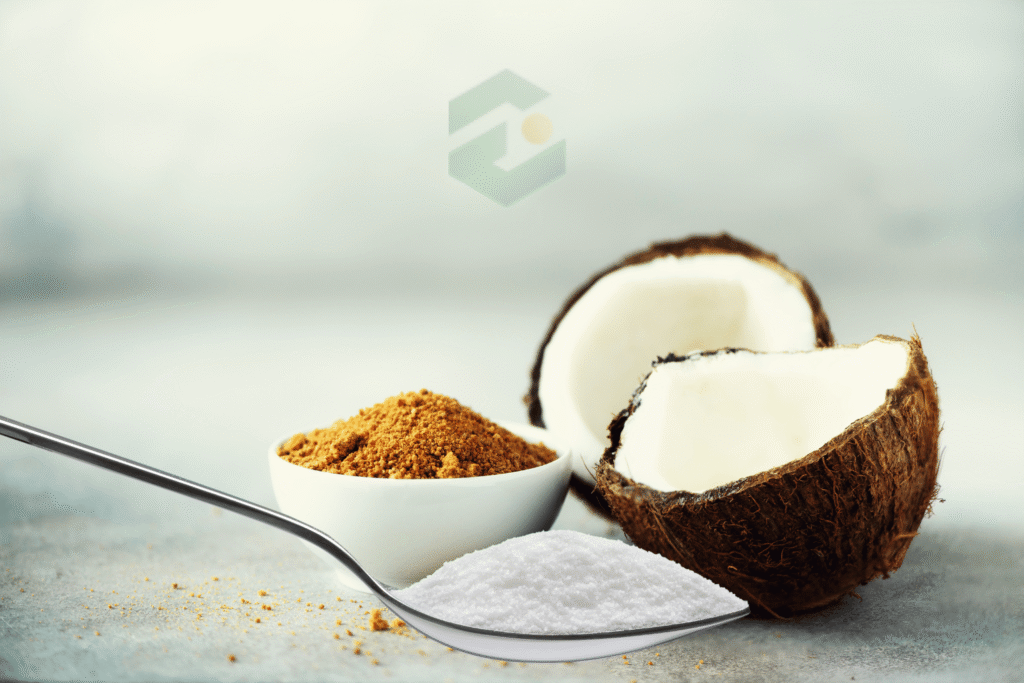
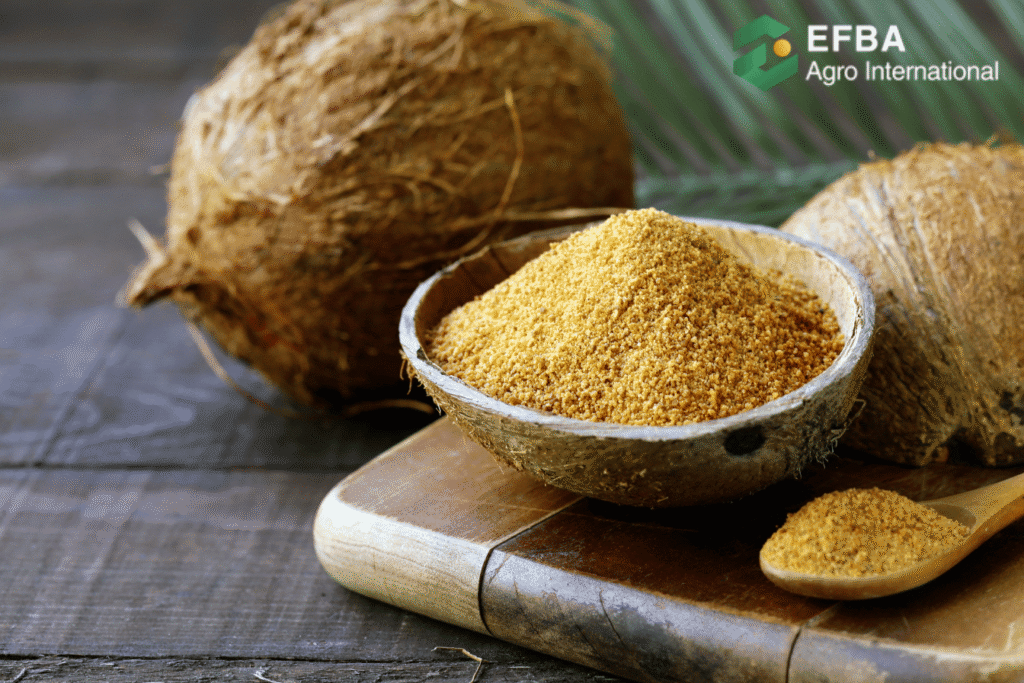
Molded Arenga Palm Sugar is the classic form of palm sugar, usually molded into cylindrical or round shapes. It’s a favorite among traditional food producers, beverage makers, and artisanal brands that value authenticity and rich aroma.
From a commodity export perspective, molded sugar holds strong appeal for niche markets that appreciate handcrafted products. Each mold reflects the traditional Indonesian production process—collected sap is boiled slowly until thickened and then poured into natural molds.
Molded palm sugar is often preferred by manufacturers who want to preserve cultural identity and natural flavor intensity. It is widely used in ethnic cuisines, specialty desserts, and organic food brands seeking a rustic and authentic presentation.
Another advantage is shelf life. Due to its dense form and low moisture content, molded palm sugar travels well and remains stable even in long-distance shipping an essential factor for international buyers. If you are looking to import molded sugar, Efba Agro ensures consistent size, clean packaging, and export-grade moisture control.
Commodity Export Comparison: Granulated Palm Sugar
Granulated Arenga Palm Sugar represents a modern, convenient version of traditional palm sugar. It’s processed into fine granules that dissolve quickly in both hot and cold beverages, making it highly suitable for industrial food and drink manufacturers.
In terms of commodity export, granulated sugar is more adaptable for large-scale applications. Its uniform texture allows easy measurement, blending, and packaging—ideal for instant coffee, bakery mixes, sauces, and ready-to-drink products.
From a business standpoint, granulated palm sugar reduces wastage during production and improves efficiency in product formulation. It also meets the demand of global buyers who prioritize ease of use without compromising natural quality.
At Efba Agro, our granulated Arenga palm sugar is produced through a controlled dehydration process that maintains its nutrient value while ensuring consistent granule size. This makes it an excellent fit for bulk commodity export and private-label partnerships.
Commodity Export Decision: Which Palm Sugar Is Better?
When comparing molded and granulated palm sugar, there’s no one-size-fits-all answer—it depends on your market focus and customer preferences.
If your target market values traditional authenticity, artisanal branding, or handcrafted appearance, molded palm sugar is your ideal choice. Its visual appeal and cultural story make it a premium product in gourmet or organic markets.
However, if your focus is scalability, industrial use, or modern packaging, granulated palm sugar offers greater practicality. It integrates easily into automated production lines and suits mass-market distribution.
Ultimately, the better choice depends on your commodity export strategy. Both molded and granulated sugars serve distinct market needs, and having both options available allows flexibility in international trade.
At Efba Agro, we understand that every importer has unique requirements. Whether you need bulk orders, custom packaging, or mixed product loads, our team ensures smooth export processes—from sourcing to shipment documentation.
Partner with Efba Agro for Reliable Commodity Export
Choosing a trusted partner is key to sustainable trade growth. Efba Agro provides consistent quality control, direct sourcing from certified producers, and strong logistics support for international shipments.
As part of our commitment to excellence, we offer full traceability for every batch of molded and granulated Arenga palm sugar. Each export is carefully inspected to meet international food safety standards, including moisture content, granule consistency, and purity.
If you are exploring new opportunities in commodity export or want to add premium natural sweeteners to your product portfolio, Efba Agro is ready to collaborate. We supply reliable commodities and ensure timely delivery to any global port.
Start your partnership today contact us via WhatsApp to discuss your requirements and receive a personalized quotation.