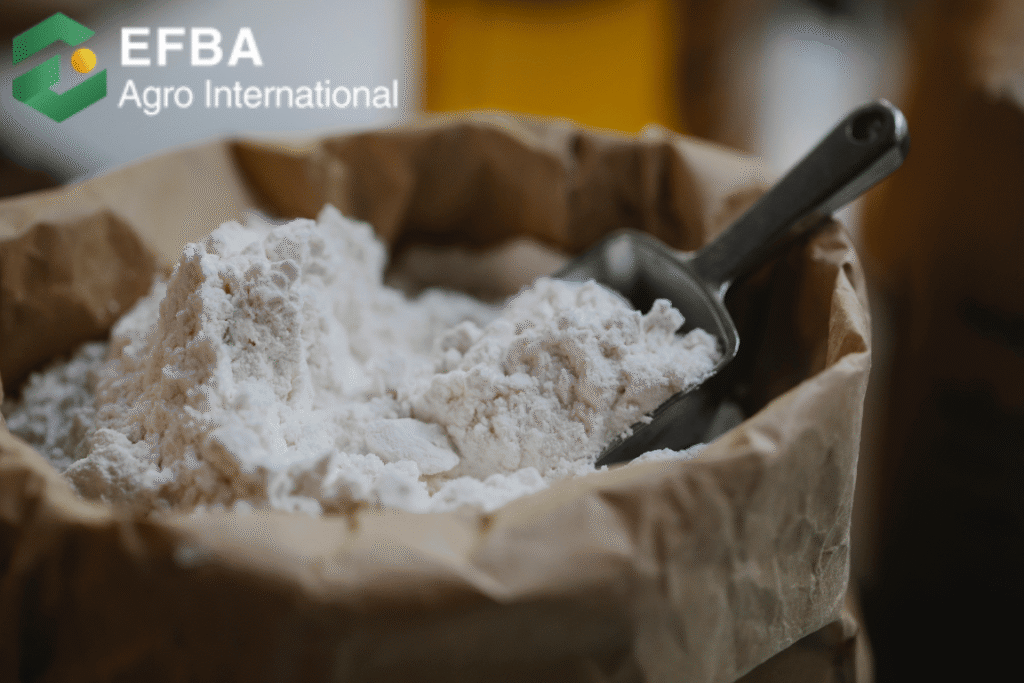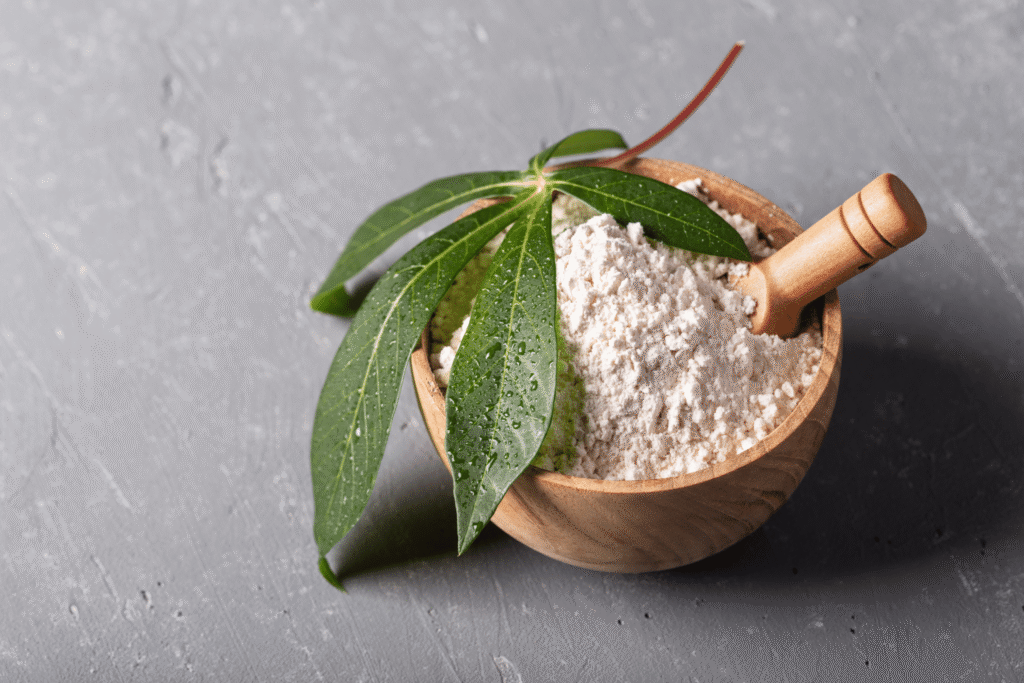

Cassava Flour has long been recognized as one of the most important agricultural commodities derived from cassava, a tropical root crop that plays a major role in global food systems. Known for its high carbohydrate content, clean flavor, and natural energy density, cassava flour stands out as a reliable staple for communities across Asia, Africa, and South America.
In organic crop form, packed in 50kg premium-grade sacks, cassava flour reflects not only food security but also sustainability, versatility, and nutritional value. This article explores cassava flour from its botanical origin to its defining characteristics, nutritional composition, benefits, and wide-ranging applications, offering a comprehensive reference for understanding this essential root-based resource.
İçindekiler
Origin and Botanical Background
Originating from cassava, scientifically known as Manihot esculenta, this root-based ingredient has a long agricultural history, and cassava flour itself represents the refined form of a perennial woody shrub belonging to the Euphorbiaceae family. Cassava is native to South America, particularly the Amazon basin, where indigenous communities cultivated it thousands of years ago as a dependable source of energy. Over time, cassava spread through trade routes and colonial agriculture to Africa and Asia, adapting remarkably well to tropical and subtropical climates. The plant thrives in poor soils, withstands drought conditions, and produces high yields even with minimal agricultural inputs.
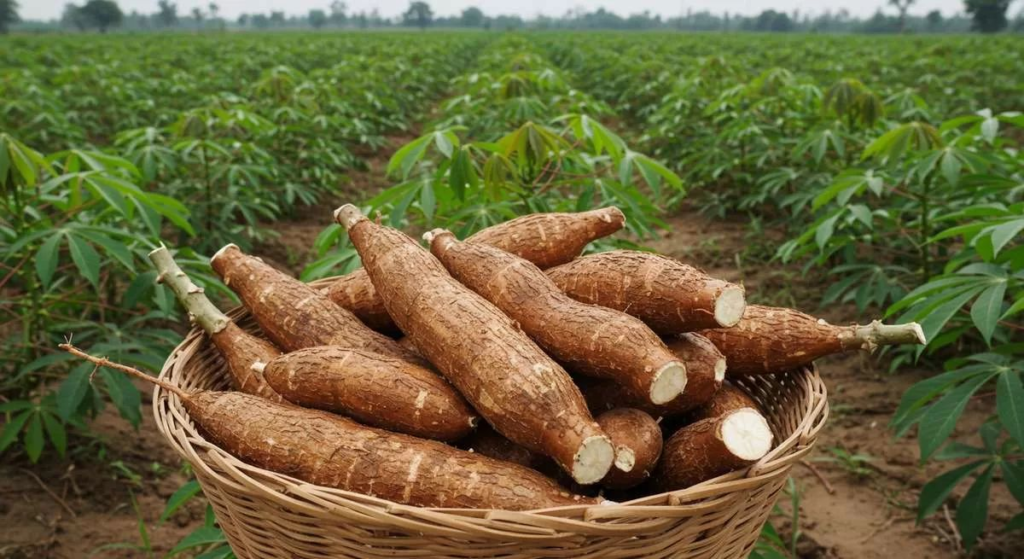
Cassava roots, often referred to as cassava tubers or manioc, are thick, elongated, and covered in rough brown skin with starchy white flesh inside. This root is the primary raw material for cassava flour. Unlike cereal grains, cassava is a root crop, which makes its flour naturally gluten free and suitable for a wide range of dietary needs. Historically, cassava flour became popular because it could be stored for long periods when properly processed, helping communities survive seasonal food shortages.
In many cultures, cassava has symbolic importance as a survival crop. Farmers value it for its flexibility in harvesting, since roots can remain in the ground until needed. This resilience is one of the reasons cassava flour remains relevant today, especially in organic and sustainable agriculture systems. As a premium organic crop, cassava flour reflects careful cultivation practices that avoid synthetic chemicals while preserving soil health and crop integrity.
Cassava Flour Characteristics and Unique Identity
Distinguished by a set of physical and functional traits, cassava flour carries an identity that differs significantly from grain-based alternatives. Visually, it appears as a fine to slightly coarse powder, typically white to off-white in color, depending on processing and cassava variety. Its neutral aroma and mild taste make it extremely adaptable in culinary and industrial uses, as it does not overpower other ingredients.
One of the defining features of cassava flour is its high starch concentration. This gives it excellent binding and thickening properties. When mixed with water and heated, cassava flour forms a smooth, cohesive texture that is widely appreciated in traditional and modern food preparations. Unlike wheat flour, cassava flour contains no gluten, making it suitable for individuals with gluten intolerance or those following plant-based and allergen-conscious diets.
Cassava itself is often confused with other root crops such as yam or sweet potato, but it has its own distinct identity. Cassava roots are denser, higher in starch, and less sweet than sweet potatoes. This starch-rich nature is what allows cassava flour to function as a major energy source. Another unique trait is its adaptability to various climates, which ensures consistent supply and availability.
From an agricultural perspective, cassava flour represents stability. The crop’s ability to grow under challenging conditions contributes to food resilience. These characteristics make cassava flour not just a functional ingredient, but also a strategic commodity for long-term food systems and organic agricultural development.
Nutritional Composition and Energy Value
Recognized globally for its role as a calorie-rich ingredient, cassava flour is widely regarded as an energy-dense food component derived from tropical agriculture. Carbohydrates account for the majority of its nutritional profile, providing a readily available source of calories that support daily energy requirements. This makes cassava flour particularly valuable in regions where caloric sufficiency is a priority.
In addition to carbohydrates, cassava flour contains small amounts of protein and minimal fat. While it is not a high-protein ingredient, its role as an energy base complements other protein-rich foods in balanced diets. Cassava flour also contributes essential minerals such as calcium, phosphorus, potassium, and magnesium, which support bone health, muscle function, and electrolyte balance.
Dietary fiber is another important component, especially when cassava flour is produced using whole-root methods. Fiber supports digestive health, promotes satiety, and helps regulate blood sugar levels when consumed as part of a varied diet. Cassava also contains vitamin C in its fresh form, although levels may decrease during processing.
From a nutritional standpoint, cassava flour’s simplicity is one of its strengths. It offers clean energy without excessive fats or additives, making it suitable for both traditional diets and modern nutritional planning. In organic form, cassava flour retains its natural composition while avoiding chemical residues, aligning with growing global demand for clean-label and responsibly sourced food ingredients.
Benefits for Food Security and Daily Use
Playing a vital role in agricultural sustainability, cassava flour offers benefits that extend far beyond basic nourishment. One of its most important roles is supporting food security. Because cassava plants are resilient to drought and adaptable to different soil types, they ensure consistent harvests even under unpredictable environmental conditions. This reliability translates into steady flour production and availability.
For daily consumption, cassava flour serves as a versatile base ingredient. It can be used in breads, flatbreads, porridges, noodles, snacks, and traditional dishes across cultures. Its neutral flavor allows it to blend seamlessly into both savory and mildly sweet preparations. Cassava flour is also widely used in home cooking, small-scale food businesses, and community-based food systems.
Health-wise, cassava flour is gentle on digestion and suitable for people seeking alternatives to grain-based flours. Its gluten-free nature makes it accessible to individuals with celiac disease or gluten sensitivity. Moreover, cassava flour supports energy replenishment for physically active individuals due to its high caloric value.
From an economic perspective, cassava flour supports rural livelihoods. Cassava farming and flour production create employment opportunities and add value to agricultural supply chains. As demand for organic and plant-based ingredients continues to grow, cassava flour stands as a sustainable option that benefits both producers and consumers.
Uses and Cultural Significance
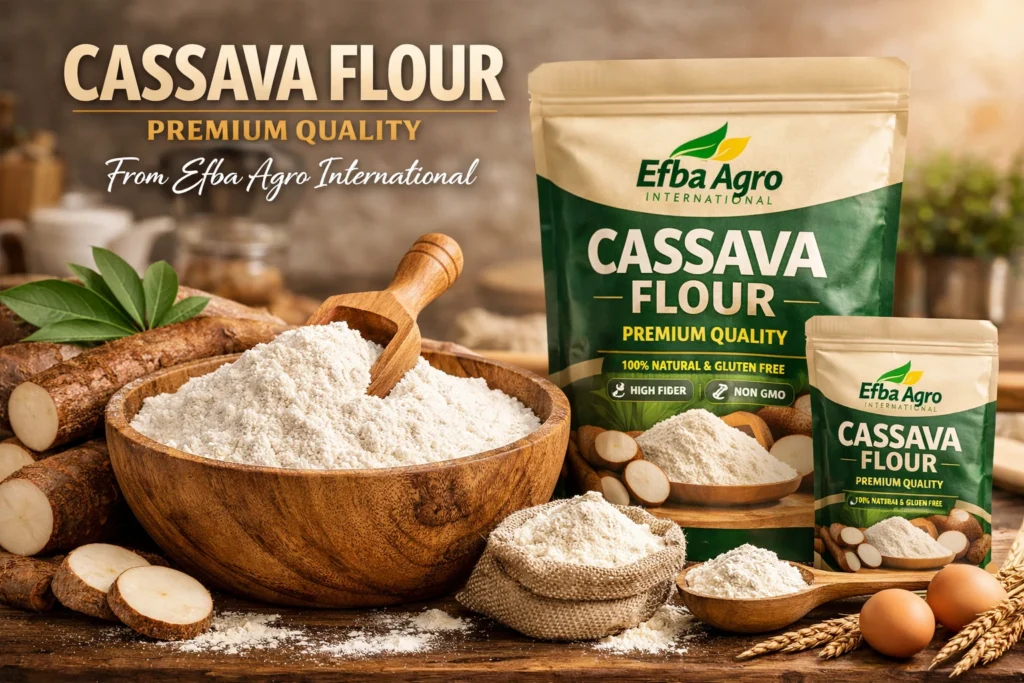
Deeply embedded in culinary traditions, cassava flour carries cultural meaning that extends across continents and generations. In Africa, cassava flour is used to make staple foods such as fufu, gari-based meals, and thick porridges that accompany vegetable and protein dishes. In Latin America, it appears in flatbreads, cakes, and traditional recipes passed down through generations. In Asia, cassava flour is incorporated into snacks, noodles, and regional specialties.
Beyond food, cassava flour also plays a role in non-food applications such as biodegradable materials, traditional crafts, and local trade systems. Its ability to bind and thicken has made it valuable in small-scale industries long before modern processing technologies emerged.
Culturally, cassava represents resilience and adaptability. Communities rely on it during times of scarcity, and its presence in daily meals reinforces its status as a trusted staple. The organic cultivation of cassava further enhances its cultural and environmental value, emphasizing harmony with nature and sustainable land use.
In the global context, cassava flour continues to gain recognition as a clean, plant-based, and energy-rich ingredient. Its growing popularity reflects shifting consumer preferences toward natural, traceable, and responsibly sourced agricultural products. As awareness increases, cassava flour remains firmly positioned as both a traditional staple and a modern solution.
By understanding cassava’s role globally, we appreciate why products like Cassava Flour matter beyond the kitchen. They represent a connection between traditional food systems and evolving markets that value nutrition, adaptability, and cultural heritage.
Bulk Tubers and Supply Chain Perspective
For businesses and food producers, sourcing cassava flour in bulk tubers such as 1 ton supplies means access to a high‑quality root source that supports scalable production. This is especially relevant for companies focused on healthy, gluten‑free, plant‑based, and energy‑rich ingredients. Bulk supplies ensure consistency, cost‑efficiency, and reliable availability for manufacturers and large‑scale baking operations.
At the intersection of agriculture and industry, cassava stands as a versatile commodity crop that can be integrated into supply chains around the world. Its adaptability and nutritional assets make it ideal for markets ranging from health food sectors to mainstream food production.
As you explore sourcing and applications of cassava flour, consider the broader ecosystem supporting sustainable crop growth, processing standards, and quality assurance that make bulk cassava products viable for international and local markets.
In conclusion, Cassava Flour is far more than a simple baking ingredient. It represents a centuries‑old food tradition with deep cultural roots, significant nutritional benefits, and expanding applications in modern diets and food industries. Whether you are a food entrepreneur, baker, or curious consumer, understanding cassava’s place in the world helps you see why this humble root continues to matter.
Doğrudan danışmanlık ve fiyatlandırma için WhatsApp üzerinden bizimle iletişime geçebilir ve Toptan Manyok ihtiyaçlarınızı ekibimizle görüşebilirsiniz. WhatsApp and discuss your Cassava Flour requirements with our team.
EFBA Agro International: Kalite, Dürüstlük ve Uzun Vadeli İş Birliği Üzerine Kurulu Küresel Bir Tedarikçi

EFBA Agro International EFBA Agro International, dünya genelindeki gıda üreticilerine, distribütörlere ve endüstriyel şirketlere hizmet veren, Endonezya’nın en güvenilir tarımsal ihracatçılarından biri haline gelmiştir. Şeffaflık, kalite güvencesi ve uzun vadeli iş birliği temeli üzerine kurulan EFBA Agro, küresel tedarik zincirlerinin değişen ihtiyaçlarını desteklemek üzere tasarlanmış bir emtia portföyü sunar. Gıda üretimi veya endüstriyel uygulamalarda Manyok Unu’na temel bir bileşen olarak güvenen alıcılar için EFBA Agro, yalnızca tutarlı kalite değil, aynı zamanda her sevkiyatın uluslararası standartları karşıladığına dair güven de sağlar. Kaynak ağımız Endonezya’nın birden fazla tarımsal bölgesine yayılmıştır ve alıcılara istikrarlı üretim, net dokümantasyon ve küresel satın alma sistemleriyle uyumlu ihracata hazır ambalajlar sunar. Toptan Manyok as a core ingredient in food production or industrial applications, EFBA Agro provides not only consistent quality but also the confidence that every shipment meets international standards. Our sourcing network spans multiple agricultural regions in Indonesia, giving buyers access to stable production, clear documentation, and export-ready packaging that aligns with global procurement systems.
EFBA Agro’yu farklı kılan unsur, işleyiciler, değirmenler ve çiftçi gruplarıyla doğrudan iş birliğine olan bağlılığımızdır. Bu yaklaşım, hammadde seçimi, işleme teknikleri ve kalite kontrol kriterleri üzerinde tam görünürlük sağlar. Manyok Unu en güçlü ihracat kategorilerimizden biri olmaya devam ederken, daha geniş bir endüstri yelpazesini destekleyen çeşitlendirilmiş bir emtia hattı geliştirmeye de eşit derecede önem veriyoruz. İhracat operasyonlarımız güvenilirlik, iletişim ve proaktif bilgilendirmeleri vurgular; bu da alıcıların önceden planlama yapmasına ve tedarik kesintilerinden kaçınmasına yardımcı olur. EFBA Agro kendini yalnızca bir tedarikçi olarak değil, birden fazla ürün kategorisinde uzun vadeli satın alma planlamasını destekleyebilen stratejik bir ortak olarak konumlandırır.
EFBA Agro’nun Tüm Emtia Portföyü: Manyok Unu’ndan Premium Baharatlara ve Doğal İçeriklere
Manyok Unu odağımızın ötesinde, EFBA Agro International küresel pazarlara yönelik kapsamlı bir tarımsal emtia seçkisi sunar. Her ürün kategorisi, hasattan ihracat işlemlerine kadar tutarlılığı sağlamak için sıkı kalite protokolleriyle yönetilir. Portföyümüz Arenga Palmiye Şekeri (kalıplı ve granül), Candlenut (kabuklu ve parlatılmış kalite), Karabiber, Vanilya Çubukları, Muskat, Karanfil, Kakao türevleri ve Endonezya’nın en verimli tarım bölgelerinden temin edilen özel doğal içerikleri kapsar. Bu emtialar, gıda ve içeceklerden doğal kozmetiklere, wellness ve endüstriyel formülasyonlara kadar çeşitli sektörleri destekler.
Bu portföy çeşitliliği, alıcıların birden fazla SKU’yu tek bir güvenilir tedarikçi altında birleştirmesine olanak tanır ve lojistik karmaşıklığı ile idari iş yükünü önemli ölçüde azaltır. Manyok Unu satın alan şirketler, büyük hacimli sevkiyatları, ihracat dokümantasyonunu, konteyner optimizasyonunu ve tutarlı iletişimi yönetebilen bir tedarikçiyle çalışmanın operasyonel avantajlarını fark ettiklerinde genellikle EFBA Agro ile ortaklıklarını genişletir. Web sitemizdeki emtialar bölümü, her ürünün spesifikasyonlarını, kullanım alanlarını ve ihracata hazır durumunu vurgular; böylece alıcılar sipariş vermeden önce seçenekleri net şekilde değerlendirebilir. Modern ve ihracat odaklı süreçlerle çoklu emtia ekosistemi sunarak EFBA Agro, küresel üreticiler ve distribütörler için uzun vadeli büyümeyi destekleme taahhüdünü pekiştirir.
Sıkça Sorulan Sorular (SSS)
1. How does Cassava Flour differ from other cassava-based products?
Cassava uses the entire cassava root, not just extracted starch. As a result, it retains more natural fiber and micronutrients. Therefore, it behaves differently in texture, absorption, and nutritional balance compared to tapioca or modified starch products.
2. Why is Cassava Flour considered suitable for organic agriculture systems?
Cassava fits organic systems because cassava plants grow well without synthetic fertilizers. Moreover, the crop resists drought and pests naturally. Consequently, farmers can maintain soil health while producing a stable, chemical-free raw material.
3. Does Cassava Flour require special storage conditions?
Cassava stays stable when stored in a dry, cool environment. Additionally, airtight packaging prevents moisture absorption. As a result, bulk formats like 50kg sacks remain safe for long-term storage without compromising quality.
4. How does Cassava support sustainable food supply chains?
Cassava strengthens sustainability because cassava grows in marginal land. Furthermore, farmers harvest it flexibly throughout the year. This combination reduces supply risks and supports consistent food availability across regions.
5. Is Cassava suitable for large-scale food manufacturing?
Cassava flour performs well in industrial production due to its neutral taste and binding properties. Therefore, manufacturers can use it consistently across recipes while maintaining texture control and cost efficiency.
6. Can Cassava contribute to energy-focused diets?
Cassava flour delivers concentrated carbohydrates that fuel daily activities. In addition, its low fat profile supports clean energy intake. As a result, it works well for energy-demanding lifestyles and staple-based diets.