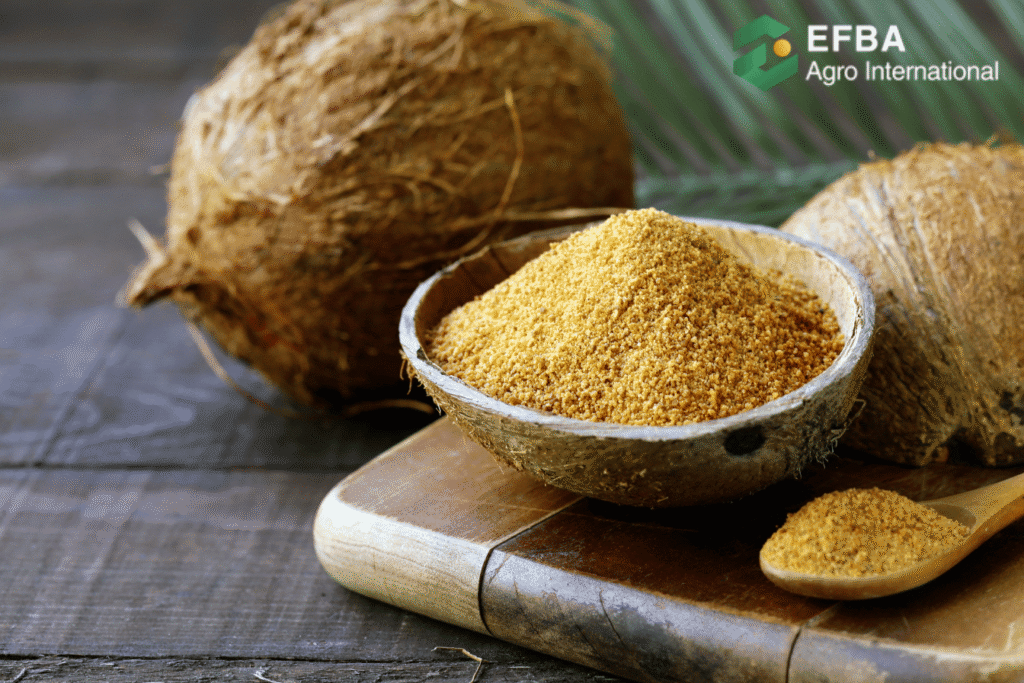

Palm Sugar has become one of the most sought-after natural sweeteners in the global market, especially as consumers shift toward clean label products that emphasize transparency, sustainability, and minimal processing. Derived from the sap of palm trees, this traditional sweetener offers not only a rich caramel-like flavor but also a range of nutritional benefits that refined sugar cannot match.
As awareness grows, industries from food manufacturing to health-focused brands increasingly rely on palm-based sweeteners as a healthier alternative. Among various types, Arenga palm sugar stands out due to its origin, mineral content, and traditional processing methods that preserve its natural integrity.
Table of Contents
Definition and Origin in Global Markets
Refers to a natural sweetener produced by evaporating the sap collected from palm tree blossoms, palm sugar develops through careful handling and controlled heating. This sap is carefully harvested and slowly heated until it thickens into a syrup or crystallizes into granules or blocks. Unlike refined sugar, which undergoes intensive chemical processing, palm sugar maintains its natural composition, making it highly valued in clean label food production. The most recognized varieties come from Southeast Asia, particularly Indonesia, where traditional techniques have been passed down through generations.
Specifically, Arenga palm sugar comes from the Arenga pinnata tree, often found in tropical forests, and farmers collect sap twice a day to ensure freshness while minimizing fermentation. This species produces sap with a distinctive aroma and deeper flavor profile compared to coconut or date palm sugar. The processing method remains simple yet effective, involving filtration and controlled heating without additives, and this approach preserves nutrients while ensuring authenticity. Globally, palm sugar continues to gain traction as a sustainable alternative because producers do not cut down trees, which supports ecological balance and strengthens local farming communities while meeting increasing demand for ethical ingredients.
Characteristics and Unique Flavor Profile

Recognized widely for its deep amber color and complex flavor, palm sugar delivers notes that combine caramel, molasses, and a subtle smokiness. This unique taste makes it highly versatile in culinary applications, from beverages to baked goods and savory dishes. Unlike refined sugar, which provides only sweetness, palm sugar enhances overall flavor depth, making it a preferred choice among chefs and food manufacturers across different markets.
Another key aspect lies in its balanced energy release, as palm sugar shows a lower glycemic index compared to conventional sugar and therefore releases energy more slowly into the bloodstream. This means consumers can maintain more stable blood sugar levels while still enjoying sweetness in moderation. In addition, producers offer palm sugar in various forms including solid blocks, paste, or granulated versions that suit modern production systems. Its natural aroma, developed through gentle heating, adds sensory richness and reinforces its identity as more than just a sweetener, positioning it as a functional and flavorful ingredient.
Nutritional Content and 9 Essential Nutrients
Provides more than sweetness alone, palm sugar naturally contains essential nutrients that support overall health and differentiate it from refined sugar. Unlike refined sugar, which strips away beneficial components, palm sugar retains minerals and trace elements from the original sap. These nutrients actively support bodily functions and give palm sugar added value within daily consumption patterns.
Among its key nutritional components, palm sugar includes four primary minerals that play important roles:
- Potassium supports heart health and muscle function
- Magnesium contributes to nerve function and energy production
- Zinc strengthens the immune system
- Iron supports oxygen transport in the blood
In addition, palm sugar also contains five other nutrients that enhance its profile:
- Calcium supports bone health
- Phosphorus aids cell repair and energy metabolism
- Sodium helps maintain electrolyte balance
- Copper supports red blood cell formation
- Antioxidants help combat oxidative stress
These nine nutrients collectively transform palm sugar into a functional ingredient. The presence of antioxidants strengthens its appeal, while its natural composition aligns with clean label expectations and supports healthier product development.
Benefits for Clean Label Sweetener Trends
Supports the growing demand for clean label products, palm sugar answers consumer expectations for natural, minimally processed ingredients. Consumers increasingly seek transparency, and palm sugar meets these expectations through simple and traceable production processes. From sap collection to final processing, producers maintain clarity and authenticity, which allows brands to communicate trust more effectively.
In addition, sustainability plays a central role in its appeal, as producers harvest sap without harming the tree, allowing continuous production for many years. This reduces environmental impact and supports long-term agricultural practices. At the same time, small-scale farmers benefit economically, which strengthens local communities and aligns with fair trade values. From a formulation perspective, palm sugar adapts easily across products, replaces refined sugar without sacrificing taste or texture, and enhances flavor profiles, giving brands a competitive advantage in clean label markets.
Applications and Global Supply Potential

Used widely across industries, palm sugar demonstrates strong versatility and natural appeal. In the food and beverage sector, manufacturers incorporate it into baked goods, sauces, beverages, and confectionery products. Its rich flavor complements both sweet and savory recipes, making it suitable for traditional dishes as well as modern formulations.
Furthermore, palm sugar continues to expand into health-oriented products such as energy bars, organic snacks, and natural beverages. Its mineral content and balanced glycemic impact strengthen its role as a preferred sweetener in these categories. As global demand rises, Indonesia remains a leading producer, offering consistent supply supported by traditional expertise and abundant natural resources. Reliable sourcing therefore becomes essential, and Efba Agro International ensures quality control, sustainable sourcing, and compliance with global standards while maintaining strong partnerships with local farmers.
For more information about trusted sourcing and product availability, you can explore Efba Agro International, or connect directly for inquiries via WhatsApp
In many producing regions, artisans transform fresh sap into palm sugar through methods that emphasize precision and timing while preserving quality. Farmers begin by collecting sap early in the morning and late in the afternoon, then immediately filter it to remove impurities. After that, they heat the liquid slowly over controlled fire, allowing water to evaporate while concentrating natural sugars. This careful process prevents burning and ensures that the final product maintains its characteristic aroma, color, and taste.
Moreover, traditional craftsmanship plays a crucial role in maintaining consistency and authenticity. Skilled producers monitor temperature changes closely and stir continuously to achieve the desired texture, whether in solid blocks, paste, or granulated form. At the same time, they avoid chemical additives, which aligns perfectly with modern clean label expectations. As a result, palm sugar retains its natural nutrients and delivers a product that reflects both heritage and quality.
In addition, modern producers increasingly combine traditional knowledge with improved techniques to meet international standards. They implement better hygiene practices, standardized drying systems, and quality control measures to ensure safety and consistency. This integration allows palm sugar to compete globally while still preserving its artisanal roots. Consequently, buyers receive a product that balances authenticity with reliability, making it suitable for large-scale applications without compromising its natural essence.
Sustainability and Environmental Advantages
Sustainability defines one of the strongest advantages of palm sugar production, especially as global industries shift toward environmentally responsible sourcing. Unlike other sugar crops that require large-scale land clearing, palm trees grow naturally in diverse ecosystems and continue producing sap for many years. Farmers do not cut down the trees during harvesting, which helps preserve forests and maintain biodiversity in tropical regions.
Furthermore, the production process generates minimal waste and requires relatively low energy compared to refined sugar manufacturing. Producers rely on simple heating techniques and often use renewable fuel sources, which reduces carbon emissions. At the same time, this approach supports ecological balance and aligns with global sustainability goals. As a result, palm sugar becomes an attractive option for companies that aim to reduce their environmental footprint.
Equally important, palm sugar production supports rural livelihoods and promotes economic stability within local communities. Smallholder farmers play a central role in the supply chain, and fair trade practices help ensure they receive appropriate compensation. This creates a positive cycle where sustainable agriculture directly benefits both the environment and society. Therefore, businesses that choose palm sugar not only meet consumer demand for natural products but also contribute to broader social and environmental impact.
Market Demand and Export Opportunities
Global demand for palm sugar continues to increase as consumers and manufacturers actively seek natural sweetener alternatives. Food industries across Europe, North America, and Asia recognize its value in clean label formulations, which drives consistent growth in international trade. As awareness expands, more brands incorporate palm sugar into their product lines, from beverages to health-focused snacks.
At the same time, export opportunities continue to widen for producing countries, particularly Indonesia, which remains a leading supplier. The country benefits from favorable climate conditions, abundant palm resources, and strong traditional expertise. These factors enable consistent production and high-quality output that meets global standards. Consequently, Indonesian palm sugar gains strong recognition in international markets and continues to attract long-term buyers.
In addition, evolving consumer preferences further strengthen its position. Buyers increasingly prioritize traceability, sustainability, and nutritional value, all of which palm sugar provides. Importers therefore seek reliable partners who can ensure consistent supply and quality assurance. With proper certifications and efficient logistics, exporters can expand their reach and build long-term relationships with global clients. This growing demand signals a promising future for palm sugar as a key commodity in the natural sweetener industry.
Future Trends and Industry Innovation
Looking ahead, innovation continues to shape the development of palm sugar within the global market. Producers and researchers actively explore new processing techniques to improve efficiency while maintaining natural quality. For instance, advancements in drying technology and packaging help extend shelf life and enhance product stability, making it more suitable for international distribution.
Additionally, product diversification plays a significant role in expanding its applications. Manufacturers develop new formats such as liquid palm sugar, fine powder, and blends tailored for specific industries. These innovations allow palm sugar to adapt to various production needs, from large-scale food manufacturing to specialty products. As a result, its versatility continues to grow alongside market demand.
At the same time, digitalization and supply chain transparency become increasingly important. Companies invest in traceability systems that allow buyers to track product origins and production processes. This strengthens trust and supports compliance with global regulations. As consumer awareness continues to rise, such innovations ensure that palm sugar remains competitive and relevant in a rapidly evolving industry.
Ultimately, palm sugar stands at the intersection of tradition and modern demand. By combining sustainable practices, nutritional benefits, and continuous innovation, it secures its place as a leading natural sweetener in global markets.
In conclusion, Arenga Palm Sugar demonstrates strong potential as a sustainable and versatile sweetener that meets modern demands. Its combination of tradition, nutrition, and environmental responsibility ensures that it will continue to play a significant role in the future of the global food industry.
Ready to Source Premium Arenga Palm Sugar?
If you are ready to explore premium-grade Arenga Palm Sugar for your business, connect directly with EFBA Agro today. Our export specialists are available to discuss:
- Bulk orders and private labeling
- Pricing and shipping arrangements
- Long-term partnership opportunities
Let’s bring the natural sweetness of Indonesia to your global market.
Discover EFBA Agro International: Your Trusted Gateway to Indonesia’s Finest Agricultural Commodities

EFBA Agro International has steadily established itself as one of Indonesia’s most reliable and quality-driven exporters of natural agricultural products. Built on a foundation of integrity, consistent supply, and strong farmer partnerships, EFBA Agro is committed to delivering premium-grade commodities that meet global market expectations. Through a streamlined sourcing system and rigorous quality inspection, we ensure every shipment reflects the richness of Indonesia’s natural resources and the professionalism demanded by international buyers. From traceability to documentation, every detail is handled with precision so clients receive both peace of mind and exceptional product value.
As a company deeply rooted in Indonesia’s agricultural landscape, EFBA Agro works closely with farming communities across the archipelago to secure sustainable, ethically harvested raw materials. This commitment enables us to supply natural sweeteners, spices, starches, and specialty products with unmatched consistency. Whether buyers require bulk quantities, retail-ready packaging, or OEM export standards, our operational structure supports diverse needs while maintaining world-class quality control. With a reputation built on transparency and long-term collaboration, EFBA Agro continues to strengthen its presence across Asia, the Middle East, Europe, and the Americas.
Indonesia’s Premium Export Collection: From Arenga Sugar to Tapioca, Coffee, Spices, and More

EFBA Agro International proudly offers a versatile selection of Indonesian commodities designed to meet the demands of global food, beverage, and industrial markets. Our flagship product, Granulated Arenga Palm Sugar, remains one of the most popular exports thanks to its natural caramel profile, eco-friendly production, and strong global demand. Beyond palm sugar, EFBA Agro supplies Food-Grade Tapioca Flour, a favorite ingredient for coating, bakery goods, gluten-free recipes, and industrial applications. We also provide a variety of premium Indonesian spices such as candlenut (kemiri), cloves, nutmeg, and black pepper, sourced directly from trusted farmers to guarantee freshness and purity.
In addition to sweeteners and spices, EFBA Agro supports buyers seeking coffee commodities through our specialty-grade Arabica and Robusta lines, including origins from Gayo, Java, and Toraja. Each commodity is managed through strict handling, standardized moisture control, proper packaging options, and export-ready documentation. With this diverse portfolio, EFBA Agro International becomes a comprehensive one-stop solution for businesses searching for sustainable, high-quality Indonesian agricultural products on the global stage.
FAQ
- What makes palm sugar different from coconut sugar?
Palm sugar comes from various palm species like Arenga, while coconut sugar specifically comes from coconut palms. This difference affects flavor depth, mineral content, and aroma. - Is palm sugar suitable for vegan and plant-based diets?
Yes, palm sugar is completely plant-based since it is derived from palm sap without any animal involvement, making it ideal for vegan-friendly food products. - How should palm sugar be stored for long-term use?
Store palm sugar in an airtight container in a cool, dry place. Proper storage prevents moisture absorption and helps maintain texture and flavor over time. - Can palm sugar be used in industrial food production?
Yes, many manufacturers use palm sugar in large-scale production because it is available in granulated and liquid forms suitable for automated processes. - Does palm sugar contain artificial additives or preservatives?
No, high-quality palm sugar is produced naturally without additives, preservatives, or chemical processing, supporting clean label product requirements. - Why is palm sugar popular in export markets?
Palm sugar gains popularity due to its natural origin, sustainability, traceability, and compatibility with global trends focused on healthier sweetener alternatives.