Flour Trade Tapioca Flour has become one of the most dynamic ingredients driving today’s global food and industrial supply chain. As manufacturers increasingly prioritize clean-label formulations, stable performance, and sustainable sourcing, Tapioca Flour is stepping into the spotlight as a multifunctional powerhouse. In contrast, cornstarch, although widely used often struggles to meet evolving consumer expectations for modern food applications. Understanding the distinctions between these two commodities helps importers, processors, and international buyers make smarter sourcing decisions.
At Efba Agro, Tapioca Flour isn’t just another commodity, it’s a flagship export rooted in Indonesia’s rich agricultural landscape. Our production standards focus on consistency, purity, and performance, ensuring that global clients receive dependable, high-grade starch tailored to food, beverage, and industrial use. As markets continue shifting toward gluten-free, allergen-safe, and plant-based formulations, Tapioca Flour’s relevance becomes even more significant.
Table of Contents
1. Distinct Agricultural Origins
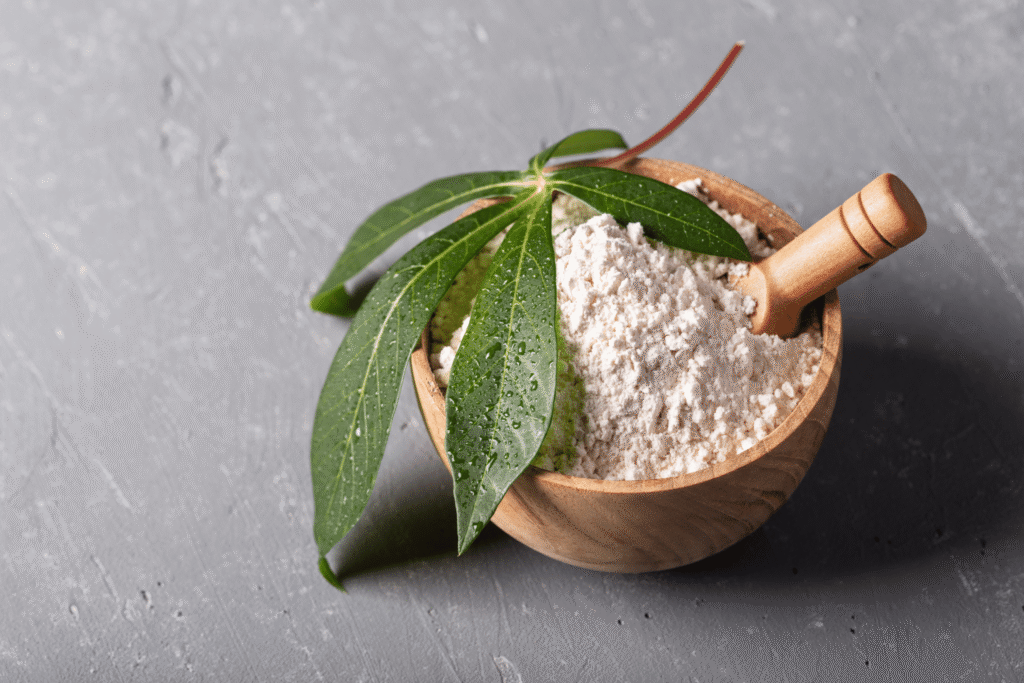
The first major distinction lies in the crops behind these flours. Tapioca Flour originates from cassava roots, a hardy tropical plant that grows abundantly across Indonesia and Southeast Asia. Its cultivation requires fewer chemical inputs, adapts well to varied soil conditions, and demonstrates exceptional resilience during climate variability. This is why the global Flour Trade Tapioca Flour supply remains relatively stable throughout the year.
Cornstarch, by contrast, is harvested from the endosperm of corn kernels. Since corn also supports animal feed and bioethanol production, its supply chain is tied to multiple competitive sectors often resulting in higher volatility and pricing uncertainty. In short, the agricultural ecosystem behind Tapioca Flour is more reliable for international buyers seeking long-term stability.
2. Texture, Stability, and Thickening Behavior
When used in food formulations, Flour Trade Tapioca Flour provides a smooth, elastic, and glossy texture that remains stable even through extended heating, freezing, and reheating cycles. This consistency makes it ideal for soups, sauces, dairy alternatives, premium desserts, and gluten-free bakery products.
Cornstarch, however, tends to produce a more opaque appearance and can break down under heat stress, leading to thinning or texture degradation. As global consumers increasingly demand visually appealing, Instagram-ready food, Tapioca Flour naturally delivers a higher-quality finish.
3. Flavor Neutrality That Elevates Any Recipe
One of Tapioca Flour’s most overlooked advantages is its extremely neutral flavor profile. It blends seamlessly into foods without introducing any off-notes, allowing other ingredients to stand out more clearly. This characteristic is especially valuable for beverage brands, confectionery manufacturers, and exporters targeting premium markets.
Cornstarch can sometimes leave a faint aftertaste when heated for long periods, subtly altering a product’s sensory experience. As a result, brands aiming for flavor authenticity usually choose Tapioca Flour over cornstarch.
4. Nutrition, Allergen Safety, and Clean-Label Compatibility
Modern eating habits place enormous value on allergen-free and gluten-free ingredients. Flour Trade Tapioca Flour checks all these boxes naturally gluten-free, vegan-friendly, and suitable for non-GMO labeling. Its composition is simple and clean, aligning perfectly with “short-ingredient-list” marketing strategies.
Cornstarch does deliver carbohydrates as energy, but it often contains higher calories and lacks the broad allergen-safe benefits that Tapioca Flour provides. For brands operating in markets where gluten-free certification boosts sales, Tapioca Flour becomes the more strategic choice.
5. Broad Industrial Applications Beyond Food
Although Tapioca Flour is widely recognized within the food sector, its utility expands far beyond the kitchen. Efba Agro supplies Tapioca Flour for use in:
• biodegradable packaging
• paper coating
• textile finishing
• pharmaceutical binders
• adhesive production
• eco-friendly plastic alternatives
Its renewable, biodegradable profile directly supports corporate sustainability goals and ESG reporting standards. Cornstarch also plays a role in industrial manufacturing, but its applications remain more limited and often less stable when subjected to moisture or prolonged heat.
6. Pricing Predictability and Global Supply Stability
In the wider Flour Trade ecosystem, price stability is critical. Cassava-based Tapioca Flour benefits from steady agricultural output, efficient processing, and widespread cultivation across Southeast Asia. This ensures predictable supply chains and more consistent pricing structures for global buyers.
Cornstarch pricing fluctuates more aggressively due to competition from livestock feed and renewable fuel industries. These market pressures often make Tapioca Flour the more stable and cost-efficient ingredient for large-scale manufacturing.
7. Worldwide Consumer Trends Favoring Tapioca Flour
Food and beverage trends are shifting fast—clean-label products, gluten-free snacks, dairy alternatives, natural thickeners, and sustainable packaging are all rising rapidly. Flour Trade Tapioca Flour naturally supports these trends without requiring reformulation or additional processing steps.
As a result, global demand for Tapioca Flour continues to grow across:
• bakery and pastry manufacturing
• ready-to-eat meals
• beverages and plant-based alternatives
• confectionery products
• international food exports
Cornstarch remains part of the traditional market, but Tapioca Flour’s versatility and sustainability give it a decisive edge in future-forward industries.
Why Flour Trade Tapioca Flour Leads the Modern Market
When comparing the seven key distinctions above, Tapioca Flour consistently offers superior performance, broader industrial flexibility, and more reliable sourcing pathways. Its smooth viscosity, neutral taste, clean-label profile, and sustainable foundation make it a strategic ingredient for brands preparing for the next era of global food innovation.
At Efba Agro, we streamline access to premium-grade Tapioca Flour from Indonesia’s best cassava-growing regions. Our processes emphasize quality control, moisture stability, whiteness index precision, and particle uniformity all critical factors for large-scale production. International buyers also benefit from professional export handling, documentation support, and competitive logistics through major Indonesian ports.
Beyond practicality, Tapioca Flour also strengthens environmental commitments. Its plant-based origin aligns with biodegradable applications, helping brands transition toward greener packaging and sustainable product development.
Conclusion
The global Flour Trade Tapioca Flour market continues to expand as businesses prioritize healthier formulas, consistent performance, and ingredients that support sustainability. While cornstarch maintains relevance, Tapioca Flour remains the superior option for innovation, product stability, and long-term value.
If your company seeks a dependable, high-quality supplier of Flour Trade Tapioca Flour, Efba Agro is ready to support your needs—from bulk orders to ongoing supply contracts.
Let’s elevate your production line with a starch that meets today’s demands and tomorrow’s opportunities.
👉 Contact us directly via Beside WhatsApp for product inquiries, trade quotations, and bulk orders today strengthen your production line with Efba Agro’s premium Tapioca Flour, the smarter choice for global food excellence.
EFBA Agro International: A Global Supplier Behind Flour Trade Tapioca Flour

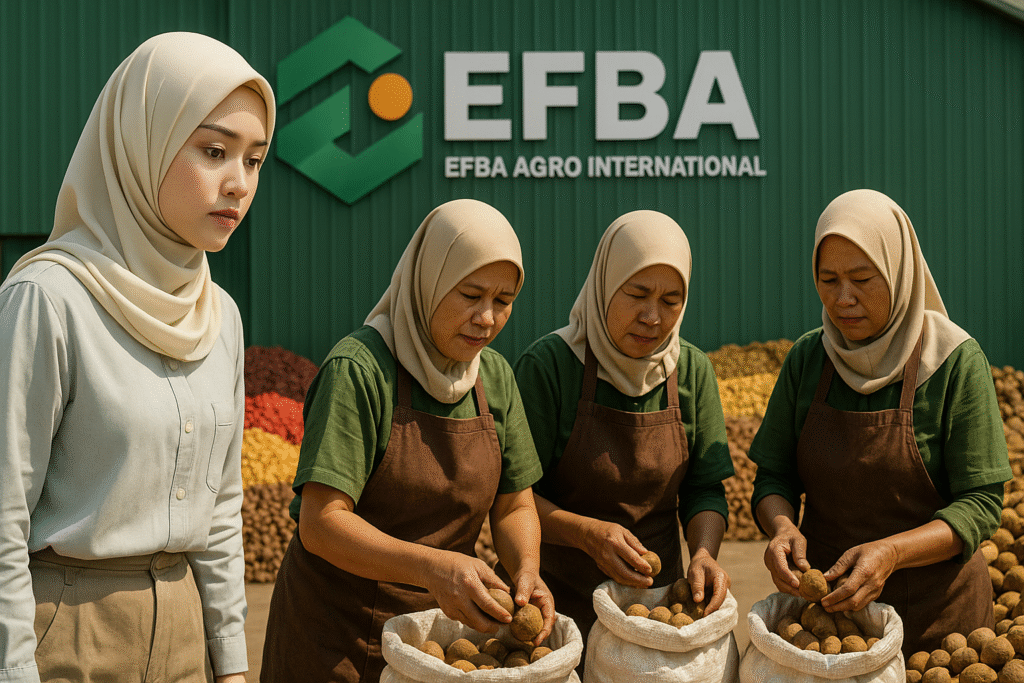
As global demand for high-performance food-grade starch continues to rise, Efba Agro International positions itself as a dependable Indonesian exporter committed to quality, consistency, and long-term trade relationships. We source, refine, and distribute Flour Trade Tapioca Flour directly from cassava plantations across West Java, Lampung, and Central Java regions known for stable agricultural cycles and clean, sustainable cultivation practices. Our production facilities apply strict quality checks, ensuring optimal whiteness index, precise moisture levels, and uniform starch granules that meet international industrial standards.
Efba Agro operates with a simple mission: make Indonesia’s finest agricultural commodities accessible to global manufacturers without the usual sourcing uncertainties. Beyond supplying premium Tapioca Flour, our team assists clients with documentation, port logistics, and export compliance, offering an end-to-end trade experience that is seamless for food processors, wholesalers, and industrial buyers. This combination of technical knowledge, ethical sourcing, and reliable delivery is what differentiates us in the broader Flour Trade ecosystem.
Our Commodity Portfolio: From Tapioca Flour to Indonesia’s Most Sought-After Agricultural Exports
While Flour Trade Tapioca Flour remains our flagship product, Efba Agro International supplies a diverse portfolio of Indonesian commodities demanded across multiple global industries. Our catalog includes MOCAF (Modified Cassava Flour), Candlenut (Kemiri), Desiccated Coconut, Aren Palm Sugar, Cascara Tea, Green Coffee Beans from Gayo and Java, and various spice exports tailored for bulk trade. Each commodity is sourced directly from cooperatives and farmer networks with long-standing partnerships, ensuring both traceability and ethical procurement.
Through our official platform at efbaagro.id, buyers can explore detailed product specifications, export-ready packaging options, laboratory testing data, and shipping capacities for 20’ and 40’ FCL containers. Our goal is not simply to sell commodities but to cultivate a dependable supply chain ecosystem where global buyers can scale production confidently using premium Indonesian raw materials. With growing market emphasis on natural ingredients and sustainable sourcing, Efba Agro International stands ready to supply what the world needs—consistently, responsibly, and at scale.
Frequently Asked Questions (FAQ) About Flour Trade Tapioca Flour
Q1: What makes Efba Agro’s Flour Trade Tapioca Flour different from regular tapioca flour?
Efba Agro’s Flour Trade Tapioca Flour is produced from carefully selected high-grade cassava roots using modern processing technology to ensure food-grade purity and consistency. With a whiteness index above 92%, moisture content below 13%, and starch concentration exceeding 85%, it meets international standards for both industrial and food applications. Unlike conventional tapioca flour, Efba Agro’s product undergoes strict quality control and export certification, ensuring reliable texture, neutral taste, and excellent stability during production.
Q2: Can Flour Trade Tapioca Flour be used in both food and non-food industries?
Yes. It’s widely used across food manufacturing (snacks, coatings, bakery, sauces) and non-food sectors (adhesives, paper coating, pharmaceuticals, and biodegradable plastics). Its smooth viscosity and binding strength make it a preferred ingredient in multiple industries seeking both performance and sustainability.
Q3: How does Efba Agro ensure export quality and consistency?
Efba Agro operates with a controlled supply chain from cassava farming to final packaging. All batches are laboratory-tested for purity, moisture, and microbial safety. Products are packed in durable 25–50 kg export-grade bags with clear labeling and customizable branding options for B2B clients.
// Also Read:
Cascara Natural Tea Bulk Supplier 2025 from Indonesia – Coffeenesia Export Excellence!
Gayo Coffee 01 Single Origin Arabica Direct from Aceh By Coffeenesia!
Indonesian Coffee Beans 100% Fresh Origin!