Beyond the Label: The Clean Sweetener Challenge
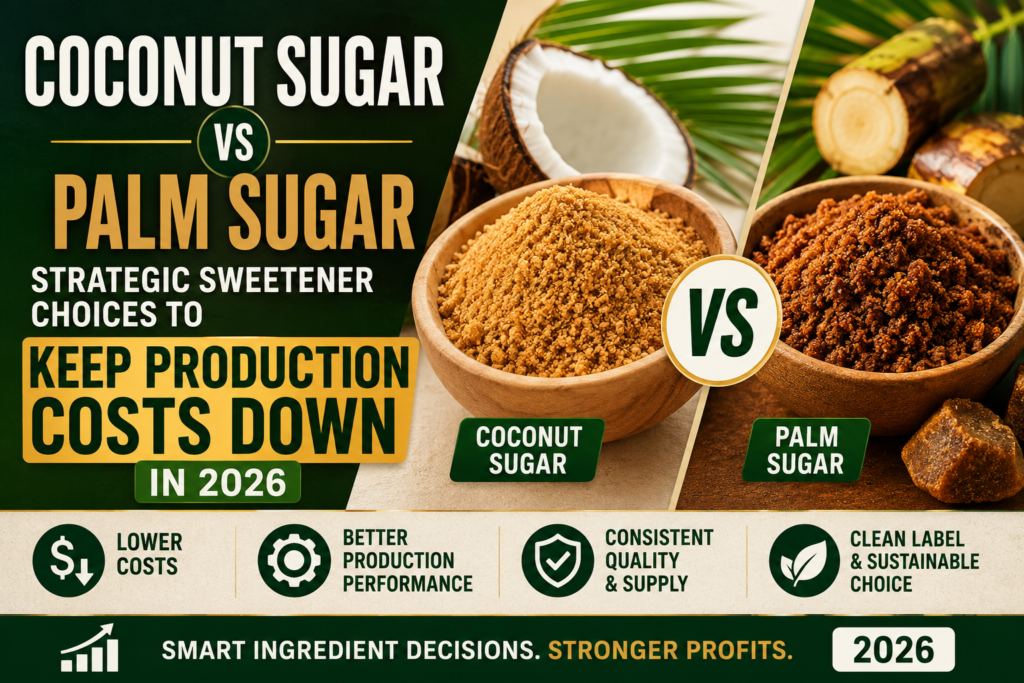
Let’s be real about the global food scene in 2026. Everyday consumers are moving away from heavily processed ingredients faster than ever before. Today, healthier and cleaner alternatives are no longer just a luxury trend for boutique brands—they have become essential survival tools for companies making food and beverages at scale. But as purchasing teams scramble to buy better ingredients to satisfy this market demand, a major operational question keeps coming up on the factory floor: coconut sugar vs palm sugar.
While marketing teams love to treat them as the exact same thing on consumer packaging, food scientists and supply chain directors know that confusing the two can completely ruin a high-speed production line. If your goal is to keep your production costs stable despite wild global weather shifts and strict new environmental rules, you have to look past simple storefront labels.
Relying on random middleman brokers who promise cheap upfront prices usually ends up costing you a fortune down the road due to hidden quality issues like heavy clumping or watered-down batches. Let’s break down the true behavior and financial numbers behind the coconut sugar vs palm sugar puzzle so your brand can protect its profits this year. Securing a reliable long-term supply pipeline with a partner who controls the actual farms is the best way to lock in prices before market shifts disrupt your bottom line.
The Simple Guide to Coconut Sugar vs Palm Sugar in Cooking
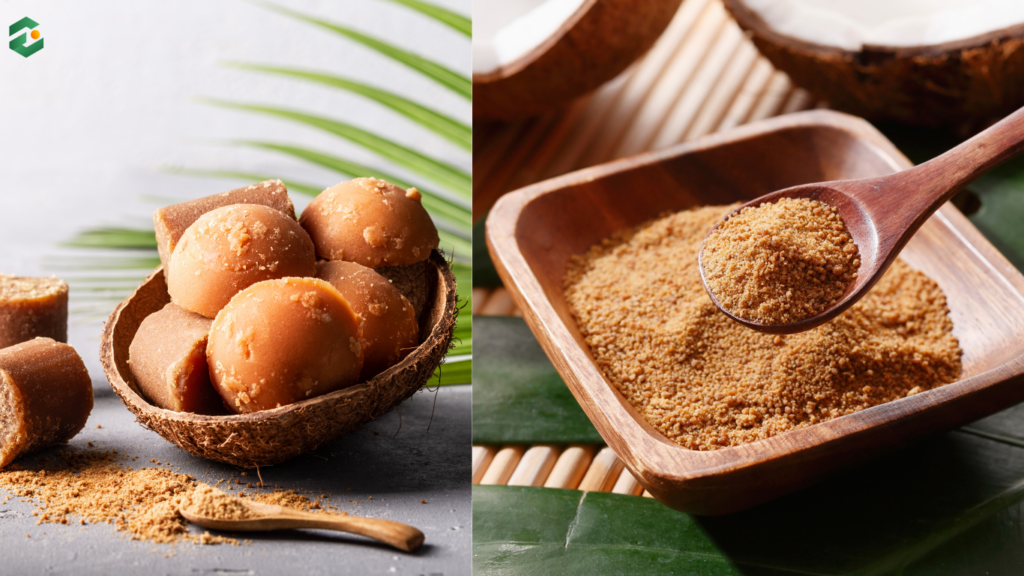
When you open a bulk container of unrefined sugar at an industrial facility, you aren’t just looking at sweet crystals. You are looking at a living ingredient that responds uniquely to heat, mixing speed, and humidity. Deciding on coconut sugar vs palm sugar means understanding exactly how they melt, dissolve, and flow through your automated recipes. When we look closely at coconut sugar vs palm sugar, we see clear differences in how they handle high factory heat.
For instance, running a basic kitchen test of coconut sugar vs cane sugar shows that natural palm-based sugars burn and caramelize at a much lower temperature than standard white sugar. Coconut sugar tends to melt quickly and hold onto moisture tightly because it contains natural fruit sugars that love water.
If you compare brown sugar vs coconut palm sugar, you will notice that normal brown sugar is just refined white sugar mixed with a little bit of molasses, which makes it release its surface moisture very quickly under heat. On the flip side, choosing between cane sugar vs coconut palm sugar means balancing a highly predictable shelf-life with a deep, complex caramel taste that modern consumers actively look for on store shelves.
The differences get even more interesting when looking closely at cane sugar vs palm sugar, which shows that traditional palm options have unique natural minerals that can slightly change the acidity of a liquid recipe.
Weighing coconut palm sugar vs brown sugar shows that the natural sap version keeps baked goods softer for a much longer time because it naturally retains moisture inside the food matrix. The growing commercial preference for coconut palm sugar vs cane sugar is driven entirely by brands wanting cleaner, low-sugar labels on the premium foods they sell. Finally, understanding the exact rules behind coconut palm sugar vs coconut sugar labeling is critical for your compliance team, because general palm sugar can legally come from different types of palm trees, while coconut sugar must come only from the coconut tree (Cocos nucifera).
To give your procurement team a clear view of how these options behave on the factory floor, we have mapped out the real-world operational variables in the bulk markets below:
| Sweetener Type | How Much Water it Holds | Melting Point | Sweetness Level (Compared to White Sugar) | Estimated 2026 Price per Ton |
| Industrial Cane Sugar | Almost None (< 0.05%) | 160°C – 186°C | 1.0 (Standard Baseline) | $550 – $700 |
| Pure Coconut Sugar | Low (1.5% – 2.5%) | 130°C – 140°C | 0.9 (Slightly Less Sweet) | $2,400 – $2,800 |
| Arenga Palm Sugar | Medium (2.0% – 3.0%) | 135°C – 145°C | 0.85 (Milder Sweetness) | $2,200 – $2,600 |
| Commercial Brown Sugar | High (3.5% – 4.5%) | 150°C – 160°C | 1.0 (Standard Baseline) | $750 – $950 |
Calculating Your True Costs and Sugar Yields
Let’s talk numbers because your finance team cares about getting the absolute most out of every dollar spent on raw materials. When you swap ingredients in a large-scale commercial recipe, you can’t just do an even trade by weight and hope for the best. Some unrefined sugars are naturally less sweet or hold more natural moisture, meaning your production line might need to use more total product to get the exact same taste profile.
To calculate your true operational costs when debating coconut sugar vs palm sugar, you need a mathematical formula that factors in water weight loss during storage and cooking. Because natural sugars easily absorb moisture from the surrounding air during long shipping journeys, any extra water weight inside the container reduces the actual sweetening solids you paid for. When you evaluate your sweetening yield cost efficiency, you can calculate it directly using this standard layout:
Sweetening Yield Cost Efficiency = (Landed Cost per Ton x Sweetness Factor) / (1 – Moisture Loss Percentage)
Using this math allows your financial analysts to see the real profit picture clearly. If a casual broker offers a low price on a batch that contains too much hidden water, the true cost goes up significantly once you dry it out and mix it into your industrial products.
This is why looking at coconut sugar vs palm sugar requires checking real quality metrics and chemical purity, not just staring at the cheapest invoice quote on your desk. Choosing a strategic partner who guarantees dry, high-quality sugar means you are paying for active sweetness, not trapped water weight that evaporates during production.
Keeping Your Supply Chain Safe: Pure Ingredients and Sourcing Risks
Let’s look at how these ingredients are harvested in the wild, because this directly affects how steady your supply will be throughout the year. Coconut palms are grown on large, organized plantations, meaning their supply chains are quite structured and predictable, though they can still be hurt by big tropical storms.
When evaluating coconut sugar vs palm sugar, you are looking at two entirely different farming styles. Traditional palm sugar often relies on wild, scattered trees climbed manually by local workers every day, which keeps the local forest healthy but makes it harder to suddenly double your order size on short notice.
The Purity Risk: The biggest threat to your brand quality in 2026 is bulk stretching. Because pure palm sap is an expensive premium commodity, low-quality suppliers love to secretly mix in cheap white cane sugar to increase their profit margins.
If your quality control team doesn’t catch this blending before production begins, your brand risks losing its organic certifications and breaking trust with your customers. The final score on coconut sugar vs palm sugar comes down to how secure and honest the supply chain is, which is why we always recommend running strict laboratory tests to prove the sugar is 100% pure before the shipping containers ever leave the port.
Upstream-Downstream Synergy: Securing Commodity Pipelines via Efba Group

Running a profitable food brand or a large factory means you cannot afford gaps between farm sourcing and factory execution. When your purchasing team is disconnected from your technical production needs, your business suffers from unpredictable ingredient quality, factory clumping, and costly shipping delays.
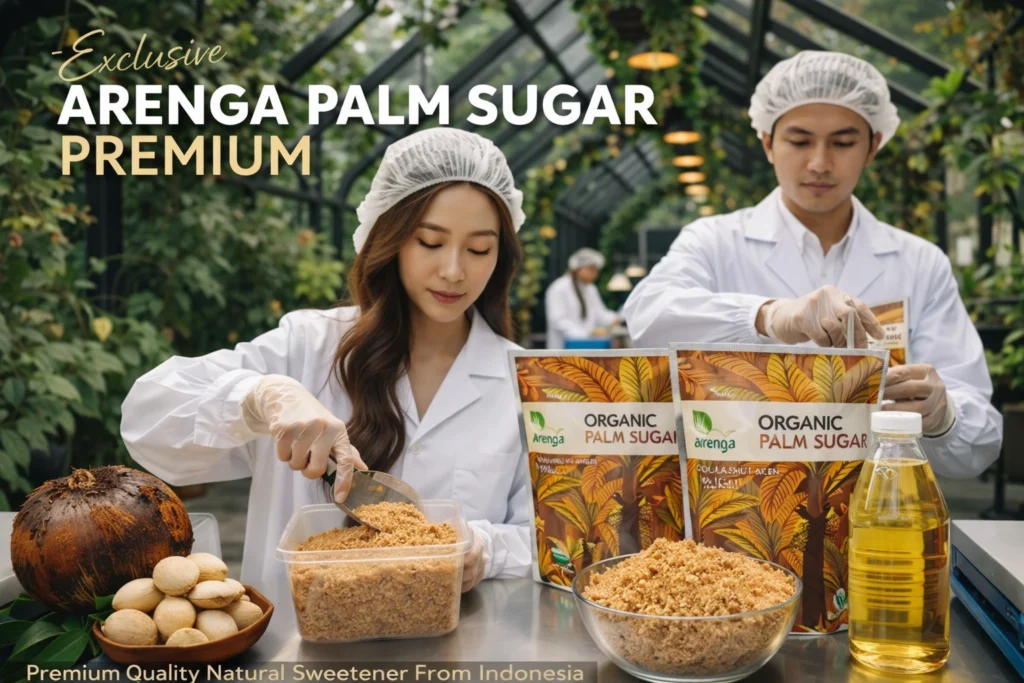
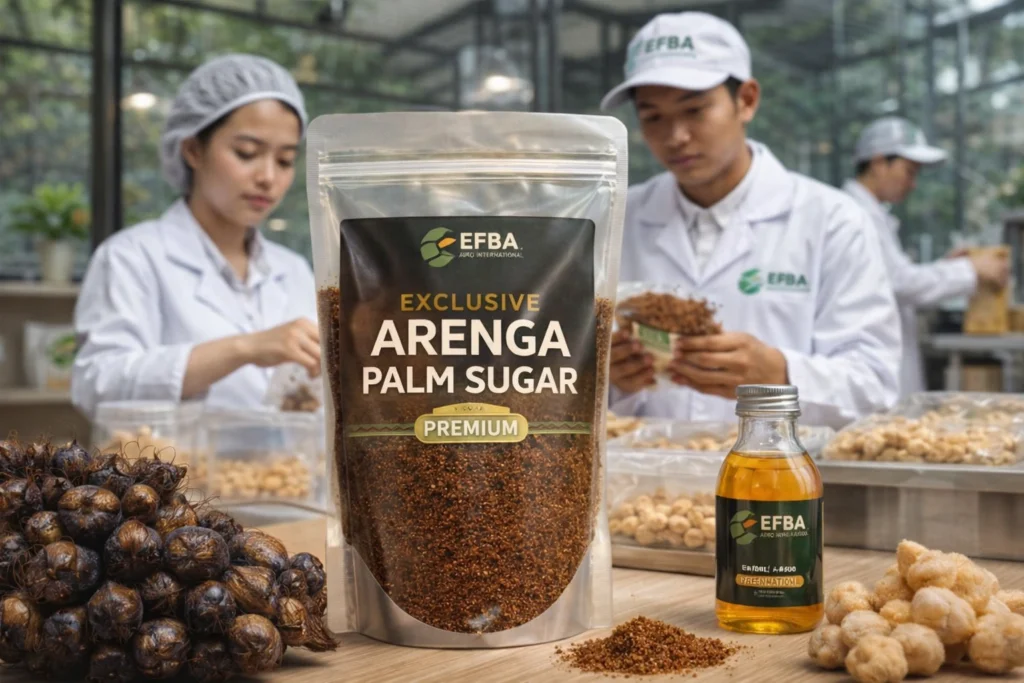
At Efba Group, we solve this exact headache by acting as your fully integrated palm sugar supply chain partner. Through our upstream agricultural platform athttps://efbagro.id/, we manage the crops directly at the farm level, run strict purity tests, and offer stable long-term contracts. We eliminate the middleman chaos so your team can focus on scaling production with total peace of mind, ensuring your choice between coconut sugar vs palm sugar is fully optimized for your specific factory setup.
Driving Retail Margins: Premium Specialty Coffee Solutions via Coffeenesia

While securing a clean-label sweetener pipeline is vital for industrial product formulations, many global food networks require a multi-commodity strategy to maximize retail margins. If your organization looks to secure premium specialty coffees alongside your raw agricultural inputs, coffeenesia.id serves as the dedicated downstream solution for sensory engineering and brand optimization.
From calibrating complex industrial roasting profiles to executing strict quality control matrices, they transform high-grade green beans into market-ready, high-margin revenue streams that protect your brand equity. Separating your core agricultural inputs from specialized downstream cafe products allows you to keep both pipelines running smoothly without diluting your main manufacturing focus.
Conclusion
Winning the food market in 2026 comes down to mastering your raw materials. When you look closely at coconut sugar vs palm sugar, you realize that both options offer incredible value for clean labels, but only if they arrive at your factory pure, dry, and uniform. Stop gambling your corporate budgets on unpredictable spot-market deals. Reach out to our team today at efbaagro.id to check your current supply chain safety and lock in a steady ingredient strategy for the coming year.
FAQ (5 Strategic Financial & Sweetener Supply Chain Questions)
How do the crystallization temperatures of coconut sugar differ from palm sugar in large-scale confectionery cooking?
It all comes down to natural fruit sugars. When looking at coconut sugar vs palm sugar in hot industrial cookers, coconut sugar browns and caramelizes a little bit faster because of its natural fructose levels, while true palm sugar stays stable slightly longer before it begins to change its physical structure.
What are the direct industrial shelf-life implications when substituting standard brown sugar with coconut palm sugar?
You will need to use better, moisture-proof packaging. Because coconut palm sugar absorbs moisture from the air much faster than standard brown sugar, any exposure to humid air will cause it to clump up inside your factory storage bins, meaning you need dry, climate-controlled storage areas.
How can procurement teams hedge against regional climate shocks affecting coconut sugar vs palm sugar harvest cycles in Southeast Asia?
The best move is to sign a long-term forward contract with a locked-in price before the bad weather seasons hit. When analyzing coconut sugar vs palm sugar volume availability during monsoon shifts, forward contracts force the supplier to find and hold your inventory in climate-controlled warehouses, protecting your business from sudden price jumps when crops are short in the spot market.