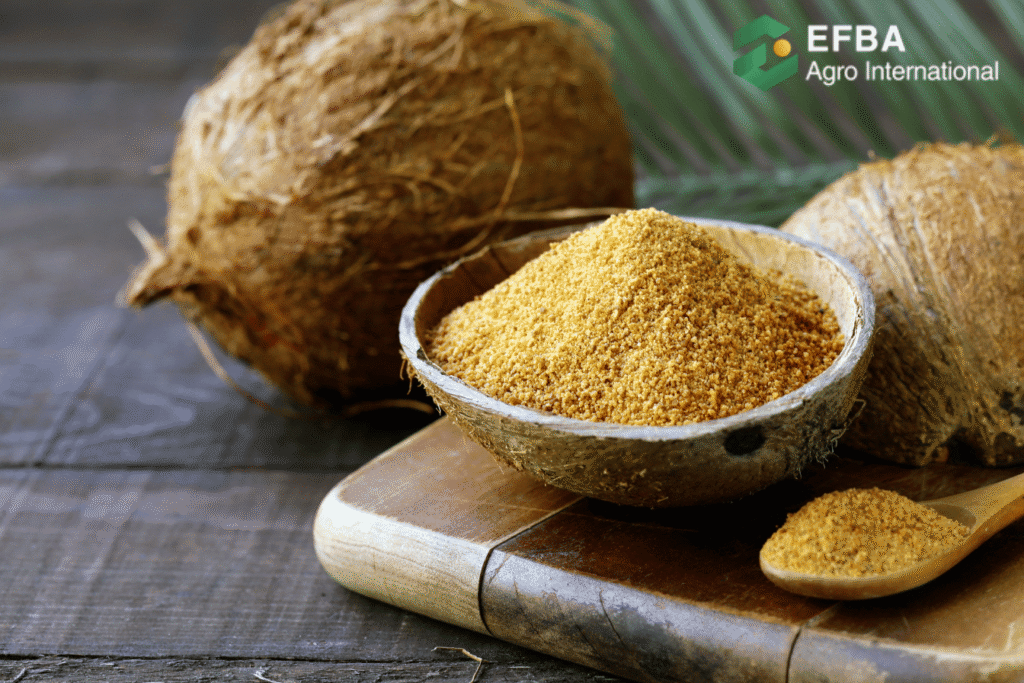
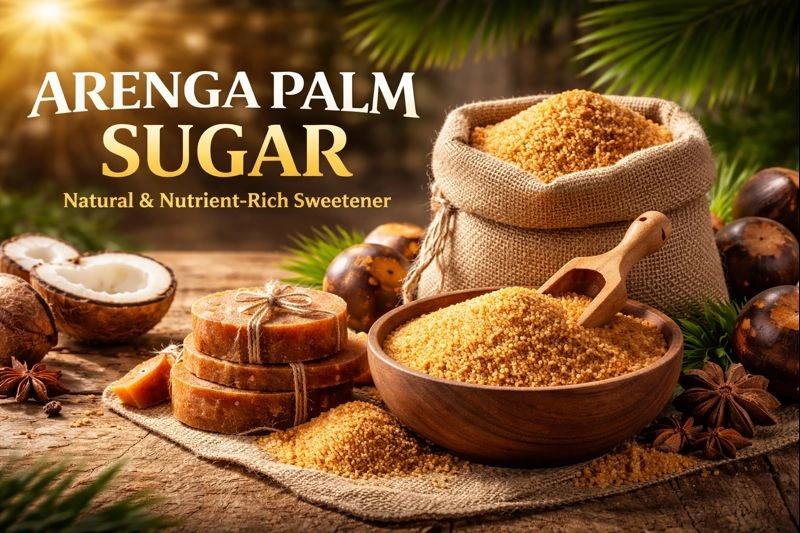
Arenga Palm Sugar is a traditional natural sweetener derived from the sap of the Arenga pinnata palm, widely valued for its balanced sweetness, mineral richness, and deep cultural roots. From the very beginning, this palm based sweetener has been appreciated as a natural alternative to refined sugar because it undergoes minimal processing. As a result, essential nutrients remain intact, making it attractive for health conscious consumers and global food manufacturers.
Originating from tropical regions, especially Southeast Asia, this natural sugar has been used for centuries in culinary traditions, cultural rituals, and everyday consumption. Over time, its rising global demand has reflected a broader shift toward natural, traceable, and functional sweeteners that align with modern wellness trends while still preserving authentic flavor and heritage.
Table of Contents
Arenga Palm Sugar Origin and Traditional Heritage
The origins of this palm based sweetener trace back to the Arenga pinnata tree, a resilient palm species native to Indonesia, the Philippines, and other parts of South and Southeast Asia. Traditionally, local farmers tap the flower stalks of mature palms to collect fresh sap. Afterward, they slowly heat the sap over controlled firewood until it thickens and crystallizes naturally. Through this careful process, flavor integrity and nutritional content remain well preserved, which clearly differentiates it from industrial sugar.
Historically, rural communities relied on this sweetener not only as a food ingredient but also as an economic commodity and ceremonial element. Moreover, the production process required patience, skill, and ecological understanding because each tree could be tapped sustainably for years without causing damage. Over generations, these practices shaped local economies and food culture. In many regions, palm sugar symbolized natural balance, as its sweetness never felt excessive. Its caramel aroma and earthy undertones made it ideal for traditional desserts, sauces, and beverages.
Today, as sustainable agriculture gains global attention, the heritage behind this sweetener becomes increasingly relevant. Modern producers now combine ancestral techniques with international quality standards to meet export requirements while still honoring tradition. Studies referenced by FAO emphasize that traditional palm sugars remain among the most culturally significant natural sweeteners worldwide.
Arenga Palm Sugar Unique Characteristics and Flavor Profile
What truly distinguishes this palm derived sweetener is its complex and layered flavor profile. Instead of delivering sharp sweetness like refined sugar, it offers a smoother taste balanced with subtle caramel, smoky, and earthy notes. Consequently, it enhances food without overwhelming other ingredients. Its natural brown color reflects the presence of minerals and unrefined compounds, which also increases its visual appeal for premium food products.
In terms of texture, it is available in granular, block, and powder forms, each serving different culinary needs. One defining characteristic lies in its relatively lower glycemic impact compared to conventional sugar, which is associated with its natural fiber and mineral composition. Therefore, it becomes popular among consumers who seek better blood sugar control. Additionally, the aroma remains stable during heating, allowing it to perform consistently in cooking and baking.
Chefs often choose it for sauces, marinades, and desserts because it adds depth rather than pure sweetness. Its moisture retention quality also improves texture in baked goods. Culinary references from organizations such as the Slow Food Foundation recognize palm sugars for their sensory richness and regional uniqueness. Furthermore, its ability to dissolve well in hot and cold preparations enhances versatility across food applications.
Arenga Palm Sugar Nutritional Composition and Natural Nutrients
The nutritional profile of this palm sugar reflects its minimal processing and traditional production method. It contains a range of natural nutrients that contribute both to flavor and functional value. Among the most notable minerals is potassium, which supports fluid balance and muscle function. Magnesium plays an essential role in nerve signaling and energy metabolism, while calcium contributes to bone strength.
Iron supports oxygen transport in the bloodstream and helps reduce fatigue. Zinc strengthens immune system function and assists wound healing. Phosphorus supports cellular repair and energy storage. Small amounts of sodium help maintain electrolyte balance within the body. In addition to these minerals, the sweetener provides natural antioxidants that help reduce oxidative stress. B complex vitamins, especially vitamin B1 and B2, support metabolic activity and energy conversion.
Altogether, these nine nutrients form a naturally enriched composition. Unlike refined sugar that loses micronutrients during processing, this traditional sweetener retains much of its original nutritional integrity. Scientific reviews published in journals such as the Journal of Food Composition and Analysis consistently show higher mineral density in palm sugars compared to refined alternatives.
Arenga Palm Sugar Health Benefits and Functional Advantages
Beyond sweetness, this natural sugar offers functional advantages that support overall dietary balance. One of the most recognized benefits involves its lower glycemic index, which helps reduce rapid blood sugar fluctuations when consumed responsibly. As a result, energy levels remain more stable throughout the day. Potassium content supports cardiovascular health by contributing to normal blood pressure regulation.
Meanwhile, magnesium and calcium assist muscle relaxation and bone maintenance, while iron helps prevent tiredness associated with low hemoglobin levels. Antioxidant compounds naturally present in palm sap work to neutralize free radicals, supporting cellular health. The presence of trace fiber also slows glucose absorption, making this sweetener a more mindful choice. Additionally, its mineral composition supports hydration and electrolyte balance, especially in warmer climates.
Traditional practices across Southeast Asia have long valued palm sugar as a gentler daily sweetener. Modern nutrition research aligns with this perspective when compared to refined sugar. Health publications and academic food science studies emphasize moderation while acknowledging its comparative advantages. Its clean label status further strengthens its appeal in health focused and natural product formulations.
Arenga Palm Sugar Culinary Uses and Industrial Applications
This versatile sweetener performs well across home kitchens and industrial food production. Traditionally, it enhances sauces, soups, desserts, and beverages by adding depth rather than overpowering flavor. Its caramel notes blend seamlessly with spices, coconut based dishes, and fermented foods. In baking applications, it improves moisture retention and adds a rich color to cakes, cookies, and bread. Beverage producers use it in herbal drinks, coffee blends, and plant based beverages to achieve natural sweetness with complexity.
On a larger scale, food manufacturers incorporate it into sauces, seasonings, snack coatings, and functional bars. Its heat stability allows consistent performance during cooking and processing. Furthermore, it is increasingly used in organic and natural product lines as a replacement for refined sugar. Global market reports from organizations such as Mintel confirm rising demand for palm based sweeteners. Beyond food, it also appears in traditional wellness syrups and herbal preparations. This wide range of applications reinforces its role as both a cultural ingredient and a modern commercial commodity.
Efba Agro International supplies high quality Arenga Palm Sugar sourced through responsible partnerships and strict quality standards. Explore our full range of commodities and sourcing capabilities through our official platform.
Ready to Source Premium Arenga Palm Sugar?
If you are ready to explore premium-grade Arenga Palm Sugar for your business, connect directly with EFBA Agro today. Our export specialists are available to discuss:
- Bulk orders and private labeling
- Pricing and shipping arrangements
- Long-term partnership opportunities
Let’s bring the natural sweetness of Indonesia to your global market.
📞 Contact us via WhatsApp
Discover EFBA Agro International: Your Trusted Gateway to Indonesia’s Finest Agricultural Commodities

EFBA Agro International has steadily established itself as one of Indonesia’s most reliable and quality-driven exporters of natural agricultural products. Built on a foundation of integrity, consistent supply, and strong farmer partnerships, EFBA Agro is committed to delivering premium-grade commodities that meet global market expectations. Through a streamlined sourcing system and rigorous quality inspection, we ensure every shipment reflects the richness of Indonesia’s natural resources and the professionalism demanded by international buyers. From traceability to documentation, every detail is handled with precision so clients receive both peace of mind and exceptional product value.
As a company deeply rooted in Indonesia’s agricultural landscape, EFBA Agro works closely with farming communities across the archipelago to secure sustainable, ethically harvested raw materials. This commitment enables us to supply natural sweeteners, spices, starches, and specialty products with unmatched consistency. Whether buyers require bulk quantities, retail-ready packaging, or OEM export standards, our operational structure supports diverse needs while maintaining world-class quality control. With a reputation built on transparency and long-term collaboration, EFBA Agro continues to strengthen its presence across Asia, the Middle East, Europe, and the Americas.
Indonesia’s Premium Export Collection: From Arenga Palm Sugar to Tapioca, Coffee, Spices, and More

EFBA Agro International proudly offers a versatile selection of Indonesian commodities designed to meet the demands of global food, beverage, and industrial markets. Our flagship product, Granulated Arenga Palm Sugar, remains one of the most popular exports thanks to its natural caramel profile, eco-friendly production, and strong global demand. Beyond palm sugar, EFBA Agro supplies Food-Grade Tapioca Flour, a favorite ingredient for coating, bakery goods, gluten-free recipes, and industrial applications. We also provide a variety of premium Indonesian spices such as candlenut (kemiri), cloves, nutmeg, and black pepper, sourced directly from trusted farmers to guarantee freshness and purity.
In addition to sweeteners and spices, EFBA Agro supports buyers seeking coffee commodities through our specialty-grade Arabica and Robusta lines, including origins from Gayo, Java, and Toraja. Each commodity is managed through strict handling, standardized moisture control, proper packaging options, and export-ready documentation. With this diverse portfolio, EFBA Agro International becomes a comprehensive one-stop solution for businesses searching for sustainable, high-quality Indonesian agricultural products on the global stage.
FAQ Arenga Palm Sugar
1. How does Arenga Palm Sugar differ from coconut palm sugar in production?
Although both come from palm sap, producers harvest Arenga Palm Sugar from the Arenga pinnata tree, which grows slower and produces sap with a distinct mineral balance. As a result, the sap requires longer reduction time. Consequently, the final sugar develops deeper caramel notes and a more complex aroma compared to coconut palm sugar, which usually tastes lighter and milder.
2. Is Arenga Palm Sugar suitable for export quality standards?
Yes, producers can process Arenga Palm Sugar to meet international export standards. Through proper filtration, controlled heating, and moisture management, manufacturers achieve consistent color, texture, and shelf stability. Therefore, many suppliers now deliver it in food grade packaging suitable for global distribution.
3. Can Arenga Palm Sugar be used in vegan and plant based products?
Because it comes entirely from plant sap and involves no animal derived ingredients, Arenga Palm Sugar fits perfectly into vegan and plant based formulations. Moreover, food developers prefer it for clean label products since it requires minimal processing and contains no artificial additives.
4. How does storage affect the quality of Arenga Palm Sugar?
Proper storage plays a critical role in maintaining quality. When kept in airtight containers away from humidity, the sugar retains aroma and texture longer. Otherwise, excess moisture may cause clumping or fermentation over time.
5. Does Arenga Palm Sugar have a distinct sustainability advantage?
Yes, farmers can tap Arenga palms without cutting down the tree. As a result, the production cycle supports long term sustainability while preserving forest ecosystems and rural livelihoods.
6. Why do food manufacturers prefer Arenga Palm Sugar for premium products?
Manufacturers choose it because it delivers balanced sweetness, mineral depth, and flavor stability. Consequently, it elevates product positioning while aligning with consumer demand for natural and traceable ingredients.