Flour Trade Tapioca continues to play a crucial role in the global food supply chain, especially for manufacturers and distributors who demand stable quality, large volumes, and dependable export partners. As international food markets grow more competitive, buyers are no longer just looking for tapioca flour. They are searching for trusted suppliers who understand export standards, food safety, packaging efficiency, and long term cooperation.
Indonesia stands at the center of this demand. With its abundant cassava resources and experienced processing industry, the country has become a reliable source for food grade tapioca flour. Through Flour Trade Tapioca export in 30kg bags, food buyers gain access to a product that is versatile, cost effective, and suited for large scale food production.
This article explores why Flour Trade Tapioca from Indonesia remains a smart choice for international food buyers, how 30kg packaging supports efficient logistics, and what makes a reliable export supplier stand out in today’s global market.
Flour Trade Tapioca Quality Standards for Export Markets
Flour Trade Tapioca is valued worldwide because of its clean taste, neutral aroma, and excellent functional properties. For food manufacturers, quality is non negotiable. Export grade tapioca flour must meet strict criteria to ensure safety, performance, and consistency across shipments.
High quality Flour Trade Tapioca typically offers fine texture, bright white appearance, low moisture content, and stable viscosity when heated. These characteristics make it suitable for noodles, bakery products, snacks, sauces, frozen foods, and beverages. International buyers rely on these properties to maintain product consistency and meet consumer expectations.
Export focused producers in Indonesia apply modern processing techniques, including controlled drying systems, advanced milling, and hygienic packaging environments. Quality control procedures often include laboratory testing for moisture levels, microbial content, and starch purity. This ensures that every batch of Flour Trade Tapioca complies with food safety regulations in major importing regions.
To align with international standards, reputable exporters also comply with regulations such as HACCP and ISO based food safety management systems. According to the Food and Agriculture Organization, proper post harvest handling and standardized processing are essential for starch products intended for global trade, reinforcing the importance of professional export practices.
Flour Trade Tapioca Packaging Advantages in 30kg Bags
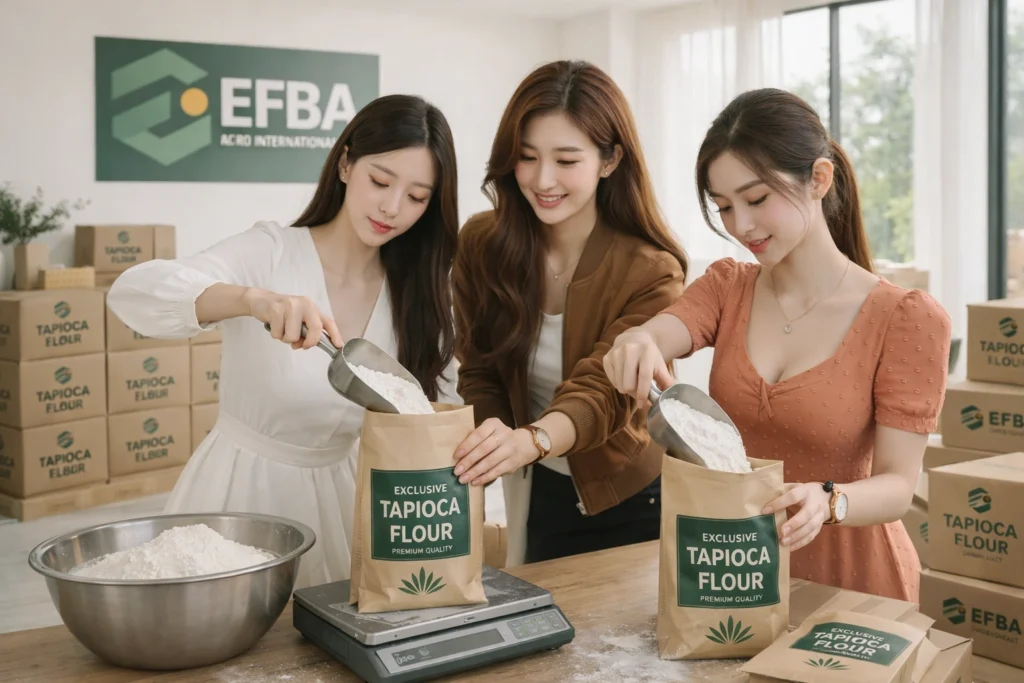
Flour Trade Tapioca export in 30kg bags is designed to meet the practical needs of food buyers who handle large volumes. This packaging size strikes a balance between efficiency and usability, making it ideal for industrial kitchens, factories, and distribution centers.
One of the key advantages of 30kg packaging is optimized logistics. Bags of this size are easy to stack, palletize, and load into containers, reducing handling time during shipping. They also help minimize packaging waste compared to smaller retail packs, which is increasingly important for buyers focused on sustainability.
Durable multi layer bags protect Flour Trade Tapioca from moisture, contamination, and damage during long distance transport. Clear labeling on each bag provides traceability, batch information, and product specifications, supporting compliance with import regulations.
For bulk buyers, 30kg bags allow flexible inventory management. They are large enough to reduce frequent restocking but still manageable for daily production use. This efficiency directly impacts operational costs and workflow in food manufacturing environments.
Flour Trade Tapioca Applications Across the Food Industry
Flour Trade Tapioca is one of the most versatile starch products in the global food industry. Its neutral flavor and excellent binding properties make it suitable for a wide range of applications across different sectors.
In bakery production, Flour Trade Tapioca improves texture, softness, and shelf life in breads, cakes, and pastries. It is often used in gluten free formulations to enhance elasticity and structure. In noodle and pasta manufacturing, tapioca flour contributes to chewiness and clarity, qualities highly valued in Asian and international cuisines.
Snack producers rely on Flour Trade Tapioca for coatings, crisp textures, and expansion in extruded products. Meanwhile, sauce and soup manufacturers use it as a thickening agent due to its stable viscosity and freeze thaw resistance.
The growing plant based food sector also benefits from Flour Trade Tapioca, particularly in meat alternatives and dairy free products where clean label ingredients are preferred. As global demand for flexible and natural ingredients increases, tapioca flour continues to gain relevance in modern food formulations.
Flour Trade Tapioca Export Reliability from Indonesia
Flour Trade Tapioca exporters from Indonesia are known for their ability to supply consistent volumes while maintaining quality standards. This reliability is essential for international buyers who depend on uninterrupted raw material supply.
Indonesia’s cassava farming sector supports year round production, reducing the risk of seasonal shortages. Export oriented suppliers maintain strong relationships with local farmers and processors, ensuring stable raw material availability. This integrated supply chain allows exporters to respond quickly to large orders and long term contracts.
Another strength of Indonesian Flour Trade Tapioca exporters lies in their understanding of international shipping and documentation. From customs clearance to export certificates, experienced suppliers streamline the process to avoid delays at destination ports.
According to global trade data from organizations such as the International Trade Centre, Southeast Asia remains one of the leading exporters of tapioca starch products, highlighting Indonesia’s role as a trusted source for global food markets.
Flour Trade Tapioca Supplier Selection Tips for Food Buyers
Choosing the right Flour Trade Tapioca supplier is critical for long term success. Food buyers should look beyond price and focus on reliability, transparency, and communication.
A professional supplier provides clear product specifications, sample availability, and responsive customer support. Consistent quality across shipments is a strong indicator of a well managed production process. Buyers should also evaluate the supplier’s export experience, including their ability to meet destination country regulations.
Sustainability practices are becoming increasingly important in supplier selection. Responsible sourcing, waste reduction, and ethical labor practices enhance brand reputation and align with global food industry trends.
Building a long term partnership with a trusted Flour Trade Tapioca exporter can reduce supply risks and improve cost efficiency over time. Open communication and mutual understanding help both parties adapt to market changes and demand fluctuations.
Flour Trade Tapioca and Efba Agro Export Commitment
As part of Indonesia’s growing agricultural export sector, efba agro is committed to supplying reliable Flour Trade Tapioca for international food buyers. With a focus on quality, consistency, and transparent trade practices, efba agro supports buyers seeking dependable long term supply solutions.
By combining local sourcing expertise with export oriented standards, efba agro helps bridge Indonesian agricultural potential with global food industry needs. This commitment ensures that buyers receive tapioca flour that meets functional requirements while maintaining competitive pricing.
Flour Trade Tapioca Export for Sustainable Food Supply
Flour Trade Tapioca export in 30kg bags offers food buyers a practical, reliable, and versatile ingredient for modern food production. From bakery and snacks to sauces and plant based foods, tapioca flour continues to support innovation across the global food industry.
Indonesia’s strong production base, combined with experienced exporters, makes it an ideal sourcing destination. By choosing professional suppliers who prioritize quality, compliance, and partnership, food buyers can secure stable supply chains and support long term business growth.
direct consultation and pricing, feel free to contact us via WhatsApp beside and discuss your Flour Trade Tapioca requirements with our team.
EFBA Agro International: A Global Supplier Built on Quality, Integrity, and Long-Term Collaboration

EFBA Agro International has grown into one of Indonesia’s most trusted agricultural exporters, serving food manufacturers, distributors, and industrial companies around the world. Built on a foundation of transparency, quality assurance, and long-term collaboration, EFBA Agro delivers a portfolio of commodities designed to support the evolving needs of global supply chains. For buyers who rely on Tapioca Flour as a core ingredient in food production or industrial applications, EFBA Agro provides not only consistent quality but also the confidence that every shipment meets international standards. Our sourcing network spans multiple agricultural regions in Indonesia, giving buyers access to stable production, clear documentation, and export-ready packaging that aligns with global procurement systems.
What sets EFBA Agro apart is our commitment to direct collaboration with processors, mills, and farmer groups. This approach ensures full visibility over raw material selection, processing techniques, and quality control benchmarks. While Tapioca Flour remains one of our strongest export categories, we are equally dedicated to developing a diversified commodity line that supports a wider range of industries. Our export operations emphasize reliability, communication, and proactive updates, helping buyers plan ahead and avoid supply disruptions. EFBA Agro positions itself not just as a vendor but as a strategic partner capable of supporting long-term procurement planning across multiple product categories.
EFBA Agro’s Full Commodity Line: From Tapioca Flour to Premium Spices and Natural Ingredients
Beyond our focus on Tapioca Flour, EFBA Agro International offers a comprehensive selection of agricultural commodities tailored for global markets. Each product category is handled with strict quality protocols, ensuring consistency from the point of harvest to export clearance. Our portfolio includes Arenga Palm Sugar (both molded and granulated), Candlenut (shelled and polished grades), Black Pepper, Vanilla Beans, Nutmeg, Cloves, Cocoa derivatives, and specialty natural ingredients sourced from Indonesia’s most productive agricultural zones. These commodities support various industries—from food and beverages to natural cosmetics, wellness, and industrial formulations.
The diversity of this portfolio allows buyers to consolidate multiple SKUs under one trusted supplier, significantly reducing logistical complexity and administrative workload. Companies that purchase Tapioca Flour often expand their partnership with EFBA Agro once they recognize the operational advantages of working with a supplier capable of managing large-volume shipments, export documentation, container optimization, and consistent communication. Our website’s commodities section highlights each product’s specifications, applications, and export readiness, ensuring that buyers can evaluate options clearly before placing an order. By offering a multi-commodity ecosystem with modern, export-focused processes, EFBA Agro reinforces its commitment to supporting long-term growth for global manufacturers and distributors.
FAQ
1. What makes Efba Agro a reliable supplier of Tapioca Flour?
Efba Agro ensures consistent quality through strict sourcing, direct mill collaboration, and export-grade processing standards. Buyers receive stable specifications suitable for food and industrial applications.
2. Does Efba Agro provide documentation for Tapioca Flour export?
Yes. We supply COA, MSDS, packing lists, phytosanitary documents, and all required export paperwork to meet international customs and port regulations.
3. Can buyers request customized Tapioca Flour specifications?
Absolutely. Efba Agro can match granule size, moisture targets, and texture requirements depending on whether the flour is used for food production or industrial formulations.
4. What packaging options are available for Tapioca Flour?
The standard export format is 25kg bags, chosen for warehouse efficiency, pallet compatibility, and contamination-free transport during long-distance shipping.
5. Does Efba Agro offer other commodities besides Tapioca Flour?
Yes. We provide a diversified portfolio including palm sugar, vanilla, candlenut, nutmeg, cloves, black pepper, and other natural ingredients sourced across Indonesia.
6. How does Efba Agro support long-term procurement planning?
We offer transparency regarding capacity, seasonal trends, and supply forecasts. This helps global buyers maintain stable production schedules and avoid supply interruptions.
// Also Read:
Cascara Natural Tea Bulk Supplier 2025 from Indonesia – Coffeenesia Export Excellence!
Gayo Coffee 01 Single Origin Arabica Direct from Aceh By Coffeenesia!